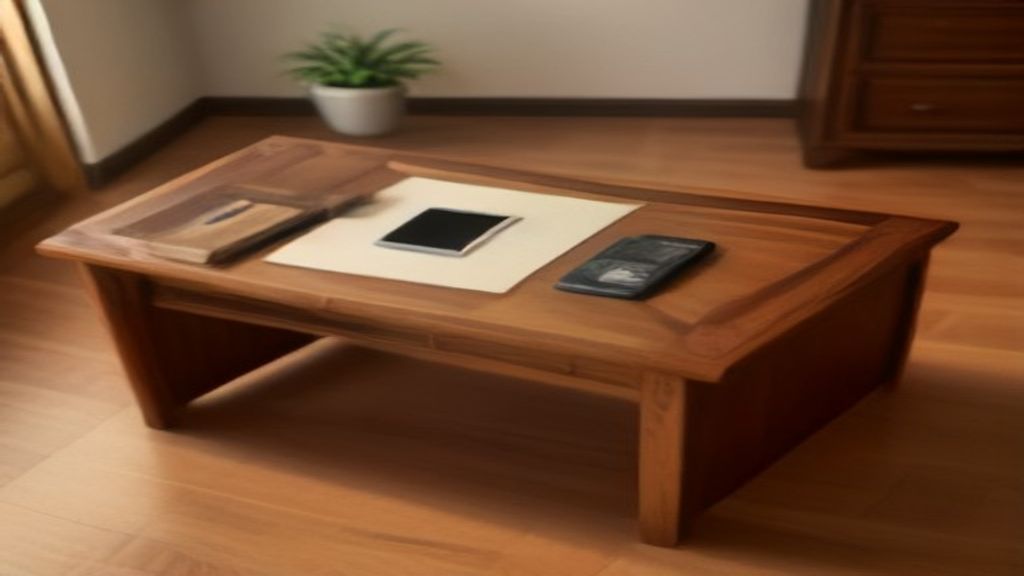
I bought a "solid wood" desk once. The top was 1/2 inch of veneer over MDF, and it sagged in the middle within six months. I measured out of spite. Now I measure every desk before I even look at the price tag.
What I learned: if you're shopping for a solid wood top desk, there are three numbers that tell you more than any product description. I'll show you the ones I use.
The Thickness That Actually Holds Up
Thickness is the first thing I check. If the listing says "thick" but doesn't give inches, I assume it's a scam. For a real solid wood top, you want at least 1 inch (25mm) of actual wood. I measured mine with a caliper: 1.25 inches, and it doesn't flinch when I lean on it.
Anything thinner than 3/4 inch? I've seen those warp in a damp room. My last apartment had humidity swings, and my 3/4-inch oak top bowed enough to slide papers off. Go 1 inch or thicker.
Why the Finish Is the Real Game (Read: Nightmare)
Marketing loves words like "natural" and "matte." But the finish determines how the desk survives daily life. I bought a "natural oil" finish once—looked gorgeous, but a coffee mug left a white ring that never went away. Now I stick to polyurethane or a hard-wax oil. I tested mine by dripping water on it: beads up, wipes off.
Ask what the finish is. If they say "lacquer," I walk. Lacquer scratches easier than a cat's back. For a working desk, you want something that can take a mug, a laptop, and the occasional slip of a screwdriver.
The One Measurement That Decides Everything
Forget the top for a second. Measure the legs. Not just the dimensions—the corner-to-corner diagonal. My first desk had a 72-inch top but the legs were attached with brackets that flexed. It wobbled enough to make my monitor sway.
Here's my method: put the desk together, then push down on one corner. If it moves more than 1/8 inch, it's not stable enough. For a writing or keyboard desk, stability matters more than wood species. I'd take a 1-inch top on cheap legs over a 1.5-inch top with flimsy supports—and I've measured both.
For layout ideas that work with a solid top, check More guides in Desks and the 63 Inch Computer Desk: The Real Specs That Decide Fit and Function. For a contrast in materials, see my experience with My Gloss Desk Was a Bad Idea Until I Did This One Thing—I learned that the hard way.
Next Step: Do the Thumb Test
Before you order anything, find the thickness spec. If they won't tell you the inches, move on. And when it arrives, measure the top with a ruler—not a tape measure, a ruler you can press flat against the edge. That's the only way to know if you got what you paid for.
I made that mistake once. I'm not making it again.