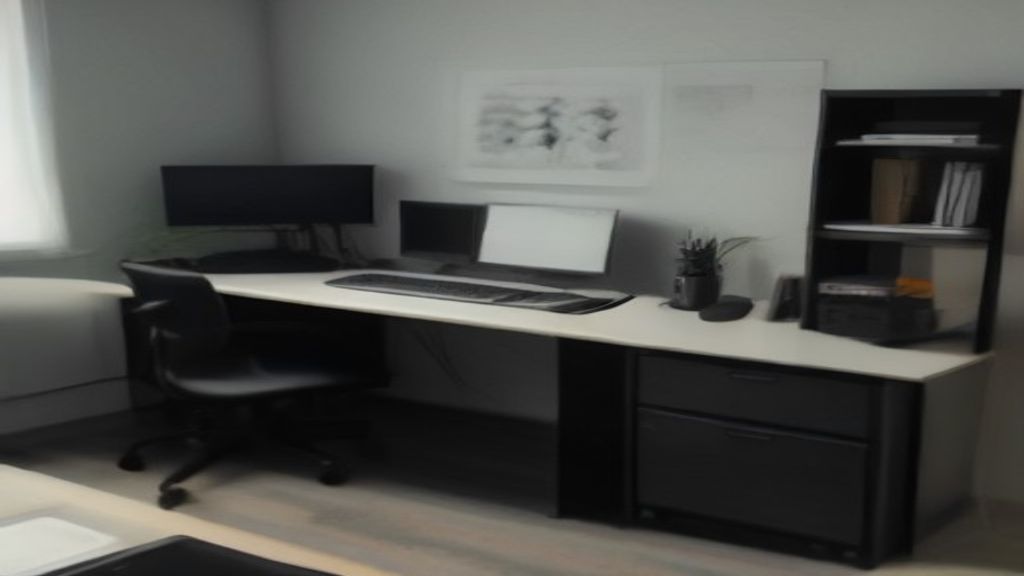
I bought the same IKEA black computer desk twice. Not because I loved it—because I didn't measure a thing the first time. I grabbed a black desk that looked fine in the showroom, hauled it home, and spent two weeks annoyed. The second time, I knew better. Still bought the same one, but for the right reason. Let me save you the repetition.
My first mistake: I bought the looks, not the fit
First IKEA black computer desk I got was a simple LINNMON top with ADILS legs. It's cheap, it's fine, everyone's had one. I didn't check the depth—only 23 5/8 inches. My monitor sat too close, my arms had no place, and my keyboard edge was basically at my chest. I measured everything after, not before.
The top is also hollow. Not exactly, but it's particleboard with a honeycomb interior. It looks fine in photos, but if you clamp a mic arm or a monitor mount to the edge, you'll hear a crunch. I felt it instantly. My mistake was assuming “desk” meant solid. My second rule: poke the edge. If it gives, don't mount heavy gear to it.
What I measured the second time
Before I bought the same black desk again, I pulled out a tape measure. Here's what I checked:
- Depth: I needed at least 24 inches to keep my monitor at arm's length. The IKEA desk was 23 5/8. Close, but close enough.
- Height: With my chair set correctly, my elbows were around 29 inches off the floor. The desk is 29 1/2. That worked.
- Width: I marked the floor with painter's tape. The desk is 47 1/4 inches wide—I needed back clearance for a rolling cabinet.
I also checked the material. The black finish is laminate over particleboard. It scratches if you drag a keyboard without a mat, but I use a large desk pad now. The scratch that happened the first week taught me—my own fault, not the desk's.
Where IKEA black desks punish you
Assembly is mostly Allen keys and patience. The cheap desks wobble if the legs aren't tightened. I tightened everything, and it still had a slight diagonal rock after two months. I added a few sticky rubber pads under the legs. Fixed it.
The color is a matte black, which shows dust and crumbs as soon as you blink. I wipe it daily, and I still see fingerprints. If you want a black desk that hides grime, get a deeper, rough-textured black, or just buy a desk pad and accept the patina.
The base is the biggest trap: the legs have little plastic feet that slide on hard floors. I put on felt pads myself because the plastic scratched my vinyl. And the cable management—there is none. I zip-tied a power strip under the top and routed cables along the back. Works, but it took an hour I didn't plan for.
The one factor that decides the buy
Before you order, measure the distance from your chair's armrest tops to the floor. Most chairs rest around 26 inches. Your desk needs to be about 1 inch higher than that, not the other way around. If your IKEA black desk is a fixed 29 1/2 and your armrests are 31, you'll shrug for months. I adjust the chair, but some of you can't.
Also measure the legroom under the desk. The IKEA desk has about 26 inches of clearance. If you have a deep drawer unit that you want to slide under, it won't fit. My filing cabinet is 28 inches tall, and I discovered that after I placed the desk. It sits beside now, not under.
So, the one decision: measure your armrest clearance first. Do that, and the desk works. Skip it, and you'll be returning it like I almost did. I kept mine because I fixed it with chair adjustments, but I know a person who didn't.
I also looked at other desks after I got used to this one. If you need more depth, take a look at the 63 Inch Computer Desk: The Real Specs That Decide Fit and Function. And if you're thinking about a black desk in general, read Black Home Office Desk: The Only Spec That Matters. I keep saying spec because it matters.
I almost bought a floating setup instead. IKEA Floating Desk Setup: The First Week and the One Decision That explains what I learned. And if you're measuring for a whole room, IKEA Desks and Chairs: The One Measurement You Can't Skip is worth a read.
But for now: go measure your armrests. That's the one factor.