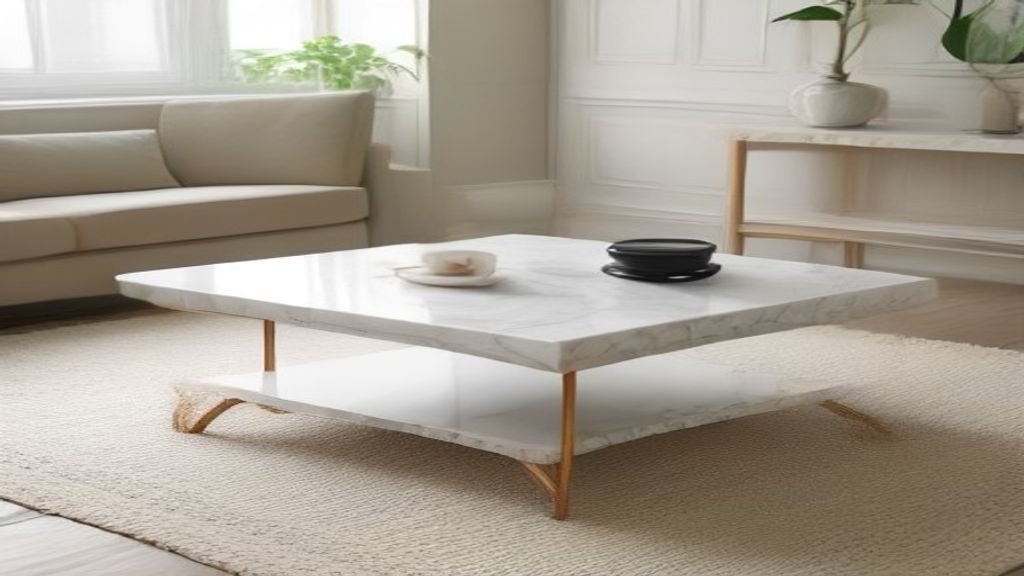
The box weighed 87 lbs. I know because I helped the delivery guy carry it up two flights, and we both grunted. That was my first clue that a marble top coffee table isn't just a pretty surface—it's a commitment. Before you click 'buy', there are a few things I wish I'd measured on the spec sheet, not just admired in the photos.
1. Weight: Can Your Floor (or You) Handle It?
Marble is heavy. My table's top alone is 40 lbs, and the whole piece is 87 lbs. That's not a big deal on a concrete slab, but on hardwood or a second-floor apartment, you'll feel it. I've seen cheap veneer tables wobble under half that weight. Also, think about moving it. If you rearrange your living room more than once a year, you'll hate yourself. Measure your doorways too—getting a 48-inch wide slab through a 30-inch door means tilting it at an angle, and if the edge isn't beveled, you'll chip something.
2. Edge Thickness: Not All Marble Is Equal
The edge profile matters more than you'd think. A thin 1.5-inch edge looks sleek but feels fragile. My table has a 2-inch beveled edge, and it's survived two years of kids bumping into it. I also checked the underside for any mesh or resin reinforcement—some cheap tables have a fiberglass backing that helps prevent cracking. If the listing doesn't mention it, ask. A hairline crack in marble is a nightmare to repair, and it usually starts at the edge.
3. Porosity: White Marble Stains Easier Than You Think
Here's the thing nobody tells you: white marble is porous. Red wine, coffee, even lemon juice will stain if you leave it sitting. I tested mine with a drop of olive oil after I got it—it seeped in within 10 minutes. So I sealed it with a stone sealer, and I reapply every six months. That's a real maintenance routine, not a one-time thing. If you're not willing to do that, look at a ceramic or quartz top that mimics marble. I'd rather have a fake that doesn't stain than a real marble that's always at risk.
4. Leg Clearance and Floor Protection
The base matters. My first marble table had a solid wood base that scraped the floor every time I moved it—even with felt pads. The legs were too close together, so it tipped when I leaned on one corner. I measured the base width and compared it to the top overhang. A good rule: the base should be at least 4 inches inside the top edge on all sides. And if you have carpet, make sure the legs are long enough to sit level—my second table's legs were too short, so the whole thing rocked until I added shims. Not a fun afternoon.
The One Factor That Decides It
You can live with weight, edge profile, and even the sealing. But the thing that ultimately decided my buy was the base stability. If the legs aren't solid and properly spaced, nothing else matters—you'll be re-tightening screws and chasing a wobbly table for years. So before you hit that checkout button, find the base dimensions and do the math. Your floor (and your patience) will thank you.
For more on choosing coffee tables that don't disappoint, check out our More guides in Coffee Tables section. I've also written about White Lift Top Coffee Table: What Nobody Tells You Before You Click, The Lift Top Coffee Table Problem I Didn't See Coming (and the Fix), and I Bought a White Wicker Coffee Table for the Look, Then Learned the if you're exploring other styles.