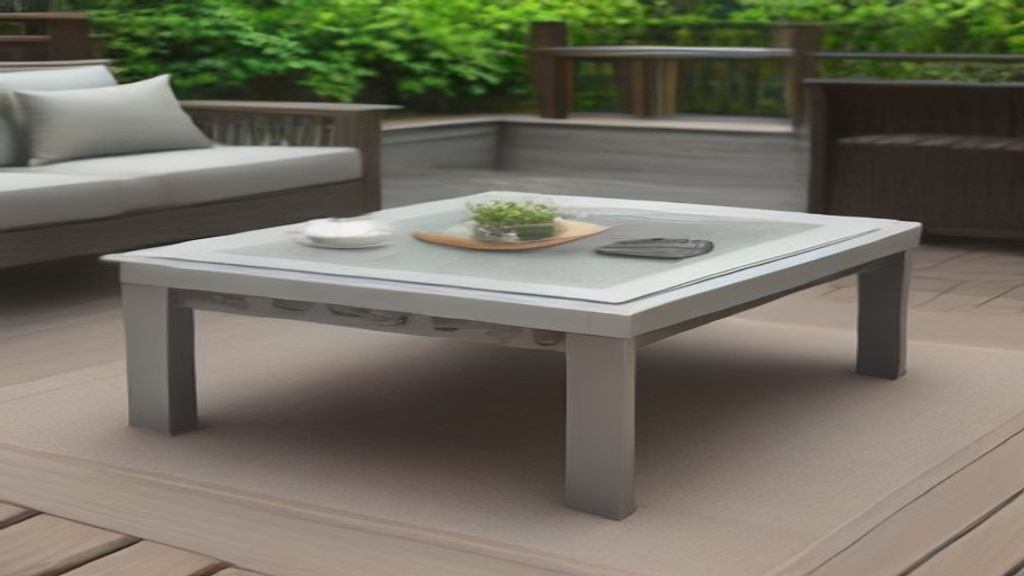
I bought an outdoor coffee table that looked great in the catalog. It was a teak-style wood with a nice slatted top. By August, the slats had cups and the finish was peeling. I replaced it with something that's still flat after two seasons. Here's what I measured and what I'd check before you buy.
Start with the space you actually have
Measure your deck or patio, not the corner where you think the table will look good. I've seen too many people buy a 48-inch table for a narrow balcony. You need at least 18 inches between the table and the edge of your seating so people can actually get up without scraping their knees. If your sofa or chairs are 36 inches deep, add that to the table depth plus the clearance. I pulled out a tape measure one afternoon and marked the spots with chalk before ordering.
Also check the doorways and paths to the outside. I nearly got stuck with a 60-inch table that wouldn't clear my slider. The delivery guy was nice about it, but I had to send it back. Measure your door width and hallway curves, even if the table is coming from a store that says it fits.
The material math: what I learned after the warping
The word "teak" got me. The catalog said it was teak, but it was actually rubberwood labeled as teak, and it soaked up moisture like a sponge. I learned that real teak has natural oils that repel water. If you see "teak-style" or "plantation teak," read the fine print. I ended up with an aluminum frame and a glass top. Glass doesn't warp, and the aluminum doesn't rust—at least not the powder-coated stuff I bought. It's lighter than wood, too, which matters if you need to drag it into the garage for winter (I do).
But I'll be honest: glass is not for everyone. I have kids, and I've had to clean off juice spills and the occasional foot that landed on the edge. Tempered glass is strong, but it's not scratch-proof. If you want wood, go for real teak or cedar, but know you'll need to oil it every spring. I skipped the glue because I'm not sure I'd stick with it.
I also checked the clearance under the table. My old table had a lower shelf that was almost flat on the ground. That meant any leaves or water pooled there and held moisture against the frame. New one has about 8 inches of clearance underneath. You can wipe the ground or sweep the deck without moving the table. That alone reduces the rot risk. If you're looking at a metal table with a side table attached, check the gap between them. I read I Bought a Metal Outdoor Dining Table Without Checking the Gap on this site, and the same logic applies here.
Schedule and weather: the real test\n
My first table sat in direct sun for six hours a day. That's hard on any finish. If your spot is that exposed, go for powder-coated aluminum or a resin wicker with an aluminum frame. UV light fades colors and breaks down the coating. I have a friend who got a composite wood table (looks like wood, made from plastic and wood fibers) and it's held up for three years in the same sun. That might be the middle ground if you don't want glass.
Also, think about how often you actually use it. I only sit outside on weekends and evenings. So a lighter, less expensive table works for me. I didn't need a six-seater behemoth. I bought a 34-inch square that fits two mugs and a plate. If you entertain a lot, maybe look for a table with a lower shelf for storing magazines or trays, like the lift top coffee table idea but without the mechanism that can stick outdoors.
Figuring out the budget
I've seen outdoor coffee tables for $80 and for $800. The difference isn't always about quality—it's about materials and size. I paid $180 for my current table, and it's been fine. What I'm paying for is the aluminum frame and the glass top. A teak table that lasts will run you $400 or more, but you're buying real hardwood that needs maintenance. If you're tight on cash, look for clearance at the end of summer. I've read Round Wood Coffee Table Price: What $150 vs $600 Actually Gets You for indoor tables, and the same logic applies outside. Price doesn't guarantee flatness, but it does buy better waterproofing.
I've also seen people spend big on a brand name and then complain about fading. It's not the brand—it's the material. Check if the finish is rated for UV exposure. The spec sheet will say "UV-resistant" or not. If it doesn't say, assume it's not.
What I'd do next
Right after reading this, go measure your doorway and the spot where you'll put the table. Write down the width, depth, and the height you need—coffee tables usually sit 16–18 inches high, but if you have tall chairs, you want to adjust. Make a note of the sunlight hours. Then decide: aluminum/glass, teak, or composite. Don't order until you know those three numbers. That will save you the return hassle I went through. If you want to see what works indoors too, I Bought a Castlery Coffee Table Blind—Here’s What I’d Measure First has similar checks that apply to any table.