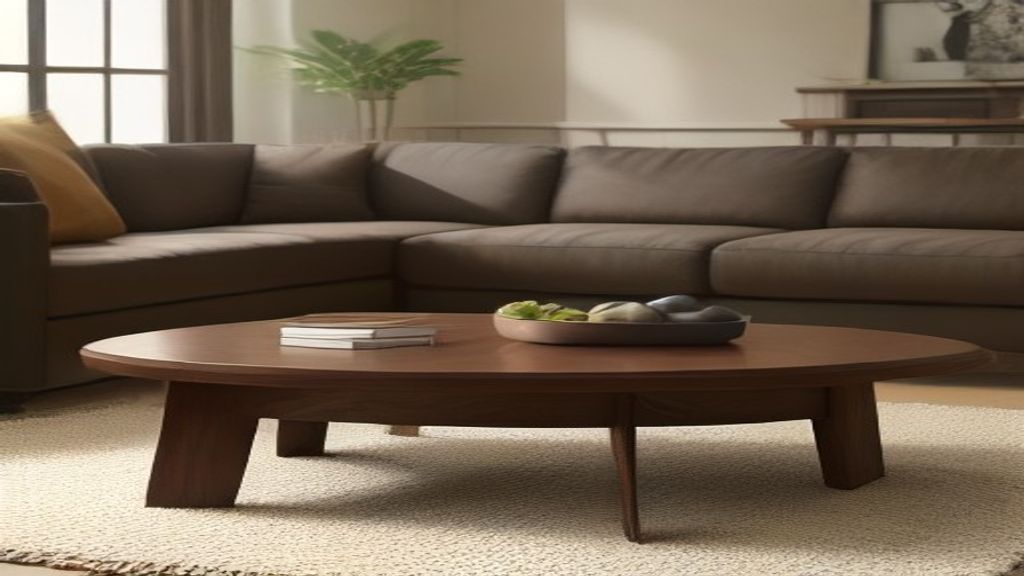
The first coffee table I bought for my first apartment was $89. It was a particleboard rectangle with a fake walnut wrap, and it wobbled the moment I put a mug down. I remember the smell — that sweet, gluey particleboard smell that didn't fade for two months. I hated that table, but I needed something, so I kept it. Eighteen months later the corners were peeling, the veneer had bubbled, and one leg was held on with a zip tie. It was a lesson in coffee table price, and it's why I spent three times as much on my next one.
Here's the thing about coffee table prices: there's not one magic number. There's a range, and within that range you get real differences in materials, joinery, and how long the thing will survive your life. I've owned three tables in the $100–$900 range, and I've also measured and poked a bunch of others in friends' houses and showrooms. After all that, here's what I think you're actually paying for at each price tier.
$100–$150: The IKEA / Amazon Special
At this price, you're almost always getting particleboard, MDF, or a thin veneer over something soft. The finish is printed to look like wood, and it can be convincing from across the room. But the joints? They're cam locks and dowels, not real joinery. The wood is soft, so screw holes strip out if you disassemble and reassemble more than once — I had a table where the leg screws just spun in the holes after a move.
The top is where you'll notice the difference first. A $100 table will scratch easily, and water rings are permanent. I set a damp glass down once on my $89 table, and the ring never came out. The finish is just a thin lacquer, and the substrate swells if moisture gets in.
But not everything at this price is a disaster. If you need a temporary table for a rental, if you don't put weight on it, or if you're careful with coasters, it'll work. The key is to know what you're buying: you're renting the table, not owning it. My recommendation? If you go this route, buy online from a brand with a decent return policy — because you might need it. The first delivery I got had a chipped corner straight from the box.
$400–$600: The Solid-Wood Sweet Spot
This is the range where you start getting legs and a top made of actual solid wood — usually rubberwood, mango, acacia, or pine. The finish is still factory-applied, but it's more durable, often a UV-cured lacquer that holds up better to cups and spills. My current table, a 48-inch rectangular acacia with a shelf underneath, cost $480 delivered. It weighs 65 pounds, and I could feel the difference the second I took it out of the box: no particleboard, no hollow thunk.
The joinery is better too. Most tables in this range use mortise-and-tenon or metal bracket legs, not cam locks. The table I have now has been moved three times and disassembled twice, and the screws still bite. That's something you can't say for the cheap stuff.
Of course, you're not getting hand-carved anything at $500. The finish might have slight color variations, and the wood grain might not be perfectly matched. But you're getting a table that will last a decade with basic care. My acacia table has a few scratches now — from keys, from a dog's nails — but they don't look like damage, they look like patina. That's the difference.
One thing to watch: shipping dents. Solid wood is heavy, and carriers can still ding the corners. I had to get a replacement top for mine after the first arrived with a gouge. So order early and check the delivery before the driver leaves.
$700–$1,000: Designer Names and Better Finishes
At the high end, you're paying for a few distinct things. First, design. Tables from brands like Castlery or West Elm have a certain silhouette that's hard to find at lower prices — the legs are often tapered, the proportions are just right. Second, construction: you get real hardwood like oak or walnut, with dovetail drawers and a higher quality finish that's more resistant to heat and water. I tested a walnut table in this range once: the surface felt like silk, and the drawers slid like they were on oiled rails. That's a different experience from the $100 table.
But here's the honest part: if you're not caring for the table properly, the extra money doesn't buy immortality. Walnut dents, oak scratches, and white rings appear just as fast on a $900 table as on a $400 one if you're not using coasters. The difference is that on a solid wood table, you can sand and refinish it; on a laminate table, you're stuck with the damage.
The other thing you're paying for at the top end is warranty and customer service. My friend bought a $900 coffee table from a design brand, and a leg split after a year. The company sent a replacement leg free, no questions asked. Try that with a $100 Amazon table — you'd be lucky to get a partial refund.
Where the Money Actually Goes
If you're trying to decide what to spend, think about it this way: at $100, most of the cost is manufacturing and shipping — you're getting the cheapest possible materials that will look OK in a photo. At $500, you're paying for real wood and better joinery, but you're still getting mass production. At $900, you're paying for design, better QC, and a name that might help if you ever resell.
So what's my recommendation? If you rent and know you'll move soon, a $100 table is a fine rental. Just expect to toss it. If you're buying for a place you'll live in for more than two years, go to the $400–$600 range. That's where the sweet spot is for most people.
And if you're tempted by the $900 table? It's worth it if you want a piece of furniture you'll keep for a decade and can refinish. But if you're just status-shopping, save your money — the $400 table will do the same job of holding your remote and your coffee.
If you want to compare more specific price points, check out Mexican Coffee Table: What $200 vs $900 Actually Gets You (Measured) for a deep dive into handcrafted options, or Round Wood Coffee Table Price: What $150 vs $600 Actually Gets You for round tables. And if you're worried about wobbly legs, Octagon Coffee Table: What I Measured After the First One Wobbled is a real-world cautionary tale.
But honestly, if you're the type of person who never uses coasters, who lets kids build forts on the table, or who plans to move every year — skip the expensive table. Get something cheap and beat it up. There's no shame in that. Just don't expect it to last. The $400 table is only worth it if you'll actually care for it. If not, you'll be back here in 18 months, reading this again, wondering why your $900 table already has a white ring.