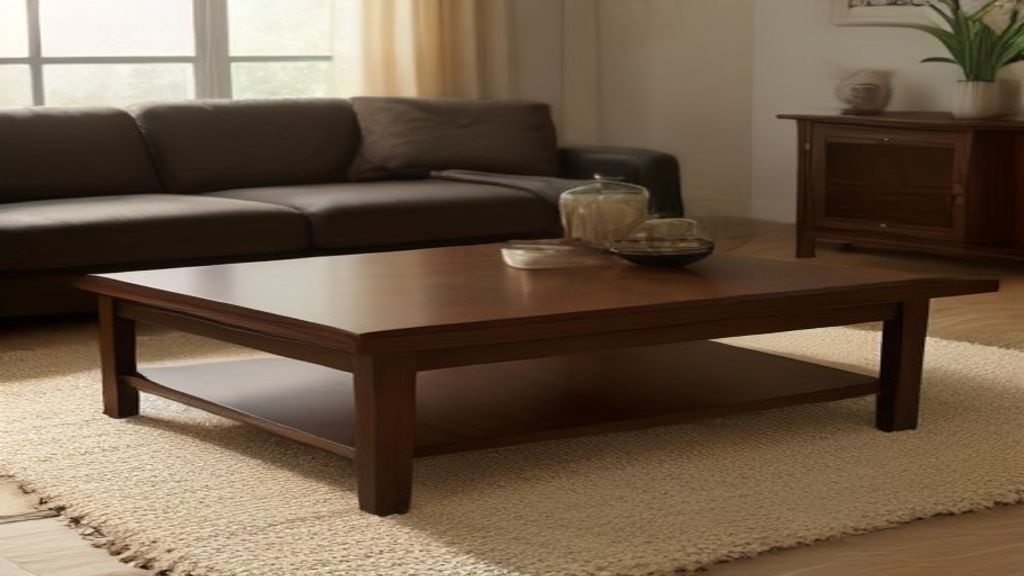
The moment I unboxed my first "big" coffee table — 52 inches of solid mango wood — I knew I'd screwed up. The delivery guy set it down in the middle of my living room, then stepped back and said, "Buddy, you got like two feet between the sofa and this thing?" He wasn't wrong. I'd measured the length against the wall, but not the distance from the couch. The result: I had to inch sideways to get to the balcony, and the dog kept knocking a mug off the edge every time she walked past.
Before you order something in the 54-inch range, walk the layout with painter's tape. Mark the footprint on the floor, then pull your sofa out to its normal spot. Sit down. See if you can grab a drink from the tape's edge without leaning. Now stand up and step past it. If your knees hit the coffee table or you're hopping over it like a hurdle, it's too big — no matter how many dings it has in the product photos.
The Spacing Math That Saved My Second Purchase
First, the floor plan. I used pencil lines on a scrap of cardboard for my second attempt: a 44-inch oval instead of the 52-inch block. The rule I now live by is 16–18 inches from the sofa edge to the table's edge. That leaves enough room for a coffee mug and a remote, but also a gap you can walk through without sucking in.
The height matters just as much. My first big table stood 19 inches tall. My sectional's seat cushions sit at 17 inches. At that height, I had to reach down to set a water bottle — fine for a coffee table, but my knees hit the frame when I crossed my legs. On the second one, I went with a 16-inch height, which feels more natural with a deeper sectional. If you're buying for a shorter sofa or a low-profile bed frame, keep that in mind.
Weight is the sneaky killer. My 52-inch table weighed 90 pounds. Getting it up a flight of stairs took two guys and a curse word. The 44-inch one? 55 pounds. I slid it into the trunk of my Outback on my own. When a table's called "large," read the spec sheet for actual pounds, not adjectives.
Say No to Absolute Width in Tight Spots
A 54-inch rectangle might fit along your wall if the sofa runs the long way, but if your room has a doorway or a floor vent, measure the diagonal path to the spot. I learned this the hard way: my first table was too wide to squeeze past the built-in shelf unit when I tried to vacuum. I had to lift it, which made the wheels on its legs a joke. Now I take the table around the room—figuratively—with a tape measure.
If your layout is tight, consider a round or oval top. I've never had to worry about corners. Those corners on a rectangle are what collects shins — and in my case, one dented toe. Plus, the oval gives the same surface area without hogging the walkway. My current table is a 44-inch round with a bottom shelf. That shelf holds two thick magazines and a candle, and it doesn't block my path to the recliner.
Materials, Density, and What "Solid Wood" Really Means
My first so-called solid wood big table came with a top that looked fine for the first month. Then my kid's hot cocoa cup left a white ring, and a hot pizza box edge left a ghost. The top-coated, lacquered ones handle that better. If you're going to eat on it — and who doesn't?—pick a sealed surface. I now avoid raw mango wood unless you've already accepted a distressed look.
Glass tops on big tables can be eyeing, too. A big glass top doubles as a radiator for finger smudges, and if you have kids, your fingerprints are permanent. My siding neighbors love their 47-inch round glass table, but they don't have a toddler. I'll never repeat that wavelength.
Budget Traps When You Step Up to 50+ Inches
I nearly dropped four hundred bucks on a big table from a big-box brand that advertised "acacia wood" with a lacquer finish. But the finish was a thin veneer over particleboard. A week later, I was already seeing hairlines where the seams met. My advice: flip the table over. If the underside is raw plywood or glued-on edge banding, walk away—unless it's a bargain for a rental.
Speaking of deals, I was tempted by a $160 big table from a discount chain. When I measured, the width was only 38 inches, despite the site calling it "XL." That's not big. That's ordinary. Don't shop by vibes. The listing must give you inches for length, width, and height. If it doesn't, assume it's smaller than you imagine.
Clever Storage, Ugly Corners, and the Console Alternative
If you really need the storage, a lift-top table can be a beast to maneuver. I helped a buddy move his 48-inch lift-top, and we nearly put a hole in the drywall when the top swung open. The piston mechanisms bend over time. If you're often moving it to clean or use as a desk, get one with casters—though casters on a shag rug are worse than none.
For a shorter room, consider a long, narrow console table behind the sofa or a pair of round nesting tables instead of one giant block. My sister has a huge room but a tiny human, and she swapped her behemoth for a 30-inch round table and a couple of trays. It freed up the path entirely.
Skip the Big Table If…
If your room is under 12 feet wide, if you have a swing path for the fridge or balcony door, or if you're in a place where you're going to haul your furniture up two floors alone, a 50-inch-plus table is a fast invite for regret. My neighbor got a huge table when his kid was learning to crawl — he removed it three weeks later because the corners proved too tempting for tiny foreheads. If you're heavy on TV tray dining or you use a coffee table only for a plant, you do not need the size. You're better off with a smaller round and the floor space.
The big coffee table can work, but it has to fit your body's path through the room first. Measuring the distance between everything—including your knees—is the only spec that really counts. After hauling that first 90-pound slab back down the stairs, I promise you, the next one I ordered began at the tape line, not the sale price.