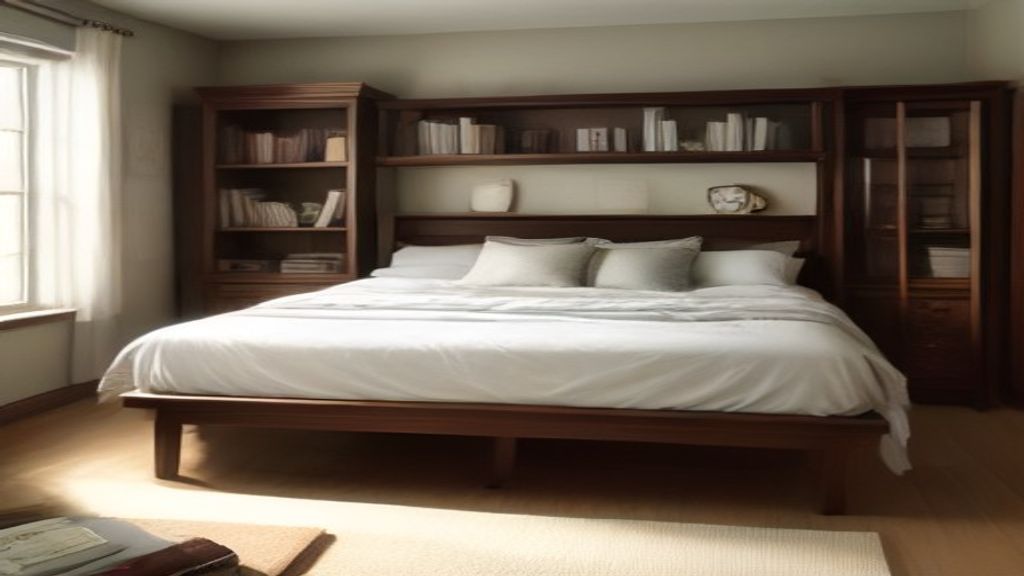
Day one with my bookcase bed, I loaded the shelves with hardcovers. They stuck out past the wood by two inches, so I couldn't walk past without scrapping my arms. I didn't measure the shelf depth before buying. I thought a bookcase is a bookcase. It isn't.
The problem was that the bed's headboard shelves are shallow—about 8 inches on mine. Standard paperbacks fit fine, but my hardcovers were 9.5 inches deep. If you're looking at bookcase beds, that's the detail that will bite you. It's fixable, but knowing it before you assemble saves you the rearranging.
Check your shelf depth and content depth
Before you buy, measure your books, photos, or bins. If you're reading this after unboxing like I did, measure the actual shelf. You want hardcovers flush or slightly recessed. They'll stick out otherwise, and you'll hit them in the dark.
If your shelves are already shallow, you have options. I pushed the books to the back and used small risers to angle them. That brought the spines back by an inch. It's not perfect, but it gets the job done. If you haven't bought yet, look for shelf specs online or check the manual's dimensions—don't trust the product blurbs.
Assemble with a helper
The headboard and footboard are heavy. I did it alone because I'm stubborn. By the time I was tightening the last bolt, I was sweating and had to redo two alignments. Get someone to hold the panels. It speeds things up and saves your back. If you're in a tight space, keep the pieces in the box until you've cleared the path. You'll hate sliding a 50-pound headboard past your dresser.
The one decision that matters most: mattress depth
This is the thing I didn't think about until the night I tried to put on sheets. Bookcase beds often have a footboard that's higher than normal. If your mattress is thick, like 12 inches, your feet may not fit under it sideways. I slept fine the first few nights, but then I woke up with my toes jammed. I had to pick a thinner mattress or a footboard that was lower.
So measure your mattress thickness before finalizing the bed. If you're at the store and the salesperson says it will look great, don't trust them. Go home and check. A standard 8-inch mattress is safe. My 12-inch hybrid is a whole different story.
Downsides you should know
Hardcovers not fitting was annoying, but dust is worse. The shelves are open, so they collect everything. You'll be wiping them down more than you expect. Also, the bed frame itself is the loud kind—a few creaks when you turn over. I tightened the bolts and it helped, but it's not silent.
The first week is the test. If you can live with the dust and the occasional hardcover hangover, it's a clever way to save floor space. But if you have a collection of thick college textbooks, reconsider. This setup isn't for everyone. I'd rather have a solid, simple bed and a separate bookcase if I had to do it again—except I don't have the room.
For more on the side you might land on, check When Single Bed With Storage Isn’t Worth the Money if you're short on square footage. And if you're thinking about a different style, Iron Beds Queen — Measure This Before You Click Buy covers frame height and footboard clearance. If you're stuck with a guest room, Folding Double Bed Setup: The Week I Learned to Measure the Hallway reminds you to measure the hallway, not just the bedroom.