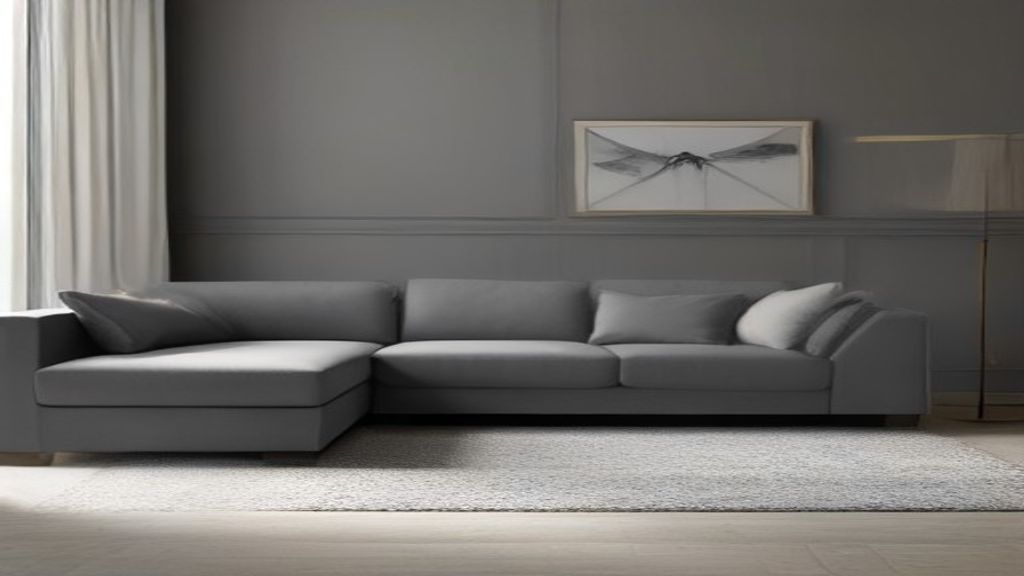
38 inches. That's the gap between my wall and the TV stand, and I ignored it for two weeks because I was so sure my new left arm facing chaise sectional would fit. It didn't. The chaise side alone was 72 inches long, and while I'd measured the main seat width like a good little shopper, I never once looked at the actual chaise dimensions. So the sectional sat in my living room at a 30-degree angle for a week, blocking the door to the balcony, while I waited for a friend with a truck to help me haul it back to the store. Return shipping? $150. My time? Priceless. Here's the thing I learned: when a sofa says "left arm facing chaise," it means the chaise is on the left when you're facing the sofa. But that doesn't tell you how deep the chaise is, how far it sticks out, or whether it'll leave you enough walkway to get to the kitchen without doing a sideways shuffle.
What "Left Arm Facing" Actually Means (And Why It's Not Enough)
If you've never bought a sectional before, the terminology feels like a puzzle. "Left arm facing" means that when you stand in front of the sofa looking at it, the chaise (the long, leg-rest part) is on your left. So the chaise is on the left side of the sofa. Seems simple, right? But here's the catch: that definition only tells you which side the chaise is on. It says nothing about the chaise's depth or length. On a typical left arm facing chaise sectional, the chaise section might be 60 to 80 inches long and 40 to 50 inches deep. That's a big hunk of furniture. I measured the total width of the sectional (around 90 inches) and the length of the wall I wanted it against (120 inches). I thought I had plenty of room. But I didn't measure the chaise's depth against the walkway clearance. My living room is a weird L-shape, and the chaise stuck out so far that it cut off the path from the hallway to the kitchen. I had to turn sideways to get past it, and I'm not a big guy. My wife almost tripped twice.
The Mistake That Cost Me
My biggest mistake: I measured the width of the room, but not the depth of the chaise. I bought a left arm facing chaise sectional because the description said it was 86 inches wide, and my wall was 96 inches. Perfect, I thought. But the chaise depth was 68 inches. My living room is 12 feet wide, so from the wall to the opposite wall is 144 inches. With the sofa against the wall, the chaise extended 68 inches into the room, leaving only 76 inches of walkway. That's tight, but workable. The problem was that the chaise also blocked the door to the balcony, which opened inward. I couldn't open the door more than a crack. I had to rearrange the whole room—move a bookshelf, push the coffee table against the window—just to make the sectional work. And it still felt cramped. I ended up returning it and buying a smaller loveseat. Don't be me. Before you even look at a sectional, grab a tape measure and write down three numbers: the length of the wall you want it against, the depth of the room (from that wall to the opposite wall), and the width of any doorways or hallways the sofa has to pass through. Then, when you're shopping, don't just look at the overall width. Ask for the exact dimensions of the chaise section—depth and length. If the listing doesn't have them, email the store or find a similar model on a site that lists them. I know it feels like homework, but it's cheaper than a return.
How to Measure for a Left Arm Facing Chaise Sectional Without Screwing Up
Here's the checklist I now use every time, and I've bought three sectionals since (all correctly sized, thank you):
- Measure the wall length where the sofa will sit. Subtract at least 6 inches from that number to leave breathing room.
- Measure the room's depth from that wall to the opposite wall. Subtract the chaise depth from that number. You need at least 24 inches of walkway left over—more if you have kids or pets that like to run around.
- Check doorways and hallways. Measure the width of every door and turn you need to navigate. Sectionals often come in pieces, but the chaise piece can be 70 inches long and 40 inches wide. If it can't fit through your door, you'll be paying for a white-glove delivery that involves taking it apart or hoisting it through a window. I've done that. It's not fun.
- Draw it out on paper or use a tape outline on the floor before you order. That's what I do now. I put masking tape on the carpet showing where the chaise will sit and live with it for a day. You'll notice if it blocks a walkway or makes a room feel like a closet.
- Read the fine print on the dimensions. Some listings show the "chaise length" as the entire sectional width, which is confusing. The chaise length is the long part of the L shape. The chaise depth is how far it sticks out into the room. Write both down.
One More Thing: Delivery and Doorways
I almost skipped this, but it's crucial. Even if the sectional fits in your room, it has to get there first. My first sectional came in a box that was 52 inches high and 70 inches long. My apartment door was 30 inches wide. The delivery guys looked at the box, looked at the door, and said, "Nope." They tried to take it through the patio door, but that was 72 inches wide—just barely enough, but they had to angle it in, and my wife had to hold the screen door open. It took fifteen minutes and a lot of sweat. If your doorway is narrower than the chaise piece, you'll need a sectional with detachable pieces or a modular one that can be assembled inside. Some brands offer "apartment-friendly" sectionals that come in smaller boxes. Others don't. Ask before you buy. I now measure my doorways and write them down in my phone notes. I also check delivery reviews to see if other people complained about access. That's saved me twice.
The Real Cost of Getting It Wrong
Getting a left arm facing chaise sectional wrong isn't just about the money—though return shipping alone can be $100 or more. It's the time, the hassle, the feeling of being an idiot while you try to push a 250-pound sofa through a doorway that's 2 inches too narrow. I've been there, and I'd rather stand in a furniture store with a tape measure than go through that again. So do yourself a favor: measure everything before you even look at colors. If you're not sure about left vs. right, read Left Facing Chaise: What "Left" Actually Means and Why You'll Get It first. And if you're leaning toward a specific model, check out my measurements on I Didn't Measure the Chaise Side First: My Tanavi Sectional Mistake or Ballinasloe 3 Piece Sectional With Chaise: I Measured It Twice Before. Still not sure? The I see people make is forgetting to measure the hallway. Don't let that be you.
At the end of the day, the one factor that decides whether a left arm facing chaise sectional works for you is the chaise depth in relation to your room's walkway clearance. That's it. If you don't measure that, you're gambling. And I've lost that bet enough times for both of us.