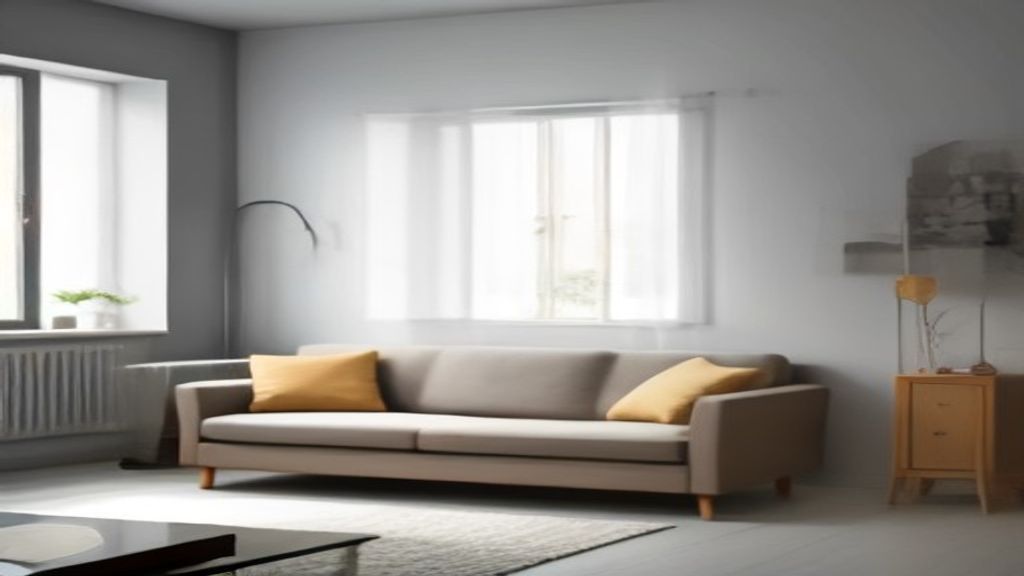
You fell for the showroom. I get it. The leather chaise lounge looked perfect under those warm lights, wide enough to stretch out, and the leather felt like it cost more than your rent. You signed the slip. Now it's in your living room and something's off. It's not the color or the smell. It's the depth. You didn't measure the chaise depth like the one that matters.
The Half-Wall Trap
Most people measure the length of the chaise lounge — the long way. They'll check if it fits against the wall or under the window. Then they forget the side-to-side depth. They'll park it in front of a doorway or in a cramped corner. Then the chaise sticks out half a foot too far, blocking the walkway. You'll be squeezing past it every time you go to the kitchen. And the chaise is the part you'll use the most.
So, measure the full footprint: length, width, and the diagonal. If you have a corner or a tight hallway, do the diagonal. That's the real clearance you need.
The Recliner Stretch
You'll get the chaise home, and then you'll lean back to test it. That's when you find out the lounging angle isn't a couch potato's dream. The seat might be too shallow for your legs. Or the backrest is so low that your head hangs off the edge. That's because showroom floors are bigger than your TV den. You need to bring your actual body dimensions, not just a tape measure.
Sit down in the store like you would at home — barefoot, maybe with a book or a remote. If the seat's less than 20 inches deep, your knees will stick out. And if the back's lower than 22 inches, you'll be cradling a neck ache.
Leather Is Not Bulletproof
I don't care if it's full-grain, top-grain, or bicast. That's not the same as indestructible. Bring a dog, cat, or a kid with a juice box? You'll notice scratches, and you'll notice them fast. I once had a leather chaise that got clawed up within a month. The scratches started as thin lines, then got lighter almost like a matte spot. I had to keep it covered with a throw blanket just to not see it.
If you have pets, run your fingernail along the leather in the store. Watch how it reacts. If it leaves a mark, think twice. Expect to condition it every few months or keep a brush and some repair balm handy. It's not about babying it — it's about keeping it looking like a chaise, not a scratching post.
The Real Decision
You're probably weighing a faux leather to save cash and a real leather for that rich feel. Faux leather can be okay if you don't have pets, but it'll stick to your skin in summer and crack in winter if it gets dry. Real leather breathes, it gets character, but it'll cost you. And the price tag isn't the whole story. The frame matters more.
I've seen cheap leather lounges with particleboard frames that sag after a year. Check if the frame is kiln-dried hardwood. Run your hand under the chaise — feel for a solid base. Test the joints by giving the back a little wiggle.
Before I bought mine, I read a lot of articles about cheap sofa frames and leather that peels. I really liked the ones in Sofas & Sectionals, especially about how fake leather breaks down. That Faux Leather Kitchen Chairs: I Tested the $50, $150, and $200 Versions story gave me a better sense of what low-cost leather actually gets you.
And if you're still deciding between a sofa with a chaise or a standalone lounger, keep this in mind: the chaise is a feature, not a filler. If you're not kicking your shoes off and stretching out on it every day, you'll regret the space it takes. I learned that the hard way.
So, don't just measure the wall. Measure your room, your doorways, and your own body. Because the chaise lounge isn't a decoration. It's a piece of furniture you'll live on. And the one factor that decides whether you'll love it — or hate it — is whether it fits where you want it and how you use it. Get that right, and it'll be the best purchase you'll make. Get it wrong, and you'll be counting the days until you sell it on Marketplace.