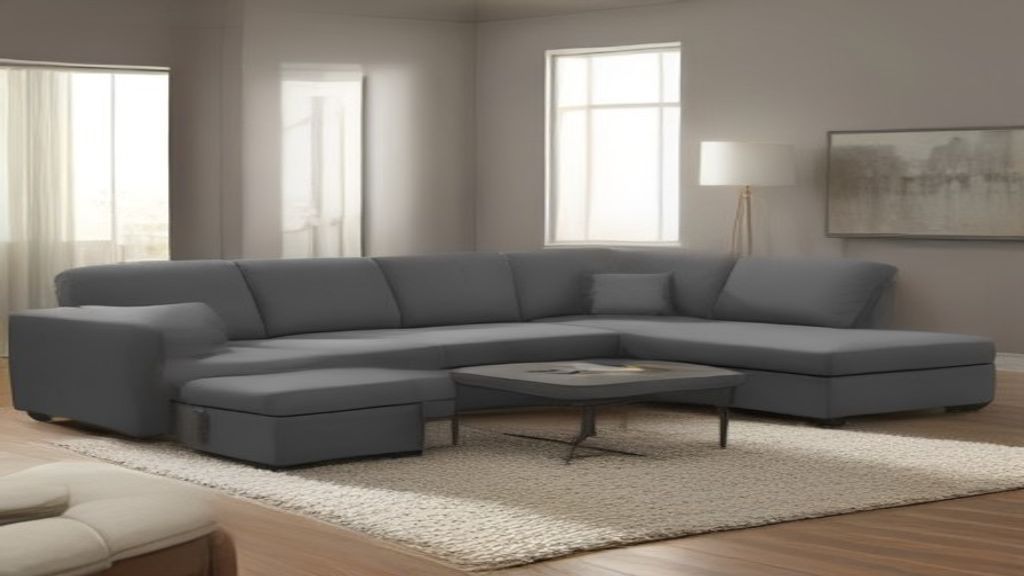
I bought an L couch with ottoman for $600 once. Looked great in the showroom. Twelve months later the foam was flat, the ottoman creaked, and I could feel the frame through the cushions. I replaced it with a $1,400 model and it's still solid after three years. The gap between cheap and mid-priced isn't just markup. Here's what you're actually paying for.
Under $800: The Bargain Trap
At this price, you're getting a sofa made from particleboard, a thin foam core, and fabric that might pill in six months. The ottoman is often the weak point—you'll sit on it as a bench or footrest and it'll start sagging by month nine.
If you're renting or moving in five years, fine. But know what you're committing to: a couch that won't survive a dog with claws, a toddler with juice, or your friends who think it's a trampoline.
I'm not saying skip it. I'm saying budget for replacement.
$800 to $1,800: The Sweet Spot
This is where you get a real frame—usually kiln-dried hardwood or hardwood plywood. Cushions are high-resilience foam or a foam-fiber blend that actually bounces back. The ottoman matches structurally. I've sat on my current one for three years, still firm.
Fabric options are better too. You can pick a performance polyester or a weave that hides pet hair. Pet-proofing is worth the extra hundred bucks.
One thing to check: the ottoman's weight capacity. Some are just hollow boxes with a lid. If you plan to actually sit on it (not just prop your feet), look for a solid base and maybe a leg that doesn't wobble.
$1,800 and Up: You Pay for Custom Fit and Longevity
Above $1,800, you're paying for name brands, custom fabrics, or extra-deep seats. You might get a full eight-way hand-tied spring system, premium down blend, and a frame that's warrantied for 10+ years.
If you have a weird layout or want a specific upholstery (like a stain-resistant crypton), this is where you go. But honestly? The jump from $1,400 to $2,500 is mostly aesthetic. It won't change your life.
I'd rather spend money on a quality frame at $1,400 and save the rest for a good mattress.
What to Check Before You Buy
Measure twice. The L-shape needs clearance for the longer leg. I once returned a couch because the corner hit my radiator. Also, check the ottoman's height—should be the same as the seat, not lower.
Sit on it for 10 minutes in the store. Watch how the cushion recovers after you stand up. If it stays dented, walk away.
And read the fabric warranty. Some companies cover pilling, others don't. One stain on the back of the ottoman and you'll be glad you picked something removable.
My Last Couch Purchase
I went with a mid-tier fabric from a local store. $1,300, L-shaped with a matching ottoman. It's been three years, two moves, and a cat that thinks it's a scratching post. Still solid. The ottoman is a separate piece, so I can pull it to my reading chair when the couch is full.
If you're set on a L couch with ottoman, aim for that $1,000–$1,500 range. You'll get something that lasts without selling a kidney.
Before you click buy, measure your room and stairway. Measure the door width, the hallway, the elevator. My buddy had to return a sectional because it wouldn't make the turn in his apartment. Don't be that guy.
Next step: grab a tape measure and write down the exact dimensions you're working with. That's step one in every couch decision.
For more, check my notes on Couches for Sale: What You Actually Need to Measure Before You Click and Cheap Living Room Sets Under $300: The Mistake That Cost Me a Couch.