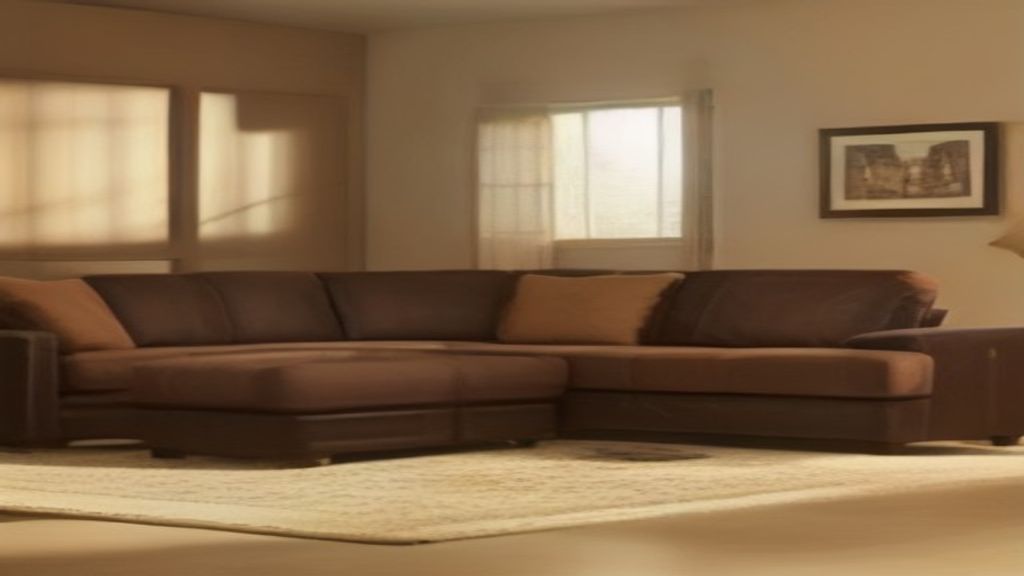
I bought a brown sectional couch and I hated it within two weeks. Not because brown is ugly — it's actually the most forgiving color I've owned. The problem was the measurements. I measured the room, but not the hallway. The couch got stuck at the turn. Delivery guys had to angle it and scrape the wall. We got it in, but the armrest has a permanent scuff that I'm the only one who sees.
That's the mistake most people make with a brown sectional: they measure the living room and forget the path. But even if it fits, there's the fabric. I picked a cheap microfiber because it felt soft. It pilled by week four. The color hid the stains but not the fuzz. I'm writing this so you don't do what I did.
Measure Everything, Then Measure Again
Your living room width isn't the only number. Write down the height of your front door, the width of your hallway, and the stairwell if you're not on ground floor. Sectionals come in boxes or as one piece. Some need to be assembled. I measured the room at 12 feet by 10 feet. The sectional was 98 inches. Fits fine. But the hallway was 30 inches wide. The couch was 38 inches deep. No way without rotating it sideways — and even then, the chaise end didn't clear the corner.
Add 2 inches of play on each side. If you have a turn, measure the diagonal. That's what I skipped.
Chaise Side: Right or Left?
Nobody tells you this: the chaise side is not about preference. It's about where the TV is and where the traffic flows. I bought a right-side chaise because the store model looked nice. Then I got it home and realized the chaise blocked the path to the balcony. I had to climb over it. For six months.
Fix: sit on your current couch (or a folding chair) and imagine where your feet would go. If it's the side that faces the doorway, you'll hate it. Measure the distance from the wall to where the chaise ends. Make sure you have at least 24 inches of walking space.
Fabric: Brown Hides Stains, Not Wear
Dark brown hides coffee spills. That's why I picked it. But it doesn't hide pilling, snags, or the weird shine that cheap microfiber gets. I stayed under $800. That was the mistake.
If you have kids or pets, look for a woven fabric with a high abrasion rating. The tag says 'double rubs.' Aim for 30,000 or more. My microfiber had 15,000. It looked fine for two months, then the arms started to look fuzzy.
Also, check if the covers are removable. Even if you never wash them, knowing you can is worth the extra cost. My brown sectional doesn't have removable covers. I can't clean the back panel where the cat sleeps.
What I'd Do Instead
If I were buying a brown sectional again, I'd pick a modular one — that way you can move the pieces through the hallway even if the whole thing doesn't fit. And I'd pick a fabric with a tighter weave, maybe a twill or a performance polyester. They feel slightly stiffer but last longer.
I'd also not buy sight unseen. I spent two weekends in stores, but then I rushed online for the discount. Don't do that. Sit on it. Lie down. Check the seat depth. If you're 6 feet tall, a 22-inch-deep seat won't support your thighs.
And bring a tape measure. Not the store's, yours. Jot down the width of the aisle at the store, then compare to your home. I measured the store's door frame — it was 36 inches. Mine was 30. That's the only way I'd have caught it.
The Last Thing:
A brown sectional is a solid choice. Just don't make my mistake. Measure the path, decide the chaise with a plan, and pay for fabric that won't fuzz. My couch still works, but I notice the scuff every day. And the pilling reminds me I cut corners.
Next time, I'll know.