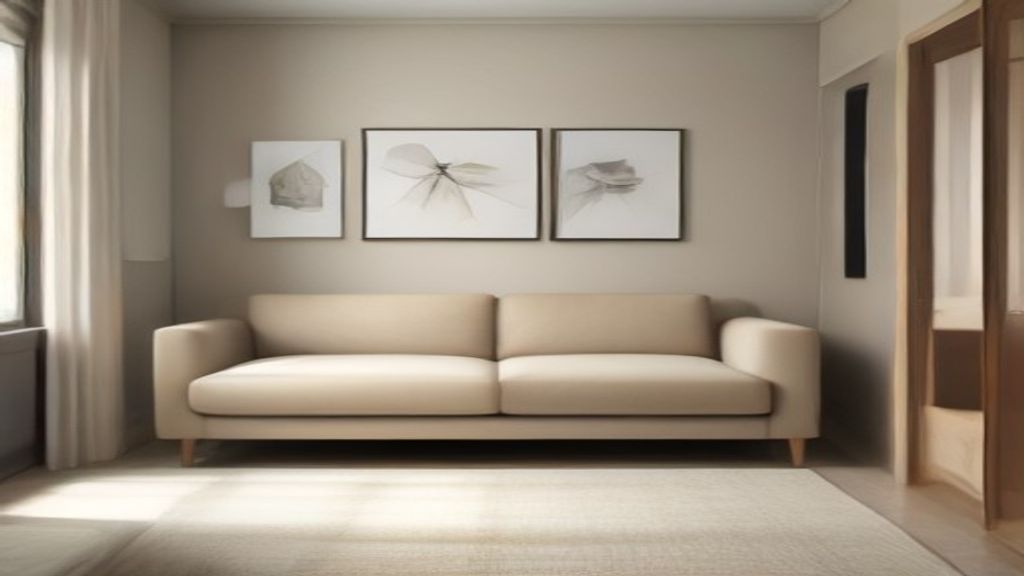
47 inches is the magic number. That’s the width of your average apartment doorway, or at least the one in the 1930s building I live in, where the door to the living room is exactly 46.5 inches. If the sofa’s seat height plus back height, or its overall length, doesn’t fit through that gap on its side, you’re not buying furniture — you’re planning a trigonometry problem at 9pm with a frat buddy and a ladder.
I’ve been through it. My first apartment sofa was a 72-inch loveseat that barely scraped up the stairwell. The second? A 90-inch beast that had to go back because it couldn’t pivot past the radiator. Listen, measurements aren’t boring. They’re the only thing that saves you from a 200-pound regret. Instead of endless showroom browsing or clicking through tabs of “modern” and “oversized”, start with a tape measure and the rule of 47.
Why 47 inch? No, really.
Most apartment doors are narrow — 28 to 32 inches is the norm. Sofa legs, arms, and backs add a few inches. So measure your actual door frame, the width of your hallway, and the landing at the top of the stairs. That 47-inch number? That’s the max overall width (depth when you flip it sideways) that fits through a 46-inch doorway with an inch to spare. If your sofa’s height exceeds 36 inches, it’s going to have to tilt, and that’s where walls get scratched.
Bring the building into it. Staircases are the real killer — a 5-foot sofa can turn into a 7-foot diagonal when you’re going up a half-turn. I’ve seen neighbors buy a gorgeous 85-inch sectional that then just stood in their lobby — no way up. So before you even talk fabric, measure the path from the curb to your living room: door heights, elevator car width, stair landings. That’s the absolute cheapest planning you’ll do.
For tight spaces, look at an armless design. Losing 4 inches per arm, the depth drops from 36 to 32, and that changes what fits in a pinch. Or a modular sectional sofas nearby with detachable backs — I’ve moved that way, and it halves the dimensions. You can bring in each module as a 25-inch cube. Sure, the seams line up less seamlessly, but who cares if it actually makes it to your floor? It also means you can swap the chaise to the other side when your roommate says daylight matters.
You Don’t Need a Big Couch If the Door Says No
An oversized L-shape is a whole mood, but your hallway might disagree. I’ve been a buyer who wanted the wrap-around thing without factoring the simple math. Don’t. Instead, consider a pair of two-seaters or a mini sofa set that you arrange in an L when you need it (and go back to separate pieces when you binge-watch alone). Freestanding chairs give you extra seats without a single day of delivery panic.
If you’re not hung up on the L, look at regular sofas under 80 inches width — those squeeze into most standard apartments. Also, follow this: check the delivery process. Retailers rarely crank the sofa into your door; they leave it in the corridor, and you're on your own. Two-man job, with the lazy susan turning instructions written in Photoshop. Better to know your 70-inch goes around a 36-inch corner — measure your doorway clearances first, then the sofa, and you’re set.
The Only Thing That Matters After the Tape Measure: Seat Depth
Once you’re past clearance, the seat depth decides whether it’s for you. You might be someone who’s happy to sit upright, or you spoon-fold with your knees up while gaming for six hours solid. From the front edge to the back cushion, that’s the make-or-break. My own 76-inch loveseat has a 21-inch seat, but if I want to nap on it, I scoot a stacking foot rest. So try everything in the store the way you’d really sit: sprawl, huddle, napping-suite posture. Watch your arms, too — cushions losing foam after 18 months is a common complaint. And definitely think about the cushions at a 160-degree recline.
Last Word: Measure Twice, Then Try to Turn It
The thing that will truly decide your purchase is whether that sofa clears the specific doorway, stair landing, or elevator. Size charts say order in 70-inch width, deliver in 5 days, a crew drops it at your apartment door — no. Unless you personally verified the path, you’re gambling a restocking fee plus a bad back. You can always swap a trendy frame for one with straight edges, but nothing will make a stubborn corner flexible.
Basically, learn my lesson: just get a sofa with an inch to spare on all sides. Take the recommended 47-inch height and that number means something — if the inner dimensions don’t match the door, walk away (or consider a two-piece band that isn't a monolithic block). Build your morning coffee routine around the dimensions, not the sell. Better to feel the seat of a budget-friendly contemporary sofa prices than to stare at an empty corner with a right-angle tape and a bottle of wine. The last answer is the measurement — every time.