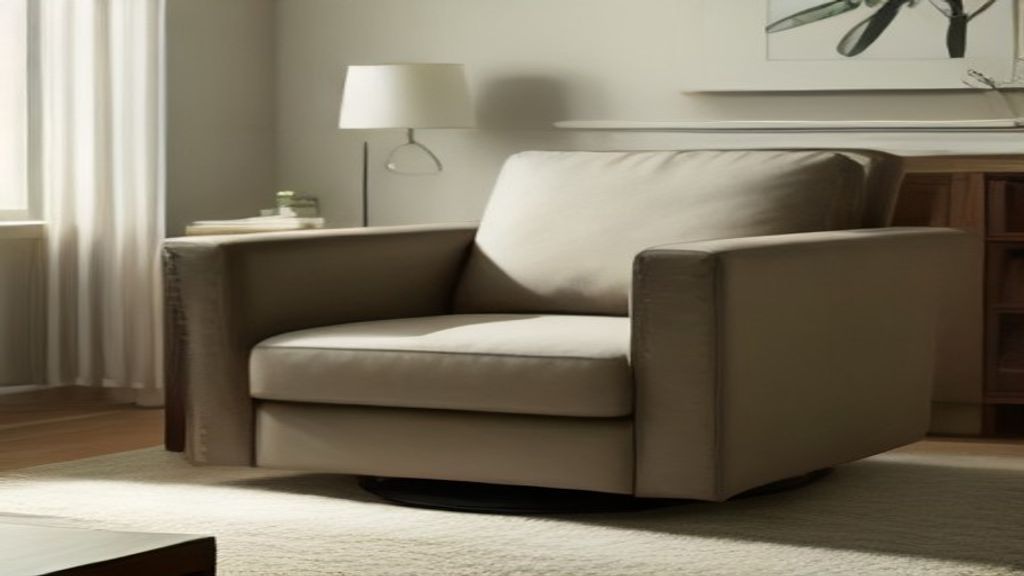
The box landed on my porch with a thunk. Inside, the base weighed about 18 pounds—solid steel, not that hollow crap. The fabric smelled like new carpet for a day. I dragged it into the living room and spun it. The floor let out a low groan; I'd scratched the wood slightly. Note to self: felt pads go on before you spin, not after.
I spent the next week living with it—reading, watching TV, ignoring email. The swivel itself? Smooth. But that's not what made or broke the setup. The real question: how much clearance did you leave around the chair?
The Spin Radius Is a Trap
My chair's base footprint is 24 inches wide, but when it swivels, the arms swing a full 28-inch circle. I didn't measure that before. Put it too close to a coffee table, and you'll knock your mug over every time you turn. I learned that the hard way—coffee on the rug, curse words in the air.
If you're adding a swivel chair to your living room, measure the radius from the center of the base to the highest protrusion (usually an arm). Multiply by two. That's your clearance. Add six inches if you want to actually get in and out without scraping your hip.
The One Decision: Swivel Base or Entire-Chair Swivel?
Turns out, not all swivels are the same. Some chairs have a swivel base that spins the whole chair. Others have a seat that swivels independent of the back—like a task chair at an office. For a living room, you want the whole-chair spin. That's what lets you pivot from the TV to a conversation without twisting your spine. My chair does that, and it's the best part.
The seat-only swivel? I tested one at a friend's house. It's awkward. You end up facing sideways while your back stays put. You'll feel like a robot mid-torso twist. Skip it.
Weight and Delivery: Don't Underestimate
Twenty-two pounds of base and shell. Not a one-person job if your door is narrow. I had to dismantle the chair to get it inside—four bolts, a minute with a wrench. If stairs are involved, budget time to haul it up piece by piece. Also, the fabric picks up pet hair like a magnet. Microfiber, though, wiped clean easily. My chair survived a week of daily use without stains.
The Week-Long Test
Day one: spun it around, felt cool. Day three: found the sweet spot for watching TV without neck strain. Day five: realized the chair's back is 28 inches high—fine for me, but if you're taller than 6'2", the headrest will be a decoration. Day seven: I'm keeping it. But I'm buying felt pads.
Who Should Skip This
If your living room is a 10x10 box with a sofa, a coffee table, and a plant, don't bother. A swivel chair needs breathing room. You'll spend the week swinging into the sofa arm or cursing the plant. Also, if you have kids, the barber-chair spin will be an invitation to chaos. You've been warned.
For the rest of you—measure the radius, clear the space, and pick a whole-chair swivel. That's the one decision that matters. The rest is just furniture.
Want more? I wrote up my mistake with swivel dining chairs and table width—different room, same clearance lesson. Or check out other living room guides if you're still deciding on the chair itself.