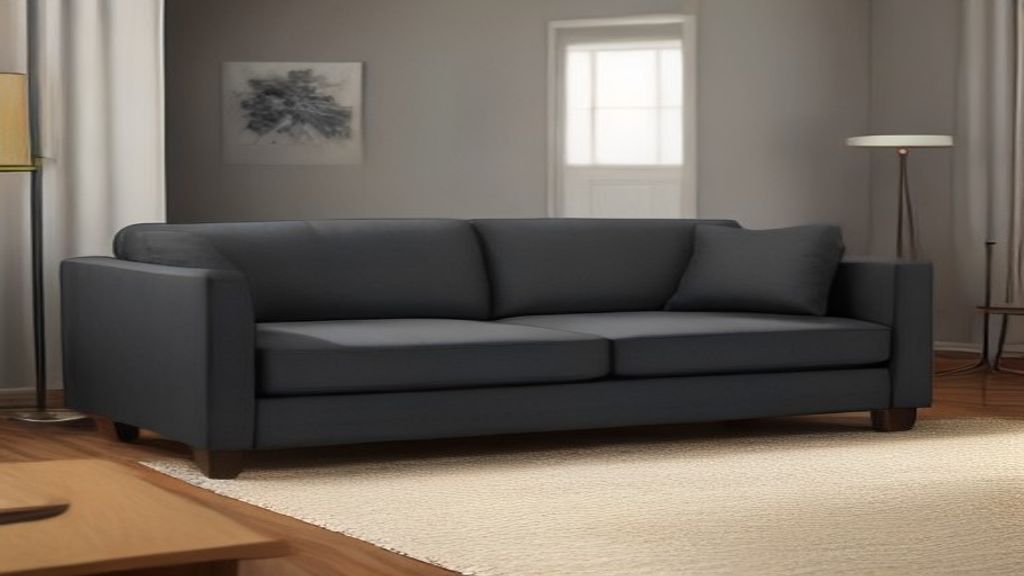
Three months ago I ordered a cheap living room set under $300. The pictures looked fine—a compact sofa, a loveseat, maybe a chair if the deal was right. The price was too good to ignore. It arrived in four flat boxes, each one heavier than I expected. Assembly took a weekend and a 6mm Allen key that stripped before dinner on Sunday.
The mistake? I measured the room with a tape measure and a dream. I didn't measure the doorway. The box was 72 inches long; my door was 30 inches wide. The couch never made it past the hallway. I ended up unboxing the whole thing in the driveway, reassembling it in the garage, and selling it on Facebook for less than half what I paid. The $300 set cost me about $170 in depreciation and a week of my life.
I've since helped two friends buy cheap living room sets. They've had better luck. Not because they spent more, but because they asked one question before clicking "add to cart": Will this actually fit through the door?
Here's what I learned.
Measure the actual path, not just the room
Most listings give you the overall dimensions—say, 68"W x 32"D x 33"H. That's the assembled size. The box is different. And the box is what has to get through your front door, down the hallway, around the corner, and into the living room.
Check the shipping dimensions if the listing shows them. If they don't, assume the box is the same length as the sofa, plus a few inches of foam and cardboard. A 68-inch sofa likely ships as a 72-inch box. My doorway was 30 inches. A 72-inch box needs to be turned at an angle, and if your hallway is narrow, that's not going to happen.
If you're not sure, mock it up. Push two chairs back-to-back in the hallway, measure the gap, and imagine a 6-foot-tall slab trying to get through. That was my lesson.
Fabric is not the same at $300
At this price point, you're looking at polyester, microfiber, or some blend that sounds fancy but is essentially the same. I checked the labels: "100% polyester with a soft-touch finish." That's it. After three weeks of normal use—no pets, no kids spilling juice—the seat cushions pilled. The arms looked like a well-worn sweatshirt.
A friend bought a fabric that's called "linen-look" but it's just textured polyester. It holds up better than the flat weave. The texture hides the wear. If you can't tell the weave from the photos, look for close-ups. A flat, smooth surface will show every rub. A texture with some weave to it will hide more.
Also check the seat cushion filling. At $200–$300, it's usually foam, and foam tends to be firm or thin. I sat on one that felt like a park bench. Another was soft but sagged by week two. There's no way to know without sitting, but you can read reviews for the phrase "seat cushion collapsed" or "sinks in the middle." If you see that more than a couple times, move on.
Delivery is part of the price
Many cheap sets are sold by third-party sellers, not the big names. That means shipping can take two weeks or more, and the carrier is usually the no-touch variety. They drop the boxes at the curb. You carry them inside. If you live on the third floor with no elevator, that's a real cost.
One set I looked at had a $49 delivery fee on top of the $219 price. Another had "free shipping" but the estimated delivery was 11 days. The price wasn't really under $300—it was closer to $270 plus my time and the risk of more stripped Allen keys.
Check the seller's return policy. If the set arrives damaged, who pays for return shipping? Some listings say "return within 30 days" but you're on the hook for the restock fee and the freight cost, which can be more than the set itself. That wasn't in the fine print on my first buy.
What to spend the extra $50 on
If you're shopping at the top of your budget—say, $299—you might be able to find a set that includes a sofa, loveseat, and chair, but the cushions will be thin and the frame will be plastic. I'd rather have a two-piece set with a better frame and fabric.
A set with a metal or hardwood frame (you can sometimes see the frame in the listing photos if you zoom into the legs) will last longer than one with a particleboard frame. And a set with a tighter weave and a lower pile will wear better than something that looks like fleece.
One good trick: filter by "under $300" and look for sets that have separate items. You can often buy a sofa and a loveseat separately for about the same total, and you get more control over the pieces.
The decision that decides everything
After my mishap, I helped a friend buy a set for her condo. She measured the door, the hallway, and the elevator. She checked the box dimensions. She chose a textured polyester in charcoal and a two-piece set with a solid wood frame. It's been four months. The cushions are still firm, the fabric shows no wear, and it fit through the door on the first try.
The one factor that decides everything in a cheap living room set is not the price. It's the fabric and the frame. If you can't verify those, you're betting on the listing photos. And at $300, that bet doesn't usually pay off.
Before you click buy, ask yourself: Do I know what the fabric really feels like? Can I find a close-up of the weave? Will this actually make it through my door? If you can't answer all three, keep looking. The set that fits and lasts is cheaper in the long run than the one that doesn't.
If you're still deciding between a whole set and a single piece, remember: a cheap couch set that fits your space is better than a full set that lives in the garage. And if you're measuring your room for the first time, don't skip the hallway—that's where my set died. For more on making a small budget work, see Decorating a Living Room with $300: What I Actually Bought and What.
If you're comparing to other budget living room pieces, I wrote about sofa 3 2 layouts and metal outdoor dining sets that taught me a lot about what cheap really means.