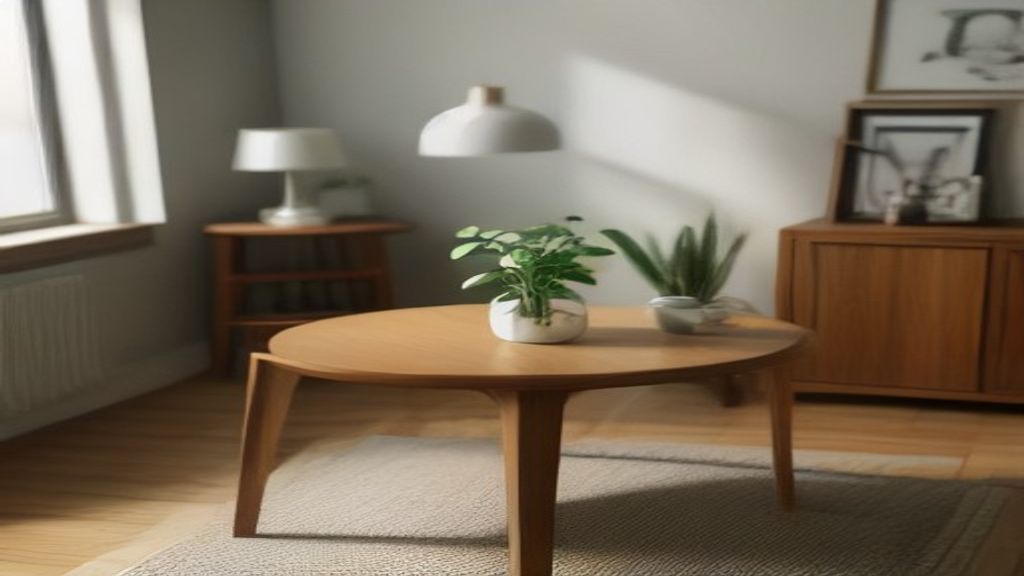
You can spend $80 on a corner table that looks fine in photos, or $300 on one that looks the same from across the room. I've done both. Here's what I learned, in case you're trying to fill that awkward 90-degree gap without wasting money.
First, the cheap one. I bought a laminate top on black metal legs, the kind you see a million of. It arrived in a box that weighed maybe 20 pounds. Assembly took ten minutes, no tools needed. But the first time I put a glass of water on it, the corner wobbled. Not terrible, but noticeable. After two months, the laminate started peeling at one edge — right where my elbow rested. I fixed it with superglue, but it never looked right. The legs scratched the floor despite those little plastic caps. I ended up moving it to a closet.
Then I spent $300 on a solid oak corner table. Same footprint, roughly — 16 inches by 16 inches. Heavier, obviously. The top is 1.5 inches thick. The legs are tapered, and they have felt pads underneath that actually stay on. It doesn't wobble, even on my uneven floors. After six months, the finish has a few dull spots from heat mugs, but no peeling, no cracking. I'm not saying it's heirloom quality, but it's solid.
What the price difference actually buys you: materials and construction. Cheap tables use MDF or particleboard with a printed wood grain. Expensive ones use real wood, even if it's just a veneer over plywood. Cheap tables wobble because the braces are thin and attached with little screws into soft particleboard. Expensive tables have more solid joints, sometimes metal brackets. That's it. Same basic function — hold a lamp, hold a plant, hold your coffee while you watch TV.
But here's the thing. For a corner table that's not going to get heavy daily use, you might not need $300. If it's just a decorative spot for a framed photo, $80 might be fine. Just check the thickness of the top and whether the legs are evenly spaced. If they're not, you'll get a wobble. The other thing to check: the height. Standard side tables are around 24 to 25 inches high. My first one was 22 inches — too low for the couch arm. That's a real problem, because it makes the table useless for reaching your drink without bending sideways. So measure your couch arm or the height of your chair before you order.
Size matters too. A 15-inch square might fit small spaces, but if it's too small, it's just dead space. My living room corner is about 20 inches deep, so a 16-inch square works. If you have a bigger corner, a triangular table might fit better, but those are harder to find and often pricier. I've seen round corner tables, but they stick out oddly unless the corner is very open.
If you're on a budget, look for tables with a solid wood top, not just veneer. You can sometimes find those at thrift stores or Facebook Marketplace for less than $50. Sand them down and re-oil, and they outlast anything from a big-box store. I did that for a friend and it took maybe two hours.
The other hidden cost: delivery. The $80 table shipped free, but it took two weeks and the box had a dent. The $300 one was free too, but it came white-glove — they brought it up to my third-floor apartment and took the packaging. That's a luxury, but if you live in a walk-up, it might be worth it.
So what do you actually do next? Measure that corner. Couch arm height, floor space, and the distance from the wall where you want the table. Then decide if the table is for function — holding drinks and remotes — or just for looks. If it's function, spend at least $150. If it's looks, maybe $80 is fine. But don't buy anything without checking the thickness of the top. You'll regret it when it wobbles.
If you're still unsure, here are some things I've learned from other furniture I've bought: I Bought a Round Metal Side Table Without Checking the Base—Here's and Hay Side Table: What I Learned in My Apartment (and What You Should. They had the same lesson: check the base. More guides in Living Room.