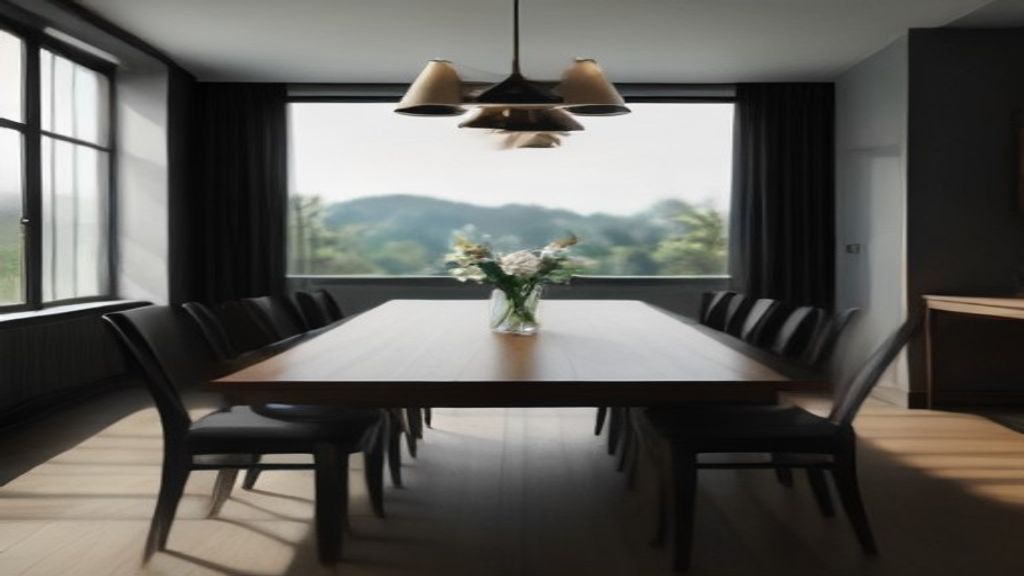
The first scratch showed up on day six. I'd set a ceramic bowl down—normal weight, nothing crazy—and when I slid it two inches to the left, the base left a gray-white streak across the black finish. My wife said I was being dramatic. Then she ran her fingernail along the edge and watched it leave a mark. That's when we started reading the fine print.
If you're looking at a black wood dining table, the listing will show you the top, the chairs, and a price. What it won't show is how the finish behaves after a week of actual dinners. I've now owned two black wood tables (one cheap, one mid-range) and sold one after three months. Here's what I wish someone had told me before I hit "buy."
The Room Constraint: Measure the Legs, Not the Top
The top looked perfect in the photo—70 inches, enough for six people. But the legs were a problem. They swept outward at the bottom, so the table needed 62 inches of clear floor space from leg tip to leg tip, not 70. My dining nook is 78 inches wide. After chairs were pushed in, I had about 6 inches of walking room. Tight.
If your room is small, measure the leg footprint, not the tabletop. Some black wood tables have a central pedestal base that frees up corner space; others have four legs that eat into it. The listing will give you the overall dimensions, not the leg spread. Email the seller and ask for the floor footprint. If they don't know, that's a signal.
I also checked the clearance under the table. Mine is 28 inches from floor to apron—enough for most chairs, but my friend's tall bar stools didn't fit. If you already own chairs, measure the seat height before you commit. I learned that the hard way when I bought a counter-height black table and had to buy all new chairs.
The Body Constraint: Comfort Isn't Just Seat Height
My last table had a 29-inch-high top, and I'm 5'10". It worked fine for us. But my father-in-law, who's 6'3", knocked his knees on the apron every time he sat down. The apron on my current table is 4 inches deep; the one on the cheap table was 6. That inch difference mattered.
If you're tall, look for a table with no apron or a thin one. If you're short, remember that thicker aprons can make the table feel like a wall. And don't trust the "seats 4-6" label. I measured the actual width per place setting. My table fits four comfortably at 21 inches each; six is a squeeze. The listing said six. It lied.
The Schedule Constraint: Delivery Pain Is Real
I ordered a black wood table in July. It arrived in October. The delivery team left it in the garage because they didn't have enough people to carry it up one flight of stairs. I had to rent a dolly and recruit a neighbor. That's on me for not checking the delivery terms, but it's also on the seller for not mentioning that the table weighs 120 pounds and has no handles.
If you live on the second floor or have a narrow doorway, measure the door frame, not just the room. A 72-inch table won't fit through a 30-inch door if it can't be disassembled. Check whether the legs come off. Some black wood tables ship in two boxes and require assembly. That gives you flexibility. Others are one piece, and you'll be stuck.
Assembly took me three hours. The instructions showed 12 steps, but the bolts were mislabeled, and the back panel didn't align. I got it done, but I'm not handy, and I broke a sweat. If you're not comfortable with an Allen wrench, budget for a handyman or pay extra for white-glove delivery.
What the Listing Hides: Finish Quality and Scratches
Black wood finishes vary wildly. The cheap table I bought had a matte lacquer that showed every fingerprint. The mid-range one has a satin polyurethane that's more forgiving. But both showed scratches on the base after normal use. The key is to check the finish type in the specs. If it says "lacquer" or "painted," expect it to wear. If it says "UV-cured" or "polyurethane," it'll last longer.
I also tested the scratch resistance with a coin. The cheap table left a groove. The better one just bounced. Do that test in the store, not at home after the return window closes.
The One Decision That Matters: Legs, Apron, Finish, and Delivery
You can't fix a bad leg layout with a good tablecloth. You can't fix a low clearance with shorter chairs. And you definitely can't fix a scratched finish with regret. So before you order, write down four numbers: the room width, the door width, the seat height, and the floor-to-apron clearance. Then ask the seller for the leg footprint and the finish type.
I know it sounds like a lot of measuring. But I could have saved myself three hours of assembly and one scratched surface if I'd done it before my first order. Instead, I spent a Saturday resealing the tabletop with a polyurethane kit from the hardware store. That fixed the finish, but it didn't fix the leg problem. That's why I sold that table and started over.
Who Should Skip This
If you're renting and plan to move within two years, don't buy a black wood table unless it's cheap and disposable. The moving cost alone—having to hire two movers because the table is too heavy—isn't worth it. Also, if you have kids under five, be ready for stickers, crayons, and the occasional juice spill. The black finish will show all of it. Get a lighter wood or a glass top instead. My friend Ali has a glass top dining table and she doesn't stress about fingerprints. If you want the look of black wood without the upkeep, consider a compact 4-seater in a scratch-resistant laminate. Or save your money and get an extendable table if you host a lot—just measure the leaf storage first. Otherwise, a black wood table can be great. It just needs to earn its place in your house, and that means you have to do the homework before it arrives.