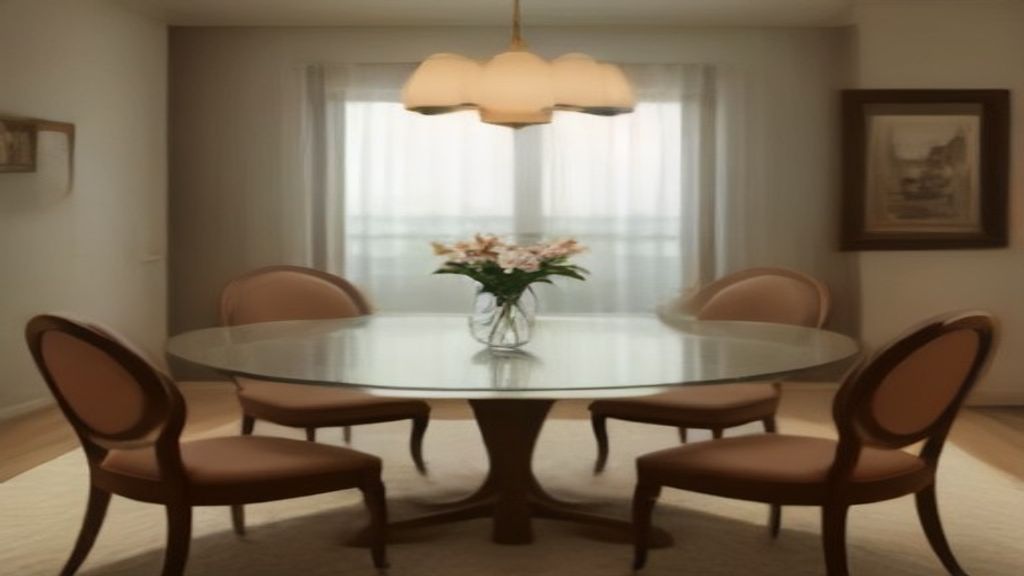
You don't need to measure every millimeter of a glass top. The base decides the purchase. That's the whole thesis. Most 4-chair round glass sets fall into three bases: metal, wood (or wood-look), and pedestal. Say it out loud, then walk away. Done.
A Metal Base Means You'll Be Tightening Screws Every Other Month
String your fingernail across the wire of a cheap metal base. See that wiggly X-shape? That's your future. After six weeks of dinners and homework, the screws will work themselves loose. A few sets ship with an allen wrench, so you're fine the first time. Then the kids knock a leg, and you're re-tightening on a Tuesday night while the dinner's gone cold.
Not saying skip metal entirely. Just get one that uses thicker gauge steel, not 1mm bars. We're talking maybe 40 lbs, not 25 lbs. Feels solid when you lean on it, doesn't skate across the floor by itself.
Wood or Wood-Look: Read the Wood Type and How the Legs Attach
This was our second round table. More forgiving. Rubberwood is fine — better than MDF for the aprons. Ghost wood and acacia look great, but see how the legs bolt to the skirt. Recessed big hex screws are better than those T-nuts that strip out after moving the table once.
Ours has a 32-inch round glass and four 18-inch-wide chairs. Measure the leg spread. The span needs to be wider than the glass lip so nobody knocks a knee. A 16-inch gap makes an adult who sits forward slam their knee into the apron. Yup, done that.
Pedestal Base: Opens Up, But Watch the Center Pole and the Weight
The pedestal with a round glass looks airy, but the center pole can trip the toddler. As an adult, you never hit it. Kids, cats, the under-table games — they find it. If that pole is less than 2 inches diameter and made of hollow metal, the whole table tips forward when your son puts his foot on it. We had to anchor the base with sandbags for six months.
Also, pedestal tables that rely on that single angled foot need a wider footprint. Something that's 24 inches across the base isn't fake-proof. Check that the base extends past the top's radius. A 36-inch round glass should rest on a base that's at least 26 inches. No wobble.
Measure, Then Re-Measure the Chair Slide
Before you order, pace your room. You need 30 to 36 inches behind each chair to pull out and sit. Table's 30 inches tall, chairs add 12 inches of clearance. If your kitchen island's at 42 inches, a 36-inch round glass set will pinch the aisle. I know the pics show them in huge rooms. Yours isn't that.
We returned one set because the chairs tucked into the glass top when you pulled them out. The chair back hit the table rim. That's a geometry issue that photos don't tell you.
The One Factor That Decides the Whole Buy
The base type isn't just style — it predicts maintenance and safety for every meal you'll eat off that table. A wobbly base turns a $300 set into a drawer of hex keys and teetering milk glasses. Round glass tops will reveal every imperfection in the base design. Get the base right, the wood or the steel, and you're buying one table that lasts. Get it wrong, and you're schlepping it to the curb within a year, like I did with that first metal set.
More on chairs and first-week setup from my notebook:
- Pottery Barn Dining Chairs: First-Week Setup and the One Decision
- Oak and Glass Dining Table First-Week Setup: The One Decision That
- We Bought a Contemporary Outdoor Dining Set and Missed the Obvious