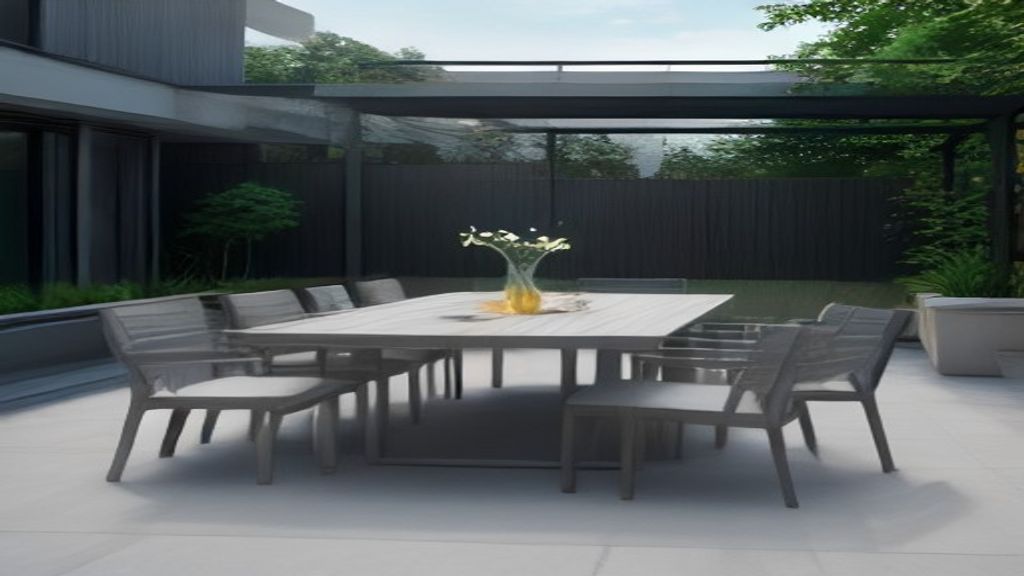
Last summer I ordered a contemporary outdoor dining set—sleek aluminum frame, dark grey slats, the kind that looks like it belongs on a rooftop in Brooklyn. It arrived, we bolted it together, and for about three weeks it was perfect. Then a thunderstorm rolled through, and I noticed the cushions were soaked through—not just wet, but heavy. The following week a slat started to wobble. My mistake? I bought on looks and forgot the part that actually matters: the material, the fit, and the weather, in that order.
The truth is a contemporary outdoor dining set is about the frame, not the chair. Go check what your frame is made of—powder-coated aluminum is fine but check the coating, because some are thinner and chip easily. If you see bolts that screw into plastic insert sleeves, run. Ours had those and the first one snapped when I tightened the armrest. You don't need to be a materials engineer, just read the spec sheet and look for terms like marine-grade or 6061 aluminum. Also, look at the joints. If they're welded and ground smooth, good. If you see sharp corners or exposed seams, that's where rust and failure start. You want something that feels like one solid lump, not a sandwich of separate plates.
And the cushions. I didn't think about the fabric beyond the color. The set came with polyester cushions that fade and don't repel rain. Look for solution-dyed acrylic—Sunbrella or Outdura, maybe. That's not just branding; it means the color is in the fiber, not the coating. And check if they drain. Flip the cushion over. Does the underside have a mesh or holes? Are the seams taped or just stitched? Our cushions held water like a sponge, and after a week of sitting wet they started to smell. If you want to skip that hassle, order some aftermarket cushions that actually drain—the ones that come with sets are usually the first bit to go wrong. This one is the thing I wish I'd known before dropping $800 on a matching set.
Size is another thing that photographs lie about. The set looked generous in the catalogue, but the seat depth was shallow and the backrest reclined a bit too far. If you're over five foot ten, your shoulders will be above the back. Seriously, measure the seat height and the armrest height at the store's showroom—or order a sample if you can. Look for sets with proportions similar to indoor dining: seat height of 18 to 19 inches and a distance from the seat to the table top of around 12 inches. And always check that the chairs fit under the table on an uneven patio—we learned that one the hard way when the feet didn't sit flat on the pavers, which caused one chair to rock. Oh, and the delivery. They'll drop the boxes on the curb. That's fine, but keep the boxes and crates for at least a month. Ours came with a cracked slat we didn't notice until week three, and the return would have been a nightmare without the original packaging.
If you're already in the market, skip the aesthetic-first approach and think about how the set will actually live through a rainy season. And if you got tricked by armrest clearance like I did once, read this: Martha Stewart 7 Piece Outdoor Dining Set: The Armrest Clearance That. For what the first week of setup tells you about a product, see Outdoor Wood Dining Table: The First-Week Setup That Tells You. And if you're torn between budget tiers, Dining Table Set for 2: What $150 vs $500 Actually Buys will save you some cash.
Last thing: check the warranty and the return policy, but do it before ordering, not after. Ours has a one year warranty that doesn't cover rust on the metal accessories—which is exactly what's starting to happen now. Don't assume a 'contemporary' price tag means 'goes anywhere'. It means it sits outside in the same wind and rain as everything else.