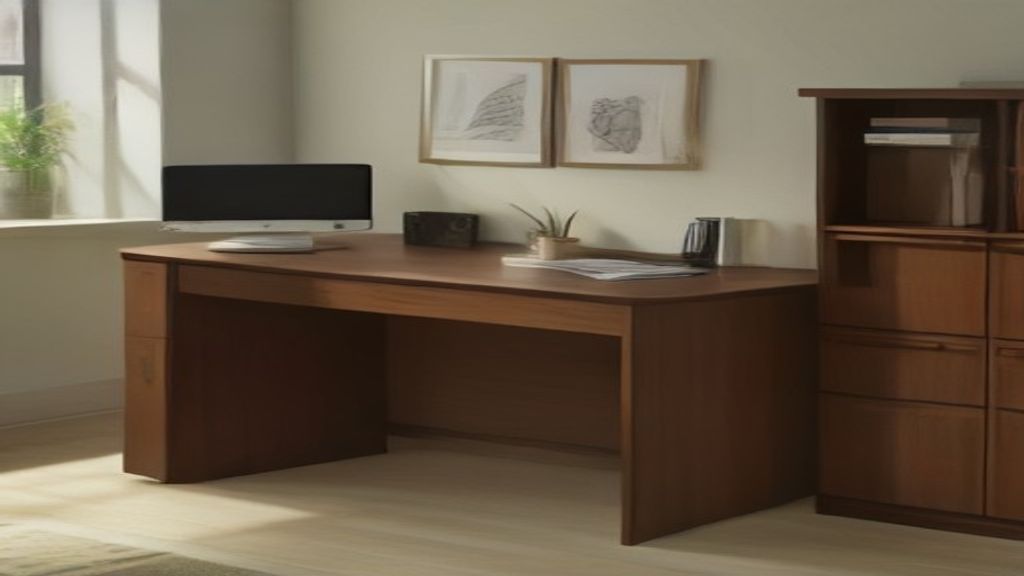
72 inches. That’s the magic number I found when I measured a two-person desk for our home office. Anything shorter and you’re both bumping elbows. But length isn’t the only measurement that matters. After bringing three desks home and returning one, here are the five dimensions I’d check before you click.
1. Shared length: 30 inches per person, minimum
I’ve worked on a shared desk before. My husband and I started with a 55-inch desk thinking it was enough—we were both on 13-inch laptops. Within a week I was hunched over my side, hitting his mouse with my elbow. We returned it and measured properly: each person needs at least 30 inches. That gives you room for the laptop, a mug, and an occasional notebook. Two people on 72 inches means 36 inches each. Buy shorter than that, and one of you will be typing sideways.
2. Drawer depth: 15 inches to hold more than clutter
Drawers on shared desks are usually the first thing I check. On many two-person desks, the drawer is just a shallow tray for pens. That’s not bad if you only have pens. But if you want a full document or a small file folder, the drawer needs to be at least 15 inches deep. I’ve seen desks from stores that claim a filing drawer but it’s really 11 inches — you fold every paper in half, and that gets old. My current desk has 16-inch drawers, a happy accident from a utility brand. If the drawers are shared between both sides, you’ll need even more depth to keep your own stuff separated.
3. Knee clearance: 24 inches across and 28 inches high
You can’t measure this from photos. The exact spec matters: the space under the desk, from left to right, should be at least 24 inches wide. That’s the width of two office chairs plus a little range. I found my chair side hit the frame, so I had to shimmy with a foot pedal unfolded. Also, check the clearance height from the floor to the underside of the top. I measured 26 inches on one desk and my legs barely fit without the desk bar pressing on my thighs. Look for a clearance spec between 28 and 30 inches. If they don’t list it, subtract the drawer depth and footer height from the total height—and then assume they’re being generous.
4. Weight limits: 150 lbs per side, and forget it if it’s “particle board”
Some two-person desks claim a total weight capacity of 200 lbs. Do the math if you’re putting dual monitors plus tower — that’s 30 lbs alone per person. I picked one desk with a single support in the middle; after three months of normal typing, the top sagged in the middle—not enough to notice until you roll a pencil and it rolls off. Ask the material spec. If it says “particle board” and the weight capacity is under 150 lbs per side, it’ll sag under any real use. I’ve also seen desks with a center drawer that limits total load—check whether the drawer’s metal rails are attached to the top or the sides. My wise friend bought a desk with metal side supports rated for 200 lbs each and it’s lasted five years with no issues.
5. Delivery: get the box dimensions and measure your doorways
This is what killed my first attempt. The box for most two-person desks is long—over 72 inches. My hallway is 30 inches wide, and I live in a condo with a tight turn at the top of the stairs. I had to pay a return fee, then buy a desk that came in two smaller boxes. Even then, check the elevator door height. My local store would only deliver to the curb, but the desk was too heavy for one person to haul—I dealt with back pain for a week. It’s worth measuring the path from the sidewalk to where you’ll set it up, including door frames and turns. Some companies offer inside delivery for a fee—that fee saved my back. My current desk came in two boxes, each around 50 lbs, and I managed to drag them up my stairs alone.
I know a person who’s read this far, probably because you already have two people in mind. On the one factor that actually decides the buy more than any other: It’s the drawer depth and the clearance under the desk. You can add a monitor stand or swap a chair, but you can’t change where your knees hit. That’s the one to take seriously.
If you’re still mulling options, a smaller build might fit—but measure for a proper built-in corner desk if you have a nook. For a more affordable route on a budget, check what a white gloss desk with drawers at different price points actually buys you—a tidy way to compare without the gloss. And if you’re looking at a portable floating setup to save floor space, the IKEA floating desk setup story covers what you’ll give up in return. More guides on desks here.