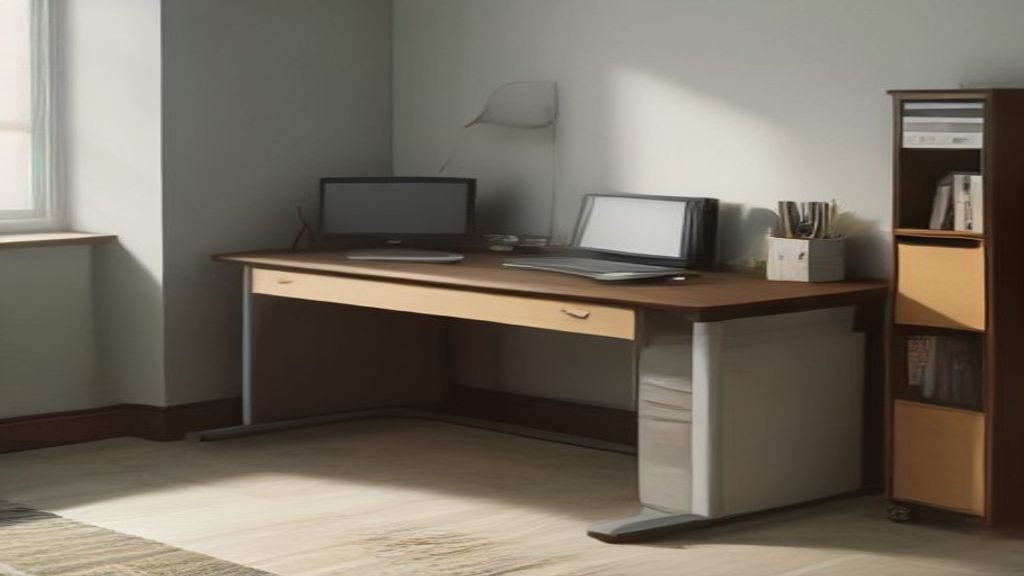
I bought three standing desks before I found one that didn't feel like a seesaw. Two are gathering dust in the hall. The one that worked? It just fit. Not the fanciest, not the most expensive—the one that matched my room and my body.
Here's what I learned. Measure the room first. Then measure your own arms.
The Desk Height Trap
Standing desk specs say "25.5–50.5 inches." Sounds plenty. But the real range you'll use is between elbow height standing and elbow height sitting. My elbows at standing position are 44 inches. Sitting? 28 inches. If your desk's minimum is 29, you're craning your shoulders every time you sit.
Check the lower end. If you're under 5'8", most desks bottom out too high. My wife's a few inches shorter than me—had to hack a footrest and pad the desk top just to make it work.
Desktop Space That's Actually Usable
Width is the other trap. A 48-inch desk sounds big until you put a monitor arm, a laptop, and a coffee mug on it. I went with a 55-inch surface and it still feels tight when I'm stacked with paper.
Depth matters more than you'd think. I'm broad-shouldered, and an 18-inch deep top leaves my forearms hovering off the edge. Need at least 24 inches from front to back so my arms rest flat while typing.
Wobble Is a Dealbreaker
Cheaper desks wobble at standing height. My first electric desk shook every time I typed above 70 words a minute. Drove me crazy at 10pm. Look for a steel frame with crossbars. Test the stability by pushing a table lamp at standing height—if it shimmies, pass.
Dual-motor saved me. Single-motor struggled to lift when I had three monitors on it. Grinding noise every rise.
Cables: The Messy Real Deal
You'll have cables for the monitors, surge protector, maybe a router. A cheap tray underneath helps, but check if it's wide enough for a brick-sized power strip. About 16 inches deep is right.
Cable routing through the leg channels is worth a few extra dollars. Otherwise, you zip-tie blind.
Budget Ranges: Where Shit Breaks
Under $300? Most wobble out of the box. $300–$600? Eventually, the one I kept. Spend more and you're paying for thinner laminate and promises—not always better. My $450 desk has lasted two years now.
Actually, the manual crank option is underrated. My sister has one—no motor, no noise, just boring efficiency. And it had a lower minimum height.
The Base-Only Route
You already have a desk top? Buy a base only. I did after my second purchase failed to show up with a cracked side panel. Got an electric base for around $350 and threw my slab on top. Upgrade headaches solved.
Just check the base's top width fits your existing board—drill holes if brave.
Yeah. That's the non-obvious part. This whole standing desk thing is more about your arm length than office trends.
More guides about your setup: More guides in Desks. Read about side storage that kept my small office livable: Floating Bedside Shelf: The 12-Inch Depth That Fixed My Cluttered. If your TV stand adds noise too, you might want TV Stand from The Good Guys: I Measured Six So You Don't Have To.
Whatever fits, measure twice. Because returning a desk is a pile of garbage nobody wants to deal with.