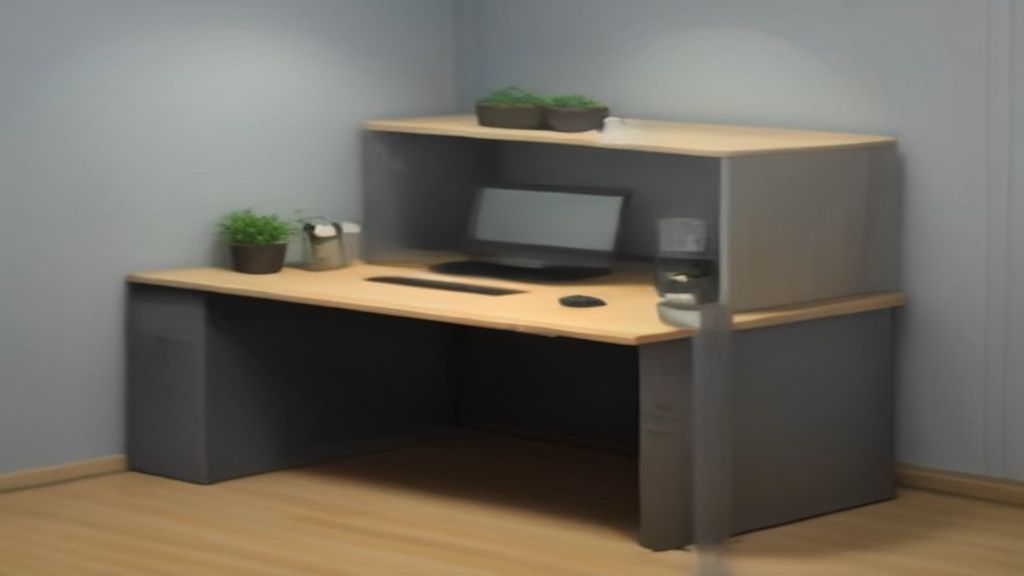
My apartment office is a corner of the living room. 5 feet by 5 feet if I'm generous. I wanted an L-shaped standing desk, but everything I saw online was either 60 inches wide or 72. No way either would fit without killing the walkway. So I measured everything twice and made it work with a 48-inch L-shape. Here's what I learned.
The floor constraint
First, I taped out the footprint on the floor. My L-shape has two legs: the main desk is 48 inches wide, the return is 36 inches. Combined they form an L that's about 5 feet on each side. That left a 20-inch gap between the desk and the door – tight but ok. If you have a bare minimum corner, measure the actual desk dimensions (the spec sheet might say 72×60 but that's the full footprint). Don't trust the photo. My 48×36 L-shape turned out to be the smallest usable size.
Delivery and box size
The box was 70 inches long and weighed 90 pounds. The delivery guy left it in the hallway. I had to wrestle it into the apartment on my own – if you live alone, get a friend to help. Assembly took 45 minutes with the included Allen wrench. Two people make it easier, but one person can do it if you're patient.
Why an L-shape at all?
I liked the idea of a second surface for a printer and coffee mug. The standing portion is on the main desk. When I stand, I set the return to sitting height so it's a side table. That way I don't have to move anything when I stand. It's a good system.
But here's the thing: the L-shape isn't for everyone. My friend has a 9-foot-wide living room and his L-shape swallows the whole wall. He'd have been better off with a straight desk. If your room is under 8 feet wide, consider a straight standing desk instead – you can still come close to the standing benefits. I only went L because I needed the extra surface. If you're tight on space, measure first. I almost didn't and it would've been a mistake. I wrote about Stand Up Desks for Home: Measure Your Room Before You Shop with more specifics.
Weight capacity and layout
My desk holds a 27-inch monitor, a laptop, and a keyboard. The standing motor lifts 150 pounds easily. I have a second monitor I sometimes add – still fine. If I were putting two 32-inch monitors and a desktop tower, I'd want a double-motor frame. Mine is single-motor at 150 lb, and it struggles if I lean on it. Keep that in mind.
I arranged the main desk to face the window, and the return on the left. That puts my keyboard and mouse in front of me and the printer within arm's reach. You'll want to think about which leg is your main work surface. Some L-desks have a fixed return – mine is fixed on the right, but I needed left. So I had to flip the whole thing around. That's a spec detail to check before you buy.
The height range
The range on mine is 26 to 50 inches. I'm 5'10". My sitting height is about 28 inches (I measured), and standing is 44. If you're 6'2" or under 5'4", check the spec. Some desks top out at 48 inches – too low for tall folks if you have thick shoes. Also, if the desk has a crossbar, it's at the bottom. With the desk at standing height, the crossbar is about 6 inches above the floor. My feet hit it if I stretch. That's annoying.
Night-time use and noise
I've used it past 10 pm a few times. The motor hums, but it's not loud. The digital display glows blue – you can't turn it off. In a dark room, that's a light source. Not a dealbreaker, but at 2 am it bugs me if I'm having sleep trouble.
Skip the L-shape if…
You have less than 6 feet of floor in either direction, you don't actually need the extra surface, or you're on the borderline height range. My friend's 9-foot wall was a waste of space. He ended up swapping to a straight desk and called it a win. So if you're not sure, measure your corner, then measure it again. I did, and I'm glad I did. If you can't fit an L, look at a narrow straight desk – I tested one of those too: Narrow Desk Table: The First Week Setup Mistake I Made (and Fixed). And for chairs, don't forget: Best Desk Chair for Back Pain: Fixed 26 Inches of Seat Depth, Not.