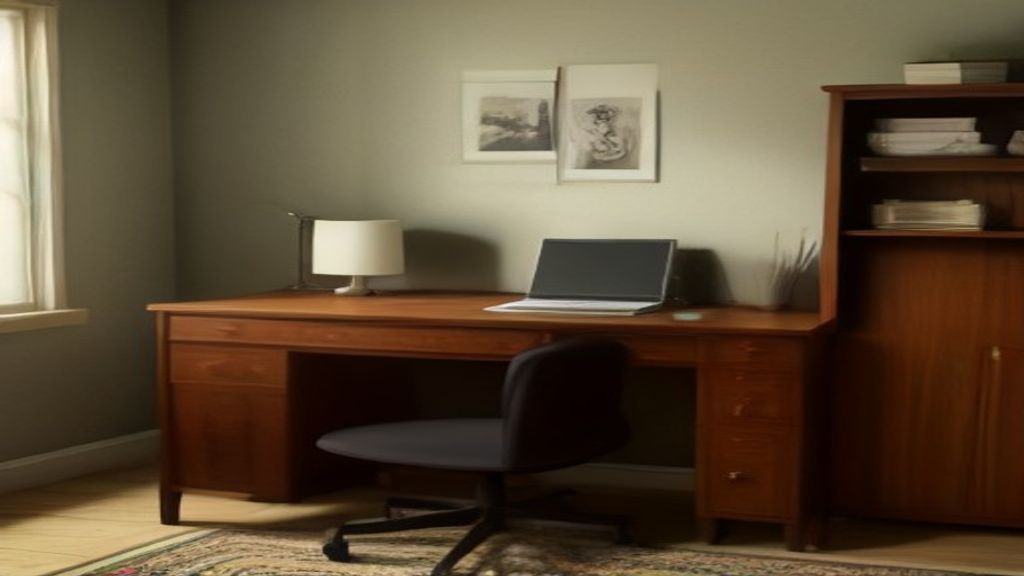
I spent three weeks staring at a 60 inch writing desk that didn't fit. Not because the desk was bad. Because I never measured the room. I measured the wall — that was fine. I didn't account for the door swing, the radiator, or the fact that my chair needed room to roll back. The desk itself? Solid. The room? A disaster. I had to return it and eat the delivery fee. Here's the thing: a 60 inch desk is bigger than you think. You can't just eyeball it.
The mistake I see everyone make
People walk into a store, see the 60-inch model, and think it'll work because their old desk was 55 inches. But the difference of five inches changes the whole layout. My old desk was 48 inches. I wanted more surface for a second monitor and some books. So 60 seemed ideal. But when I put it in, the clearance between the desk and the bookshelf dropped to 22 inches. My chair hit the shelf when I leaned back. I had to swap the room around, which I should've done before buying.
The other mistake: they forget to measure the depth. A 60 inch writing desk usually means 60 inches wide, but depth varies. Mine was 30 inches deep. That's a huge footprint. I checked the width, but the depth caught me off guard. My previous desk was 24 inches deep, so the room lost a foot of walking space. That's the thing nobody tells you.
How to measure before you buy a 60 inch desk
Get a tape measure and do this in your actual room, not in your head. Mark the floor with tape where the desk will go. Then walk around. Sit down. Simulate your chair moving back. I didn't do that, and I paid for it.
Concrete numbers: you need at least 48 inches between the desk and the wall if you have a desk chair that rolls. If you use a stationary chair, 36 inches might be okay. But if your room is narrow — under 10 feet wide — a 60-inch desk might leave too little walking space. I measured my space: 8 feet wide, 11 feet long. The desk took up almost the entire width. Bad idea.
Another thing: the weight. A 60 inch desk is heavy. I bought one I had to assemble alone, and it was a pain. The top alone weighed 50 lbs. I had to drag it upstairs. If you live on a third floor with narrow stairs, think again. That's not a joke. Some 60-inch desks come in two boxes. Check the delivery option before clicking buy.
What to look for in a 60-inch desk
Not all 60-inch desks are created equal. The cheap ones wobble. I had one that shook with every keystroke. That's a dealbreaker if you type all day. Look for a desk with legs that are far apart, not a flimsy center support. Better, get one where the frame attaches to the top with metal brackets. That reduces wobble a lot.
Also, the depth. I just told you mine was 30 inches. My friend has a 60-inch desk that's only 22 inches deep — looks smaller, fits better. Depth matters as much as width. If you only need a laptop, a shallower desk saves space. If you need a monitor arm or a printer, you might want deeper.
And check the height. Standard is 29 inches, but if you're tall like me (5'10"), you might want an adjustable one. I didn't. I just bought a 29-inch desk and my keyboard tray is set low. My shoulders hurt after a week. Not the desk's fault, but I should've bought a riser.
Alternatives to a 60-inch desk
If you're like me and the 60-inch doesn't fit, consider a 48-inch or a 55-inch. A 48-inch desk still holds two monitors if you use a dual-arm mount. Or get a 60-inch L-shape — that gives you more surface without the full width in one direction. I ended up with a 55-inch desk that fits perfectly.
Or think about a wall-mounted desk. That frees up floor space completely. But that's a different project.
What actually decides the buy
It's not the width. It's the fit in your room. If you do the tape-measure test and the desk feels cramped, don't buy it. I know, the idea of 60 inches sounds efficient. But a desk that's too big makes the room unworkable. My one factor? Clearance. If you can't pull your chair and stand up, it's too big.
Measure first. That's the whole article. I wasted $60 in delivery fees to learn that. Don't be me.