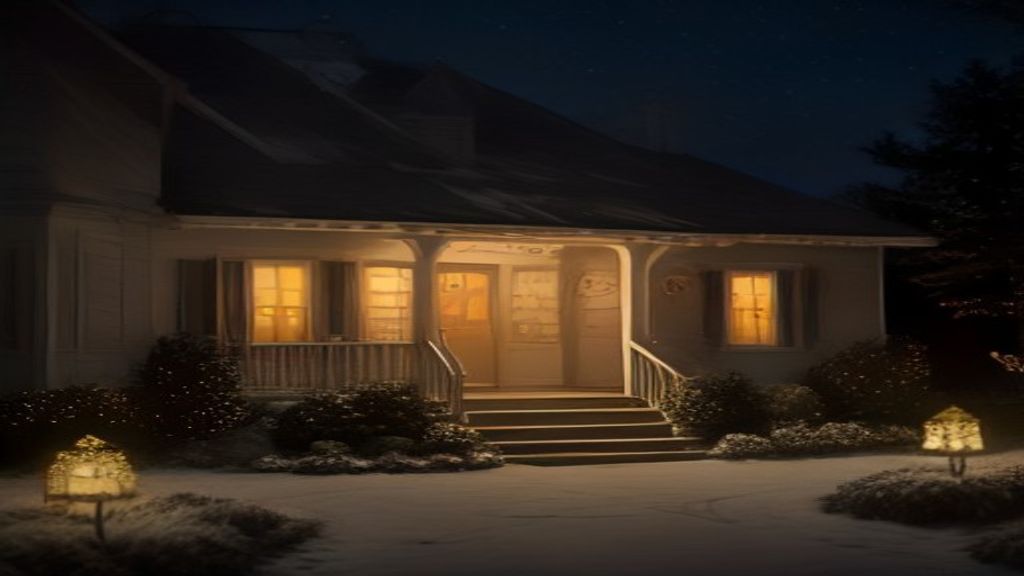
I bought Target's outdoor Christmas lights first. The box looked fine in the aisle — 100 feet, warm white, LED. Got home, strung them along the porch railing, and by the second night I knew it was wrong. The spacing was too wide, so the light looked like dots instead of a line. The plug end was bulky, and the wire was stiff in the cold. I returned them and measured everything before buying again.
Here's what I wish I'd checked, with numbers.
Bulb spacing is more important than length
Target's 100-foot set has bulbs every 12 inches. That sounds fine, but on a straight railing, it creates gaps. My porch is 40 feet long, and the light looked like Morse code. I swapped for a set with 6-inch spacing — same length, double the bulbs. The glow was solid, and it looked like a proper winter display.
If you're wrapping a tree or bushes, tight spacing matters even more. A tree with 12-inch gaps looks sparse at night. Measure the area you want to cover, then count the bulbs, not just the feet.
Weather rating is on the tag, but not the shelf
Target's outdoor string lights are wet-rated, meaning they can handle rain and snow. But the tag says "wet rated" — not "waterproof." The connectors and sockets are sealed, but the ends aren't. Last January, we had a heavy snow, and one end cap let moisture in. The string still worked, but it flickered for a week until it dried.
Look for a UL wet rating, and check the plug end. If the plugs are the kind you can't replace, you're stuck if one fails. I'd rather pay $5 more for a set with replaceable fuses and a sealed plug.
Read the length on the box, not the bin label
Target often stacks the same style in different lengths. The 100-foot box is easy to grab, but the bin says "50 feet" — someone mixed them up. I brought home a 50-foot set thinking it was 100, and had to return it. Check the actual product sticker, not the shelf tag.
Also, the light output (lumens) isn't listed on most Target boxes. If you're replacing incandescent lights, LED will look dimmer per bulb. You might need more LEDs than you expect. I ended up buying an extra 50-foot set to match the brightness I wanted.
Buy one set, test it, then buy more
Don't buy five boxes at once. Get one, string it where you plan to use it, and see how it looks for a night. If the spacing or brightness is off, you're out $15 instead of $80. I learned this the hard way — the second set I bought, I tested on the bushes first, then ordered the rest.
If you're mixing brands, don't. I tried plugging a Target set into a different brand's extension cord, and the connection was loose. The lights flickered all night. Stick to one brand per run.
Who should skip Target's outdoor lights
If you need lights for a large roof line or tall trees, Target's basic sets aren't it. The wire is rated for 18-gauge, and it sags across long runs. I have a friend who used them on a two-story roofline, and he said the lights look uneven from the street. He switched to commercial-grade lights with a thicker wire and better spacing.
Also, if you're in a windy area, the plastic clips that come with Target's lights are flimsy. I had three clips pop off in a gust — the lights didn't break, but they hung loose. I used zip ties for the final install.
If your goal is just a simple porch railing or a single tree, Target's lights work fine once you check the spacing and test them. But don't assume the box tells you enough.
For more on coverage math, see Why 1000 Christmas Lights Might Not Cover What You Think (I Measured). If you're considering battery options, this guide on Christmas Candle Lights for Windows: What Worked After My First Week covers warm window grids. And before you buy online, Amazon Christmas Lights: Don't Buy Until You've Measured These 4 has similar pitfalls.
Need more ideas? Check More guides in Decor & Lighting.