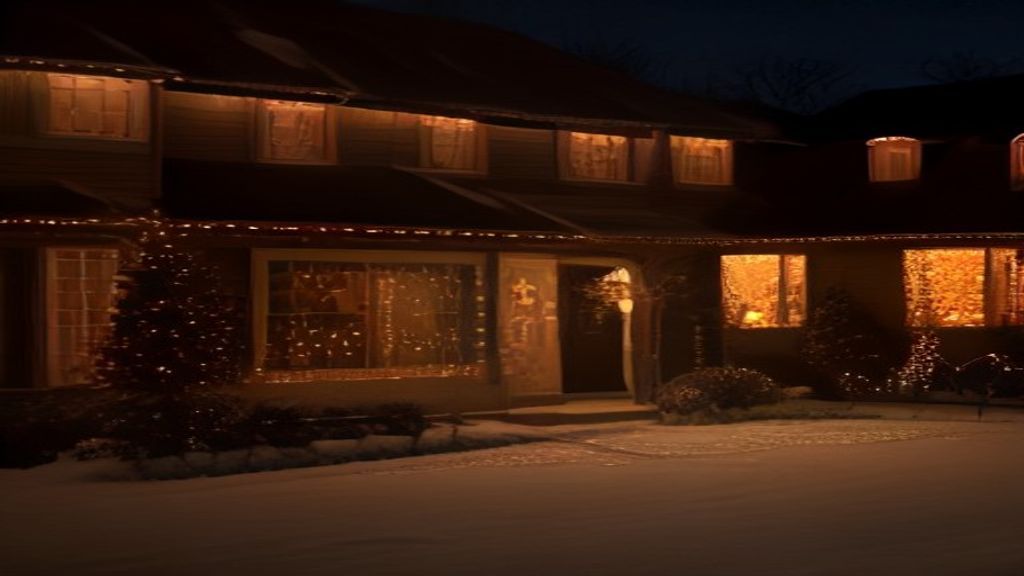
The box says 1000 lights. I measured the actual spool length: 108 feet. That's the first thing you need to know, because every "how many feet do I need" calculator assumes 1000 lights equals 250 to 300 feet. Marketing rounds up or uses tiny bulbs. My string of 1000 classic C7-size LEDs measured 108 feet from plug to end connector.
So the honest question isn't "how many lights do I need" — it's "what kind of lights am I actually buying?" The big-glass C7s eat up length fast. The mini LEDs (the ones that look like rice grains) pack 1000 into 150 feet or so. Both say 1000 on the label. Neither tells you what the coverage looks like until you're on a ladder.
Measurement Reality: 1000 Lights on a Real Roofline
I ran that 108-foot string along my front roofline (about 75 feet of eave, plus the gable). It covered the straight run and left me 20 feet short of the far corner. Not because the box lied — because 1000 C7s spaced 1.3 inches apart don't stretch the way a 1000 mini string with 2-inch spacing does. The coverage gap is a function of bulb size and spacing, not count.
If you're doing a 50-foot roofline with C7s, plan on 1500 to 2000 lights. For mini LEDs, 1000 will do 120 to 150 feet of roofline with the classic 2-inch spacing. But that's only if the manufacturer doesn't cheat the spacing — some jam bulbs closer to hit the count, which makes a denser, dimmer string.
Power Draw: The Part Nobody Mentions on the Box
I plugged my 1000-count LED string into a Kill A Watt meter. It pulled 34 watts, about 0.28 amps. That's nothing — you can run three of these strings end-to-end on a single 15-amp circuit without tripping a breaker. The old incandescent C9s? A 1000-count would pull 8 to 10 amps. If you're replacing old incandescent strings, your breaker load drops dramatically. But cheap LED strings rated for indoor only won't survive a wet December. Check the label for "indoor/outdoor" before you hang anything.
The 1000-Light Price Myth
I've seen 1000-count LED strings from $15 to $60 for the same physical product. The difference is almost always the connectors. The $15 ones have thin wire and plastic plugs that crack in cold weather. The $30 ones have thicker 18-gauge wire and molded plugs. The $60 ones add a remote control and 8 lighting modes that nobody uses after the first week.
Don't fall for the "commercial" label either. I bought one commercial-grade string because the box said it was "proven for rental fleets." The wire was heavier, yes, but the bulbs were the same cheap sockets. What actually matters is the wire gauge (look for 18AWG or thicker) and weatherproofing (the little rubber gasket at the plug).
Where to Save and Where to Spend
Save on the count. You don't need 1000 lights on a small porch or a 6-foot tree — that's overkill. My neighbor does a 6-foot tree with 400 mini LEDs and it looks full. Spend on the connectors and wire. One failed plug at the far end of $35 worth of string is a PITA, and cheap ones fail all the time.
If you're only doing a small area, buy a 500-count quality string instead of a 1000-count bargain. You'll get better coverage and a longer life. For a whole-house outline, spend the extra few dollars on a 1000-count with molded plugs and 18-gauge wire.
What I'd Do Differently Next Time
I'd measure my roofline first, multiply by 1.5 for C7 spacing, then buy. I'd also buy two 500-count strings instead of one 1000-count — more flexibility for corners, and if one segment dies, I don't lose the whole run.
Also, I'd read the fine print on "indoor/outdoor." My "outdoor-rated" string has a warning that says it shouldn't be submerged (which is code for "don't hang it where water pools"). See Buying Lowe'S Christmas Lights Without Wasting a Weekend for more on that.
Bottom Line: Match the String to the Job
1000 lights isn't a coverage spec; it's a count. The real spec is feet per string and watts per foot. Look those up, do the math, and you'll save a trip back to the store. For more on testing before you buy, see Amazon Christmas Lights: Don't Buy Until You've Measured These 4.
Next step: measure your roofline, note the bulb style, and buy based on feet per string, not count. And if you really want to nerd out on power draw, spring for a $15 watt meter. It'll tell you more than the box ever will.