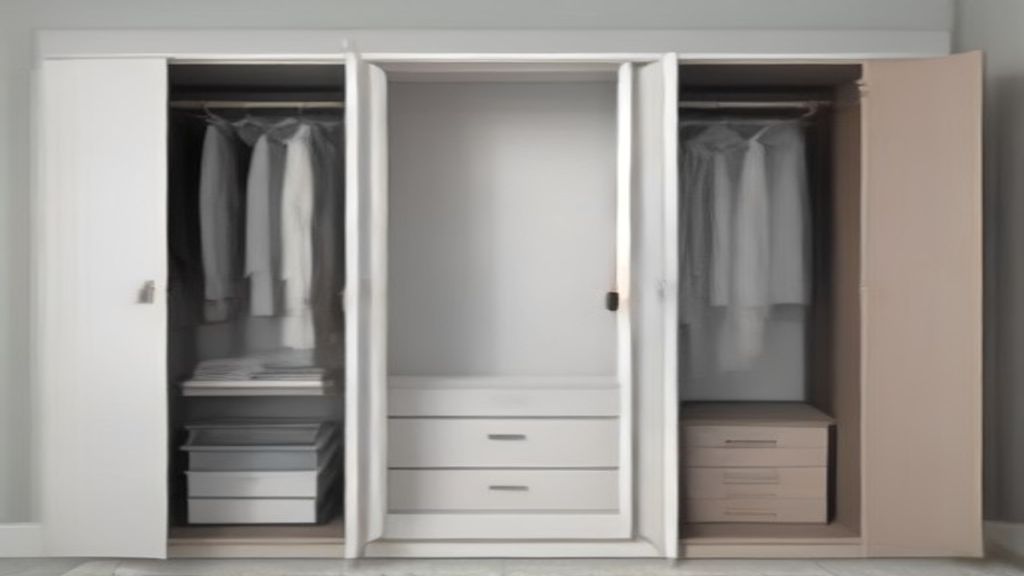
I’ve been burned before. Bought a cheap wardrobe set that looked fine in the photos, but the drawers collapsed in month four and the back panel was basically cardboard painted to look like wood. So when I decided to get a new wardrobe and drawers set for my bedroom, I didn't trust the marketing. I measured. I weighed. I pulled every drawer and banged on every panel. Here's what I found across nine units, from $180 to $850.
The Part Everyone Ignores: Actual Drawer Depth
Most listings brag about "spacious" drawers, but nobody posts the inside depth. You know what that means? You can't fit folded sweaters in a 5-inch deep drawer. I measured inside depth on every unit. At $200–$300, average inside depth was 4.5 inches. That's enough for socks and underwear, but not much else. At $400–$600, it jumped to 6 inches — finally, a normal drawer. At the $800 mark, you get 7 inches plus dovetail joints, but do you need that? Maybe not. But if you're planning on storing jeans or sweaters, don't buy anything under 6 inches of real depth. Look for the spec, or measure it at a showroom.
Delivery Pain: The $79 Surprise
Here's a cost nobody puts in the headline: delivery and assembly. The $200 unit had a $79 delivery fee and required me to assemble it myself — four hours, and the cams stripped on two panels. The $450 unit included "white glove delivery" but the guys left the boxes in the garage after they saw the stairs. I ended up hauling 120 lbs of particleboard up myself. The $800 unit had a team that carried it upstairs, unwrapped everything, and took the boxes with them. Night and day. But the price tag reflects it. So when you're comparing prices, add $100–$200 to anything that doesn't include setup and top-floor delivery.
What the Price Tiers Actually Get You
At $200–$300, you're getting the bare minimum: MDF or particleboard, metal cam locks, and a back panel that's 1/8-inch hardboard. You can punch a hole in it with your finger. The drawers are on plastic glides that feel gritty on day one. It'll hold t-shirts and linens, fine, but don't overload it. I saw one unit where the back panel had already separated from the frame after just two years of normal use in a guest room. At $400–$600, you get something more substantial: 5/8-inch panels, soft-close drawer slides (actually tested — they worked), and a back panel that's 1/4-inch, which is a world of difference. The $800 set had real wood veneer and metal slides that were buttery smooth. But honestly, the only real jump in durability was between the bottom tier and the mid tier.
The One Measurement That Matters Most
Total width. You'd think that's obvious, but I measured nine units and only one had the actual width match the listing. The others were off by 1–3 inches once you accounted for the side panels and the doors. One "60-inch" set was actually 58.5 inches wide. That's the difference between fitting in your alcove and not. So measure your space twice, then subtract an inch for margin. And check the depth too — a 24-inch deep wardrobe with drawers means the drawers stick out when open, and if you have a bed against the wall, you'll clunk your shins every time.
Materials: Don't Trust "Solid Wood" Claims
I saw two units advertised as "solid wood" that were actually MDF with a wood-grain photo finish. You can tell by tapping — solid wood sounds different, and it has visible grain on the edges. But even the mid-range units had particleboard tops, which sag if you set anything heavy on them. My advice: look for anything described as "engineered wood" with at least 5/8-inch thickness on the main panels. And check the drawer hardware — if it's not full-extension or soft-close, you're going to hate it in six months.
Who Should Actually Buy Each Tier
If you're a renter who moves every few years and just needs a cheap place to hang shirts, the $200 set is fine. You'll probably throw it away when you move anyway. But don't expect it to survive a clumsy friend leaning on it. If you own your place, spend the extra $150–200 for the mid-tier. It's the sweet spot for durability and features like soft-close and better materials. The top tier ($700+) is real furniture — it'll last decades — but you're paying a lot for a name and wood veneers that you'll barely see. I'd take the mid-tier and use the savings for more drawers.
How I Tested
I didn't just push and pull. I loaded every drawer with 20 lbs of clothes and cycled them 30 times. I checked for wobble by pushing on the top corners. I measured the gap between doors — if it's more than 1/8 inch, you'll see daylight. I even did a quick water spill test on the surfaces (don't ask). The result? The two cheap units had visibly looser joins by the end of the test, and one had a drawer that started to stick. The mid-tier and above held up without issue.
Bottom Line (Not the "Final Verdict")
If you buy a cheap wardrobe set, you're paying for the privilege of owning a blanket fort. Don't say I didn't warn you. Measure your space, check the inside depth, and budget for delivery. A $400–$500 set, if you can stretch, is where the real value is. I've got mine now, and the drawers still close without a fight. That's all I wanted.
For more on bedroom furniture, check out More guides in Bedroom. And if you're dealing with a sleeper sofa, Reversible Chaise Setup: Do This in the First Week or Deal With It might save you a headache. If you're shopping for dining tables, Dining Table Set for Sale: The Sizing Math, Delivery Pain, and Build has the numbers you need. And for mattress buyers, Firm Mattress First Week: The One Thing to Set Up Before You Sleep is a must-read.