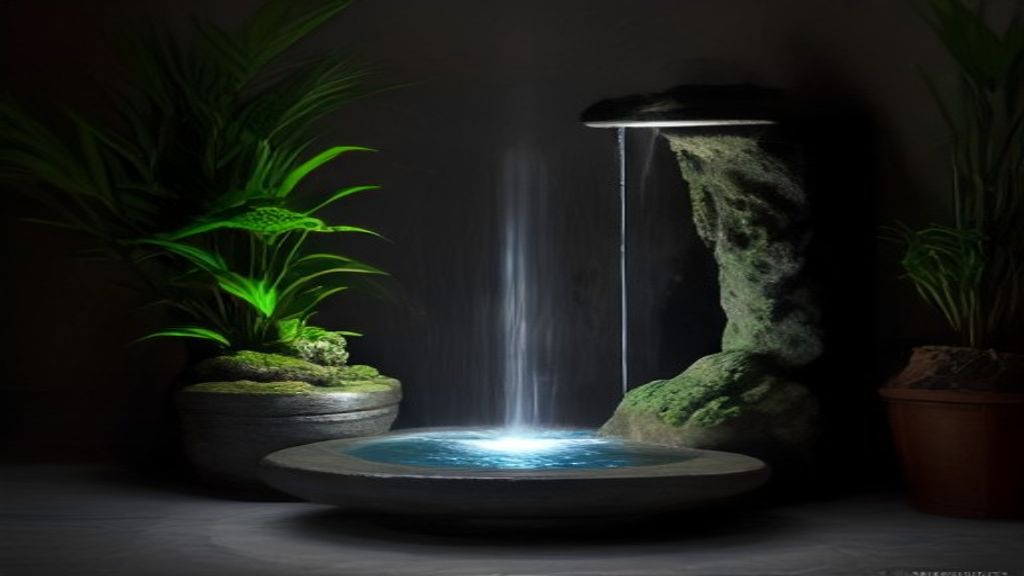
I've had three bedroom fountains in the last two years. Two went back. The one that stayed is 18 inches tall, sits on a dresser, and makes a sound like rain on a tin roof—not a gurgling toilet. If you're shopping for a bedroom fountain, start with the noise, not the looks.
Most bedroom fountains are sold as 'relaxing,' but the pump decides that. A cheap pump hums at 50 dB and you hear it over the water. You don't want that at 10pm. Test the pump before you commit. If you can't hear yourself think with the water on, it's too loud.
Size: Measure the Nightstand, Not the Photo
My first fountain was 24 inches wide. Sounded nice, but it took up half my nightstand. No room for a book or a glass of water. I got a 12-inch one after that. Fits fine.
Here's the rule: the fountain's base should be at least 2 inches smaller than the surface it sits on. You also need a foot of clearance above if it's on a shelf. Water splashes, especially when you first fill it.
Check the water reservoir size, too. Small ones dry out in a day. I fill mine every two days—otherwise the pump runs dry and whines. Pumps hate running dry. They burn out in about six months if you forget.
Noise: The Real Test
You can see foam waterfalls and polished stones online, but you don't see the sound. In a bedroom, sound matters more than looks. You want a gentle trickle, not a splash.
Look at how the water falls. Wide weirs create a sheet—usually quiet. Drip trays make plinking sounds, which can be annoying at night. My now-favorite fountain has a spillway that looks like a tiny staircase. The water glides down. Barely a splash.
If you buy online, check reviews for 'noise' and 'loud.' If you buy in a store, turn it on. Don't just admire it. The first fountain I bought in a shop, I loved the look. Got it home and the pump saw, so I had to return it.
Placement and Maintenance
Put the fountain away from electronics. Water and outlets don't mix. Also, flowers that fall into the water cause the pump to clog. Keep it away from curtains, too. Splash can stain fabric.
Cleaning is a chore you shouldn't skip. Algae builds up, especially if you get direct sunlight. I clean mine monthly: empty, wipe with a damp cloth, brush the pump in warm water. Takes 15 minutes. If you don't, the pump gets sludgy and noisy.
One thing I didn't think about: humidity. In a small bedroom, a running fountain adds moisture to the air. Not much, but if you already have a humidifier, skip the fountain to avoid mold near the window.
What to Spend
You can get a decent tabletop fountain for under $60. It'll be small, but it'll work. Higher price doesn't guarantee quieter—I've seen $200 fountains with terrible splash. What you pay for is materials and build quality. Stone lasts longer than plastic. Acrylic stays clearer than glass for the water path.
Skip anything with flimsy wiring or a pump you can't easily replace. When the pump goes, you want to swap it without buying a whole new fountain.
For a Bedroom, Specifics Matter
My current one is a stone spillway, 12x8x18 inches. It sits on a wide dresser with a tray underneath. It runs about 4 hours a night on a timer. For a 10x12 bedroom, it's the right size.
If you're looking at other low-light decor, I've written about Setting Up Indoor Christmas Lanterns: The First Week and the One Choice That Matters Most and globe string lights indoor if you want dim lighting without the water. For the fountain itself, keep an eye on the pump noise and the footprint—that's what keeps it out of the closet.
More guides in Bedroom
I still have my fountain. I turned it on a week ago, and it still doesn't hum at night. That's the win.