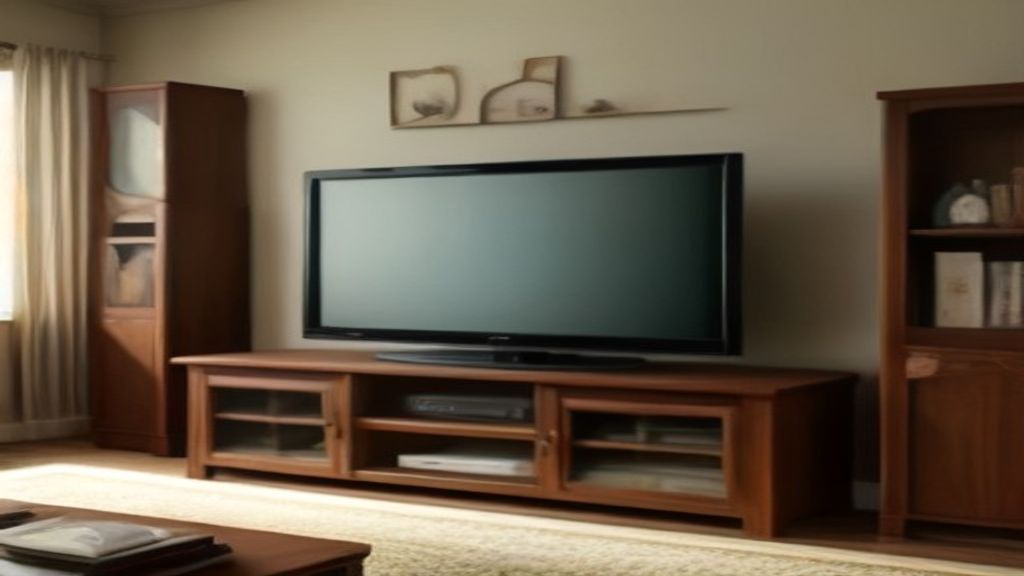
The first cabinet I ordered for my 55 inch TV arrived with a cardboard smell I still associate with regret. I unboxed it in the living room, slid the TV on top, and watched the whole thing wobble like a dare. The TV was 48 inches wide, the cabinet was 47.5. My error, not the seller's. The spec sheet said "fits up to 55 inch" and I believed it, which is like believing a shoe size chart without measuring your foot. So here's the real math, and the room and back-pain constraints that actually decide the buy.
First, measure the TV, not the label
Your 55 inch TV is measured diagonally — that means nothing for a cabinet. Take a tape measure to the actual width of the bezel (the frame around the screen). Mine came in at 48.2 inches, and I've seen 55s that run 49 to 50. You need the cabinet top to be at least 3 inches wider on each side, so the TV doesn't hang off. 54 inches of cabinet width is the floor for most, but if your TV is on the chunky side, you're looking at 56 or more.
Depth is the one everyone forgets. TV stands are shallow — like 14 to 16 inches of actual top surface before the back panel. My TV's feet spanned 11 inches deep, so it fit, but barely. I had to pull the cabinet out from the wall by 4 inches so the back cables weren't shoved into the panel. (I later wall-mounted it, which changed everything, but that's a separate level of hashing out.)
The wall constraint and the 18-inch trap
My living room wall between the window and the door was 64 inches. I wanted to fill it, but not with a cabinet that makes the room feel cramped. There's this whole category of narrow media cabinets that say "fits 55 inch" but the top is 18 inches deep and the width is 50. That's a lie if your TV's feet are wider than the stand — I'd be staring at my TV teetering on a plank. I wrote about that trap in my post on narrow cabinets — Narrow Media Cabinet: The 18-Inch Depth Trap I Keep Seeing — because I keep seeing people buy them online. Measure the width between your door and window, subtract a foot for breathing room, and that's your max width. My max was 52 inches, which meant I had to look at wider cabinets and adjust my expectations.
What I ended up buying (and returning)
First try was a 48-inch gray wood cabinet, because it looked clean in photos. Unboxed, it was 47.5 inches of particleboard — the TV wouldn't have fits on it at all, and the shelves were 9 inches apart, too short for any receiver or soundbar I owned. Back it went.
Second try: a 55-inch walnut with 16-inch depth and sliding doors. The top was 56 inches, giving my 48-inch TV a solid four-inch margin on each side — that felt right. Assembly took an hour, and the doors slide smoothly. But the shelf height under the TV was still 8 inches — my soundbar (3 inches tall) fit; my receiver (5.5 inches) didn't. If you've got any components, bring a tape measure to the store or check the interior dimensions, not just the cabinet width.
What actually decides the buy
The one factor that made or broke every option: the inside height. Not the width, not the depth — measure the distance between shelves. It sounds petty but it's real. My receiver lives on a shelf in the open, because the sliding-door cabinet couldn't hold it. It's that simple.
If you're in the planning stage, go measure both the TV’s actual dimensions and whatever boxes you want inside. The cabinet might be level, the finish might be fine, but if your gear doesn't fit behind closed doors, the cabinet becomes more of a shelf than a solution. I’ve seen more takes on measuring TV cabinets in the category hub, and the wall mount route if you decide to skip the feet altogether. Just don't do what I did — order first, measure later. The measuring is the buy.