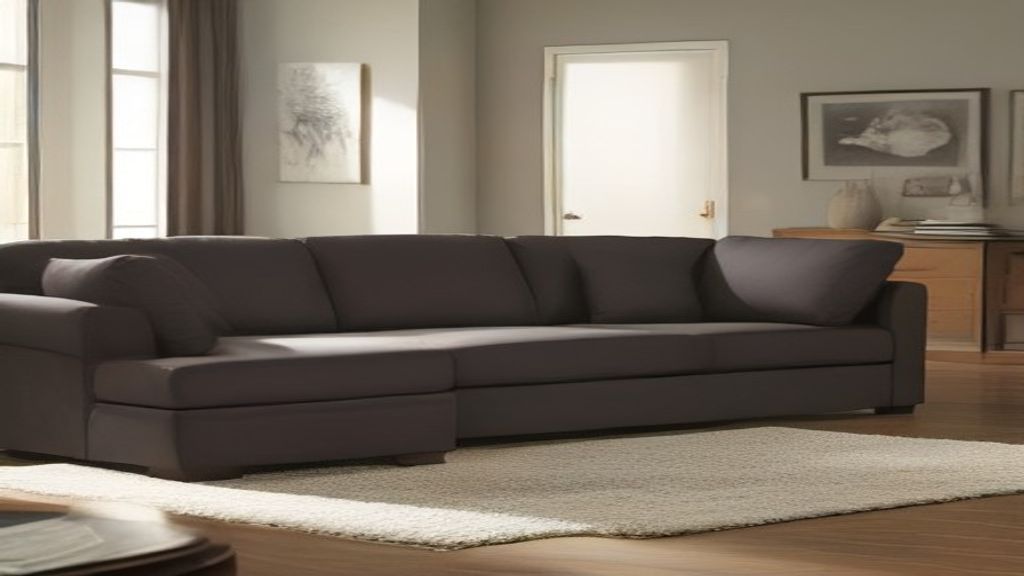
You don't need a $3,000 sofa to sit comfortably. But you also shouldn't expect a $300 one to survive a toddler and a dog. I've owned and returned more sofas than I want to admit, and here's the blunt breakdown of what each price tier gives you — and what it takes away.
Under $500: The Land of Particleboard and Polyester
At this price, you're not buying a sofa. You're buying a temporary seat. The frame is almost always particleboard or MDF, the cushions are foam that will flatten within six months, and the fabric is polyester that pills faster than a cheap sweater.
I bought a $450 loveseat from a big-box store. It looked fine in the showroom. By week three, the seat cushions had permanent indentations. By month eight, the frame creaked every time someone sat down. It wasn't broken — it was just tired. I sold it for $100 on Craigslist and moved on.
What you're actually paying for: a basic seat for a guest room or a rarely used office. If that's your situation, go for it. Just don't expect it to be your main couch.
$500 to $1,000: The Sweet Spot for Real Life
This is where sofas start being actual furniture. You get a kiln-dried hardwood frame (at least in the better brands), high-density foam cushions, and fabric that handles daily use without looking ragged in a month.
I've had a $750 sofa from a mid-range brand for two years. It's been through two moves, a cat with claws, and countless Netflix marathons. The frame is solid — no creaks. The cushions have softened but still hold their shape. The fabric (a performance polyester) has a few snags but no visible wear.
This is the price point where you can find decent sectionals too. I tried a $900 L-shaped model that had a chaise long enough for a 6'1" person to stretch out. The build wasn't perfect, but it was comfortable and didn't fall apart.
$1,000 to $1,500: When You Start Paying for Details
At this price, you're not just paying for durability — you're paying for design, comfort engineering, and better fabric choices. Expect options like removable, washable covers, deeper seats, and more frame braces.
I've sat on $1,200 sofas that felt like a hug and $1,300 ones that felt like a park bench. The difference wasn't the price tag — it was the specific model and brand. This is the tier where you need to actually test the sofa, not just order it online.
One thing I've learned: at this price, you can also get a real sectional that doesn't feel like a puzzle of cheap parts. Skip the Showroom Sectional and Measure Like I Didn't taught me that the hard way.
What Actually Changes Between Tiers?
Beyond the obvious frame and foam, here's the breakdown:
- Fabric: Sub-$500 sofas use low-grade polyesters that pill and fade. Mid-tier ones use better weaves that resist wear. High-end ones offer performance fabrics that repel stains and handle pets.
- Warranty: Cheap sofas often have a 1-year warranty that covers almost nothing. Better ones have 5-10 year warranties on the frame and springs. That tells you something about how long they expect it to last.
- Cushions: Foam density matters. Cheap foam is around 1.5 lbs/cubic foot — it sags. Good foam is 2.0+ lbs/cubic foot — it bounces back. Some brands use down-wrapped foam for a softer feel, but that's a luxury you won't find under $1,000.
- Delivery: Low-cost sofas often arrive in a box or with minimal assembly. Mid-priced ones might come with white-glove delivery. Costco and some online brands include it — ask before you buy.
The One Factor That Decides the Buy
Budget matters, but it's not the real deciding factor. The real one is how long you plan to keep it.
If you need a sofa for a year, get the $400 one and call it a day. If you need it for five years, spend the $800-$1,000 and buy something with a frame warranty. If you're furnishing a house you plan to live in for a decade, $1,500 is worth it.
I've seen people overspend on a cheap sofa and then replace it twice in three years — that's not saving money. But I've also seen people spend $2,000 on a sofa they barely use. Your actual usage is the key.
A Few So-So Sofas and What They Taught Me
Not every sofa fits every room, and some sofas look great until you measure. If you're tempted by a cheap sectional, read I Bought a $700 Sectional and It Was a Disaster first. If you're eyeing a window seat, Window Sofas Are a Trap explains why that can cost you more than you think.
And if you're in the market for a recliner, be careful — Recliner Sofas for Sale: The First-Week Setup That Saves You a Return will help you avoid a common mistake.
The Bottom Line (without the fluff)
I said I wouldn't do a conclusion, and I'm not. Just remember: affordable sofas are not all the same. You get what you pay for, but you also pay for what you need. Set a budget, measure your life, and don't let a price tag fool you.
If you're still unsure, More guides in Sofas & Sectionals has everything about the nitty-gritty of buying sofas without the showroom pressure.