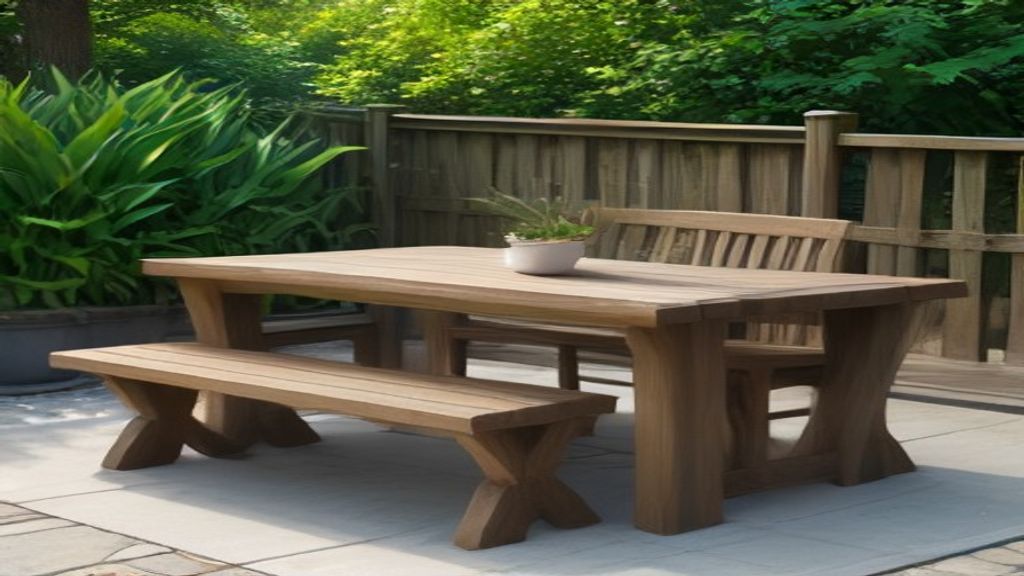
The first thing I noticed was the smell. Not the nice cedar smell I expected. This was more like a wet dog that had been rolling in varnish. I'd just carried the outdoor bench table up from the lobby, and the bottom of the legs were damp. Not raining. Not even humid that day. But the wood was cold, like it had been sitting in a cellar.
I should have known better. It's July. I live in a place where the air gets thick enough to chew on. And I bought an outdoor bench table rated for "all seasons" without checking the leg construction.
So, here's the thing. If you're looking at an outdoor bench table, you're probably looking at the top surface and the stain color. Maybe you check the weight so you can drag it around the patio. But the leg clearance at the bottom? And the wood's reaction to moisture? That's what got me.
Two weeks later, that bottom leg section had swollen. Not a lot, but enough that the table rocked on the pavers. I pulled up a chair, put my feet up, and the whole thing wobbled. Annoying. The fix involved a sander and a sealer.
What I'd do differently now. First, I'd measure the clearance at the bottom legs. Most outdoor tables have a crossbar or a toecap — something that raises the leg off the wet ground. But "off the ground" can mean 1/4 inch. That's not enough when you get heavy rain and the water puddles under the table. Look for at least 3/4 inch of clearance under the leg bottoms, or a leg cap that's replaceable.
Second, I'd check the wood type and finish. Mine was eucalyptus, which is common and affordable. But the coat on it was thin. I could see bare wood near the bolt holes. That's where moisture got in. If you see that on a floor model, walk away. Or expect to pay for a good sealer.
Third, I'd weigh the table myself. Not look at the listing weight. Those are always off. My "35 lb" table felt like 60 when I carried it up. But heavier isn't necessarily better. If you're planning to move it around with the dining set, you want something you can drag without scratching the patio. Or get a bench table with casters.
Other things I learned. The tabletop gets hot in direct sun. We have a metal one now for the dining area. Wear shoes with a rubber sole if you're going to put drinks on a metal top. Yeah, this is more about bench tables, not picnic benches.
And the bench itself? The seating under it can be lower than you think. The tabletop is at 28 inches, but the bench seat is at 16. That's fine for short people, but my knees were at my chest when I sat for more than 15 minutes. I ended up adding a cushion. Now I measure seat height before buying.
That's probably the biggest lesson. Go to a store, sit at the bench table, and stay there for 10 minutes. Not 30 seconds. See if your legs fall asleep. See if the edge of the table hits your thighs when you sit down. See if the wood grain snags your clothes. Outdoor bench tables look better online than they feel under your thighs.
And don't trust the "weatherproof" label. It means it won't fall apart in the rain. It doesn't mean the legs won't swell, the hardware won't rust, or the finish won't fade in UV. Check the warranties too. A two-year warranty is a green light. A "lifetime coated finish" is a red flag.
I returned my first one. But that's because the legs must have been cut at a slight angle — the table rocked after a week. The store took it back. The second one, I sealed the feet myself and added rubber pads. It's fine now.
If I'd done the leg clearance check first, I would have saved myself two weekends of sanding and swearing. And a trip to the hardware store.
So, measure three things: leg clearance, seat height, and the gap under the table frame. Then look at the finish in direct sunlight. Then maybe you'll be ready.
I wasn't. But I am now.