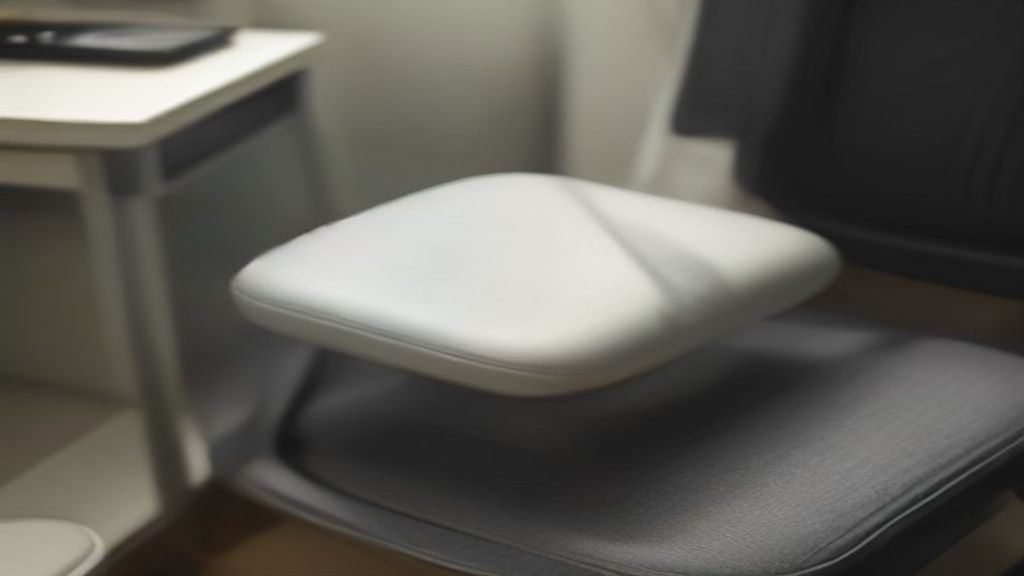
You found a used Steelcase Amia for $400, or maybe you paid $900 new. Either way, after a week you're wondering if you made a mistake. The back feels great, the arms adjust, but that seat pan—it's either too hard, too short, or the front edge digs into your thighs. You're not alone. So many people send the Amia back for this exact reason. But the fix isn't always returning it; sometimes it's just one adjustment away.
The Mistake: Ignoring the Seat Depth
The Amia's seat depth adjusts by sliding the whole seat pan forward and back. That's it. No separate slider for the front edge like on some other chairs. People forget this, plop down, and if the seat is set for someone with longer legs, the front edge hits you mid-thigh. That pressure cuts off circulation and makes you want out.
What to do: before you even look at anything else, slide the seat pan back. Reach under the right side of the seat, find the lever (it's a flat bar, not a round knob), and pull it while you shift your weight. Slide the pan under your thighs until you've got about two finger widths between the back of your knee and the front edge. That's the sweet spot. If you're 5'8" or under, you'll likely need it all the way back. If you're 6'1" or taller, you might need it forward, but then check the gap again—too far forward and you lose under-thigh support entirely.
I've also seen people skip the tension adjustment. Under the seat is a twist knob that controls how much you need to lean to recline. If that's set too loose, you're constantly fighting the backrest, which makes you perch on the front of the seat—and then the seat pan feels twice as hard. Tighten it so you can recline easily but still sit upright without effort.
When the Seat Pan Is Still a Dealbreaker
Even with depth dialed in and tension set, some people still find the Amia's foam too firm. It's denser than the Leap V2's, and it's not gel-padded like some cheaper chairs. If you're used to sitting on a cloud, this will never feel plush. But here's the thing: that firmness is why the foam doesn't break down after a year. I've had mine for three years, and it still feels the same as day one.
If you're under 150 lbs, you might not even be able to compress the foam enough—it feels like sitting on a board. That's when you should consider a different chair. But before you do, try a seat cushion. No jokes—a 1-inch gel or memory foam cushion that doesn't shift works fine on the Amia and keeps the edge from digging in. It's a $20 fix that saves you $400.
What to Check Before You Buy Used
Used Amias are a great deal, but they come with risks. Check the seat pan foam for permanent compression—if you press the front edge and it feels like rock, skip it. The gas cylinder should support your weight smoothly; if it drops or jerks, that's a $100 repair. Also, look at the armrests: the Amia's standard arms are narrow and not the best for wide shoulders. If you need more adjustable arms, hunt for a version with 4D arms, but those are rare used.
One more thing: the Amia has no adjustable lumbar on the back. That's fine if your lower back doesn't need much, but if you do, you'll end up buying a lumbar pillow. Not a dealbreaker, just know it before you commit.
What Decides the Buy
The Amia is a solid workhorse chair. It's built like a tank, and the seat pan firmness is a feature, not a bug—until it isn't. If you've adjusted the depth, set the tension, and still can't get comfortable after two weeks, give up. That firmness won't break in much. But for most people, that one-time tweak makes all the difference.
If the Amia isn't the one, here are other options worth reading:
- Steelcase Leap V2 Price: What You're Really Paying For has more seat cushioning but also a higher price.
- Steelcase Gesture: What You’re Really Paying For if you need highly adjustable arms.
- Best Steelcase Chair: How to Choose the Right Model Without Overpaying to compare all models.
And if you're on a budget, Boho Desk Chair: My First One Fell Apart, Here's What to Measure First is a cheaper alternative, but know the build quality gap.