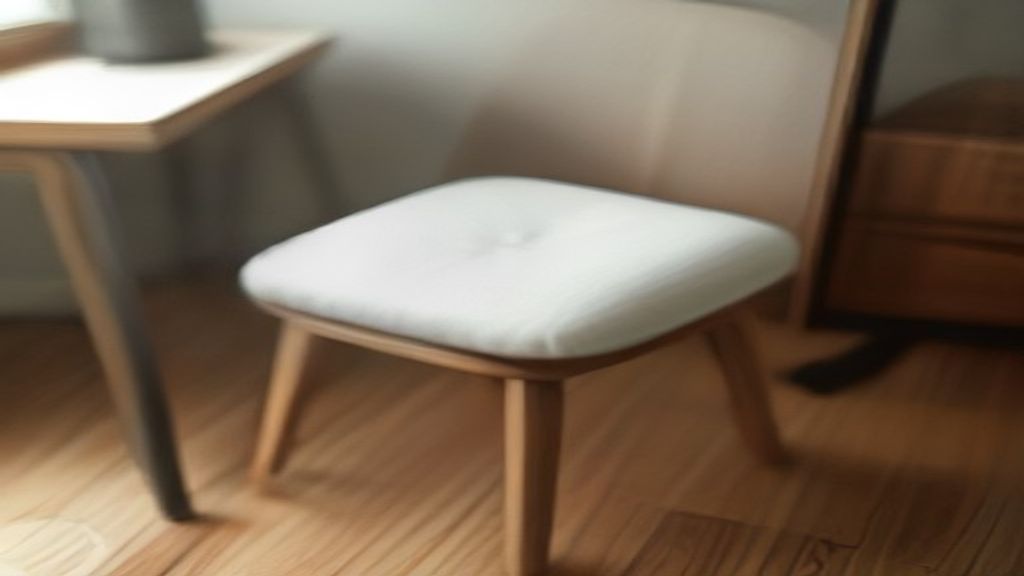
I spent $60 on a wooden desk stool from a local shop, thinking I'd keep it for occasional sitting. Three weeks later, my $400 office chair is in the closet. I didn't plan this. Here's what happened when I actually used a stool at my desk instead of just reading about it.
The First Two Days: Why Everything Hurt
Day one, I sat on the stool for maybe two hours total. My feet were flat on the floor, knees at 90 degrees, and my back felt—sort of straight. But by day two, my hips and lower back actually ached more than with my chair. Why? I was slouching without realizing it, because there's no backrest to slouch against. I had to actively engage my core to stay upright, and that's a workout I wasn't used to.
The trick was to stop thinking of the stool as a chair and start thinking of it as a balance prop. I adjusted my desk height so my elbows rested at 90 degrees, and I put a small cushion under my sit bones. That helped a ton. By the end of week one, the backache faded, and I noticed something weird: I was shifting my position a lot more, which kept my muscles from locking up.
What a Desk Stool Actually Does to Your Posture
I'm not a doctor, but I've spent nine years in front of a desk, and my spine has paid the price. With a regular chair, I tend to lean back, and my shoulders round forward. On the stool, there's no back to lean on, so my body naturally finds a neutral alignment—but only if the height is right. I'm 5'6", and the stool I bought is 24 inches high, which works because my desk is 29 inches. If your desk is higher or lower, the stool won't fix anything; it'll just add a new problem.
One unexpected benefit: my deep core muscles actually feel engaged after a workday. Not a six-pack, but a subtle fatigue, like I did a few planks. My balance also improved slightly—I can stand up from the stool without using my arms. That's not a miracle, but it's a visible change after a month.
The Cheap Stool Problem: Slip, Creak, Wear
Let me be honest about the downsides. First, the stool slips on smooth floors. I put felt pads under the feet, and now it stays put. Second, the wood creaks after about a week. It's not loud, but it's there. Third, if you're not used to sitting on a hard surface, your butt will go numb after an hour. I use a thin cushion, and that solves it. But if you're expecting the comfort of a padded chair, you'll be disappointed.
Another thing: sitting on a stool means you're more likely to stand up and move around. I found myself taking mini-breaks every 30 minutes, not because I was tired of the stool, but because my body wanted to move. That alone is probably the biggest win. My step count went up, and my afternoon slump wasn't as bad after lunch.
How to Know If a Desk Stool Is for You
If you work long hours in one position, a stool might not be your primary seat. But it's a solid rotation for a few hours a day, especially if you're doing focused writing or coding. I still use my chair for marathon sessions—like eight-hour days—but for the usual four-hour stretch, the stool is my go-to. If you're thinking about trying one, here's my advice: buy a stool with a foot ring if you have short legs, or make sure your feet reach the floor. Don't skip the cushion. And give it a full week before you judge it; your body needs time to adapt.
I also realized that a desk stool works best when your desk setup is already dialed in. If you're still wrestling with a wobbly desk, fix that first. For example, I had to raise my monitor to eye level, which I'd been skipping with my chair. You might want to check out my Under Desk Storage Cabinet: The First Week Setup and the One Decision for ideas on keeping the floor clear around your stool. And if you're on a budget, a stool is way cheaper than a new chair—but don't expect it to replace one. For a more conventional pick, see Best Desk Chairs 2022: The Only Number That Matters Is the Seat Depth.
My next step: I'm going to build a second stool for my reading corner. Not because I need it, but because I've learned to like the honest feedback it gives my body. If you're curious, borrow a stool from a friend for a week before you buy. That's the real test.