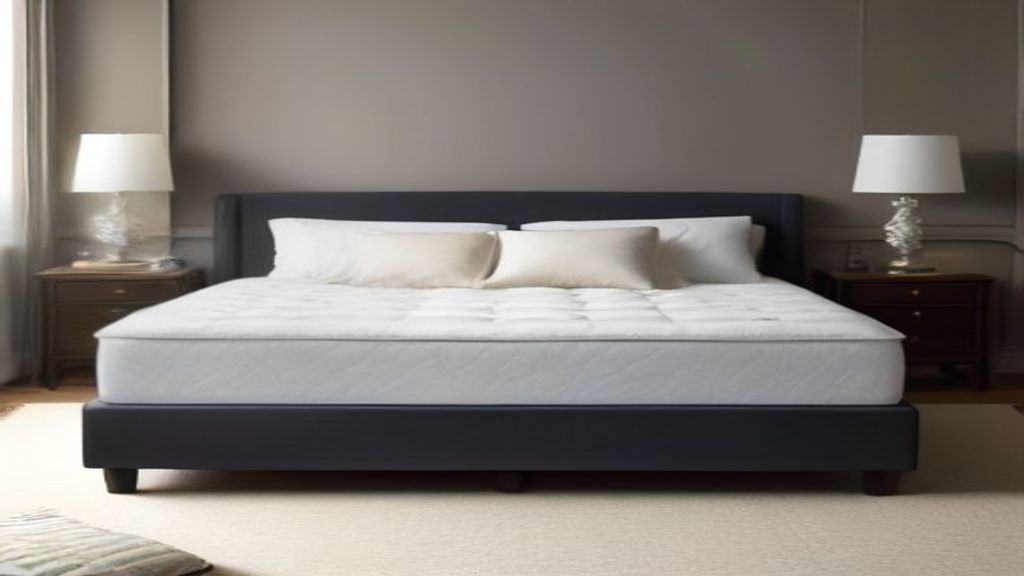
The delivery guys set the box down in my hallway with the kind of reverence usually reserved for a grand piano. It weighed 187 pounds. The mattress inside — a hand-tufted, horsehair-and-cashmere thing from a European brand that doesn't like to talk about prices on its website — ran just over $15,000 after the "white glove" fee. I slept on it for seven nights, measured everything, and kept a running list of what that money actually bought me. Spoiler: it wasn't better sleep. Not for me, anyway.
Day One: The Unboxing (There's No Box)
Most expensive mattresses don't come rolled in plastic. This one arrived flat, on a wooden pallet, wrapped in thick felt. The delivery team wore cotton gloves. They asked me where the bed was, then warned me that the mattress needed to "acclimate" for 24 hours before sleeping on it — even though it wasn't vacuum-compressed. That was the first sign I was dealing with something different.
The asking price includes that delivery experience, something I noticed again when I moved my old $600 foam mattress up the stairs by myself and nearly threw my back out. But acclimation, in this case, is mostly about letting the natural fibers settle after shipping. The mattress also had a distinct smell — not the chemical off-gassing you get with cheap foam, but a clean, animal-hair-and-wool scent that faded after two days. If you're sensitive to smells, that's actually a point in its favor. If you're sensitive to spending, it's not.
The One Decision That Matters: Firmness, Not Brand
I tested a "medium" in the company's scale, which I later learned meant something different from the medium I was used to. Most mattresses I've slept on — including my own $900 memory foam — feel like a soft hug. This one felt like a firm handshake that didn't let go. The horsehair and latex layers create a surface that's buoyant but not plush. I woke up on day two with a slightly sore lower back, which is my body's way of telling me a mattress is too hard.
I swapped it for the "plush" version on day four, delivered the same day (the price includes concierge service). That was the right call. The plush had an extra layer of cashmere and wool, and it felt like sleeping on a very expensive wool blanket stretched over a firm base. Not sink-in soft, but springy and supportive. The lesson: when you're spending this much, the firmness — not the brand name — is the make-or-break decision. I'd suggest testing in a store for at least 20 minutes, lying in your actual sleep position, not just sitting on the edge.
What the Price Tag Pays For (and What It Doesn't)
Here's the honest breakdown after a week:
- Materials: Real horsehair, cashmere, organic cotton, and hand-tufting. The mattress breathes better than any foam I've tried — I didn't wake up sweaty once, even when my apartment hit 78°F. The wool also regulates temperature naturally. That's real, but you can get decent airflow from a $1,500 hybrid with a latex layer.
- Construction: Hand-tufted means the internal layers are tied together with twill tape, not glued. That makes the mattress flippable — this one had a different firmness on each side. The stitching was immaculate, and the edge support was excellent; I sat on the corner and it barely compressed. A $400 mattress from a big box store will have foam that breaks down in five years. This one is guaranteed for 25.
- Service: The in-home trial lasted 100 nights, and they'd have picked it up for free if I'd returned it. The delivery team even re-leveled my bed frame, which was off by a quarter inch. That kind of service is part of the price.
But here's the kicker: the mattress didn't solve my sleep problems. I still woke up at 3 a.m. when the neighbor slammed a door. The plush version felt nicer than my foam mattress, but not by a $14,000 margin. What I paid for was mostly peace of mind — the warranty, the materials, the craft — not a guarantee of deeper sleep.
The First-Week Reality Check
During that week, I also noticed a few downsides. The mattress is heavy — 187 pounds — so rotating it (which you're supposed to do every six months) is a two-person job. The fabric, while beautiful, is delicate; I snagged it with the metal zipper on my duvet cover and left a tiny pull. And the price includes that white-glove delivery, but if you ever move, you'll need professional movers just for the mattress. My cheap foam one I could carry on my own.
I also checked out some alternatives in the same ballpark: a $5,000 latex mattress from a direct-to-consumer brand (no hand-tufting, but similar breathability) and a $2,300 hybrid with a quilted pillow top that felt almost as comfortable on the plush setting. Neither had the cachet or the warranty, but both would probably suit most people fine.
If you're considering the most expensive mattress, the real question isn't whether it's worth it — it's whether you'll notice the difference after the first week. For me, after seven nights, I did notice. But I could've lived without it. The mattress went back on day 8, and the delivery team took it away with the same reverence. I returned to my $900 foam and slept fine — not better, not worse.
The takeaway? Shop for firmness, not price. And if you buy the expensive one, make sure you can flip it — both sides, and on your own budget.