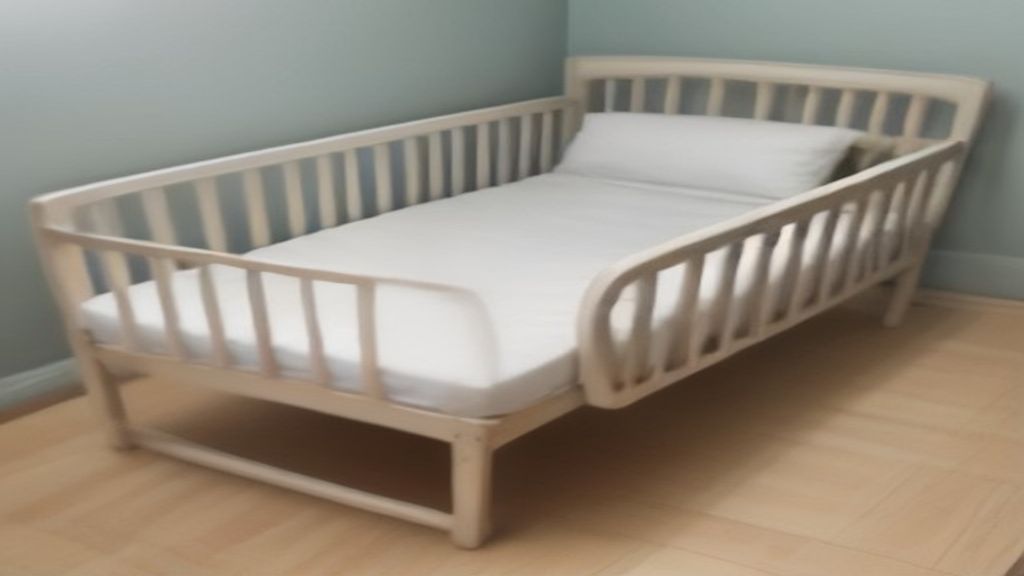
I've lost count of how many cot mattresses I've bought, and the biggest mistake is always the same: I assume the bed frame is standard. It's not. My second cot had a frame that was 5 cm wider than the mattress I bought. That gap meant the sheets kept slipping, and my kid's arm would occasionally wedge in the gap. Not fun.
So before you click buy, measure the frame. The mattress should be 1–2 cm smaller than the frame on each side. That's the tight fit you want. If the mattress is bigger, it jams and doesn't fit flat. If it's smaller, you get a gap.
The Usual Sizes
Standard cot mattresses in the UK are roughly 70 × 140 cm, and in the US, crib mattresses are about 28 × 52 inches. But that's a starting point, not a guarantee. Some cots are smaller or bigger. I've seen cheap frames that are 68 cm wide.
Use the marked size as a hint, but always measure the frame itself. The mattress needs to be at least 1 cm smaller than the frame on each side. So for a 70 cm wide frame, a 68 cm mattress works. For a 71 cm frame, a 70 cm mattress is fine.
How to Actually Measure
Get a tape measure. Do it on the floor, not with the frame assembled against a wall. Measure the inside width and length at the widest points. Do it twice. Frames often taper slightly, so measure both top and bottom.
Write the numbers down. Then compare to the mattress specs. If the mattress is thicker than the frame's depth, check that it doesn't push the mattress too high — that could be a fall risk.
Money Talk: What You Gain and Lose
Cheap cot mattresses under £50 are thin and lack support. You'll feel it after a few months — sagging in the middle, or the baby's sleep gets worse. A mid-range mattress costs £100–£150 and usually has double layers of foam or a better spring system. It holds up longer, and you don't have to replace it as soon.
I bought a cheap one once, and within four months, the foam had a permanent indent where the kid's head was. That's not a mattress, that's a slab. Spend a little more if you can; it's a surface they'll sleep on for years.
The Frame Matters More Than You Think
The frame's slat spacing can ruin a mattress. If the slats are more than 7 cm apart, an inexpensive foam mattress can sag between the gaps. I speak from experience. Our cheap frame had 10 cm gaps, and after two months, the mattress was visibly bowed. I had to add a plywood board under it.
Check the frame's slats before you buy the mattress. If they're wide, get a firmer mattress with good edge support, or cut a piece of 1/2-inch plywood to fit the base.
Don't Forget the Fitted Sheet
A 70 × 140 cm mattress doesn't always fit standard cot sheets. Some sheets are sized for 68 × 130 cm. Read the sheet label. If the sheet is too big, it bunches; too small, it pops off and your kid sleeps on bare foam. We ended up buying extra deep sheets just to make one work.
Also, check the mattress's depth. Most cots have a fixed depth, but if the mattress is too tall, you might not be able to lower the cot base to the safe level. That's a real safety issue.
A Quick Checklist Before You Click
- Measure the frame width and length at two points each.
- Allow 1–2 cm gap between frame and mattress.
- Check the depth and the cot base height.
- Look at the slat spacing—7 cm max.
- Read the sheet size before buying.
I've made the same mistakes with two kids and several cots. Now I measure first, every time. It saves a return trip and a lot of irritation.