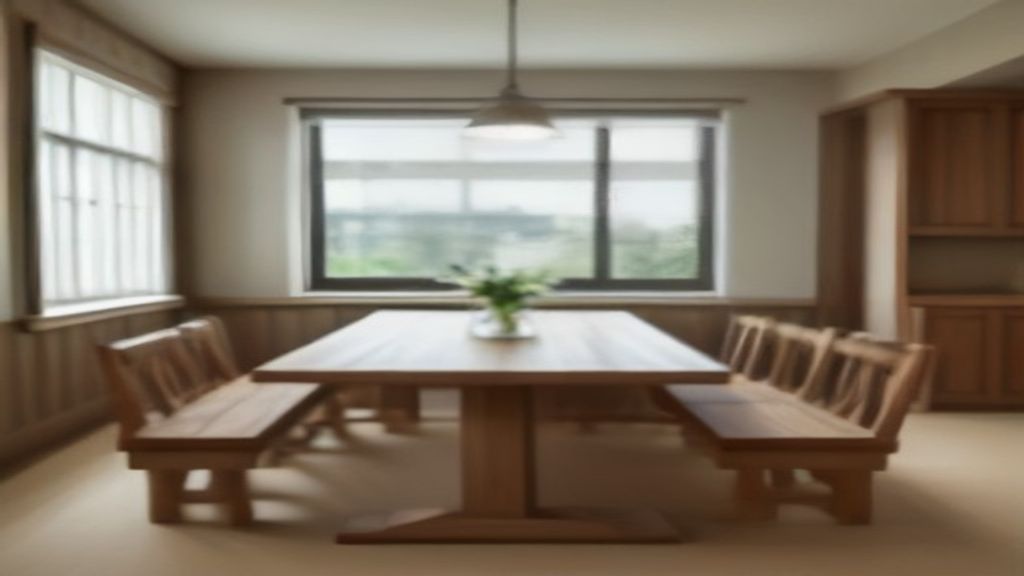
I installed a built-in dining bench last spring. I've lived with it through three seasons of family dinners, two holiday gatherings, and one spilled glass of red wine that I still haven't fully forgiven. If you're thinking about one, here's the honest version.
The Money Question
A built-in bench isn't cheap. I paid a local carpenter $1,400 for a 72-inch bench with a plywood base, solid oak seat, and a back that's just a rail. No storage underneath. No fancy upholstery. That was the cheapest real quote I got. The high end was $3,800 for a full wrap-around with lift-up storage and a custom cushion.
What you gain at $3,800: hidden storage that actually works (my kids' board games would've fit), a thicker seat that doesn't need a separate cushion, and a finish that matches your trim exactly. What you lose: $2,400 that could've bought a good table. If you're handy, a DIY version runs about $300 in materials. I'm not handy enough, so I paid the middle.
The Measurements I Got Wrong
First mistake: seat depth. I planned for 18 inches, which is standard for a chair. But you don't sit upright against a wall the way you do in a chair. You slide back. You slouch. Eighteen inches felt like a church pew. I had the carpenter shim the back out three inches, but the seat was still too shallow.
If I did it again, I'd build 21 inches deep. That sounds like a lot, but it's the difference between sitting stiff and actually leaning back. Also, think about the floor. A bench with legs leaves about 6 inches of clearance for your feet. That's fine. A bench on a full plywood base leaves almost none. My toes hit the panel every time I sat down. If you go with a solid base, cut a toe-kick notch — 3 inches high, 2 inches deep. It's a detail nobody mentions.
Second mistake: the height. Table height is 29 inches, so I had the bench at 18 inches. That's standard. But we have a 3-year-old. On a bench, kids slide around. The bigger problem is adults getting in and out. At 18 inches, it's a slight drop for someone over 6 feet. For someone 5-foot-2, their feet barely touch. A bench cushions this — literally. A 2-inch foam pad changes everything, and it also makes the seat depth more forgiving. If you skip the cushion, you'll feel the edge of the wood on your thighs after 20 minutes.
Third: the back. A bench without a back is a stool with extra steps. You'll lean against the wainscoting and feel every seam. Add a rail at about 14 inches above the seat — just enough to catch your lower back. I had mine at 12, and it's too low, which is why I'm planning to adjust it one weekend.
Comfort and Manners
A built-in bench forces everyone to sit together. That's great for family meals. It's terrible if you're the one on the end — you're essentially sitting on a table leg. The middle person's feet are surrounded by everyone else's. Kids climb over people to get to their spot. Our bench seats three comfortably, but four is a game of elbows.
The bench does one thing no chairs can:
- It keeps the room looking bigger because there's no chair backs sticking out. In my 10x14 dining room, that helped.
- It's excellent for parties. You can squeeze people on it without dragging over a folding chair.
- You can push a stroller or a bassinet beside it during naps. That's more than I expected.
For the cost and the compromises, I'd only recommend it if you have a fixed wall and a family that doesn't fight over personal space. If you switch chairs out often or if you rent, skip it — a good bench in a wooden topper won't break, and you can buy exactly that at a store.
Where the Money Should Go
If you're going to spend $1,000+ on a built-in, make sure the rest of the room isn't a hand-me-down disaster. A bench mounted to the wall will hold your table in place — literally. Our table is still on its floor pads, but the bench is fixed. If the table rocks, it rocks into the bench. Ours doesn't, because I fixed the table first.
And don't skip the table. If you're reading this because you want a built-in, measure your table too. A 60-inch table fits three on a bench fine. A 42-inch table is too small — the bench overhangs the tabletop and people hit their knees. I know because I had a 42-inch table when I first measured, and I swapped it out for a 60-inch before I even called the carpenter.
The bench changes how the room feels. It's not a chair. It's a piece of the house. If you're okay with a permanent fixture — and you'll never say 'I wish we could move this around' — then it's worth it. If you like rearranging furniture, buy a freestanding bench and call it a day.
Last thing: the cushion. I waited two months before buying a 3-inch foam slab from a fabric store and covering it in a cotton duck cloth. It cost $80. It was the single best money I spent on the project. The bare wood is fine for a week, but not for a life.
The bench isn't the most exciting furniture you'll buy. It's just the one you'll never stop using.
And That's It
I could talk about wood species or finish options forever, but the truth is that the bench is the easy part. The hard part is knowing your own space. Measure everything twice, assume the kids will slide, and skip the $3,800 version unless you're actually going to use the storage.