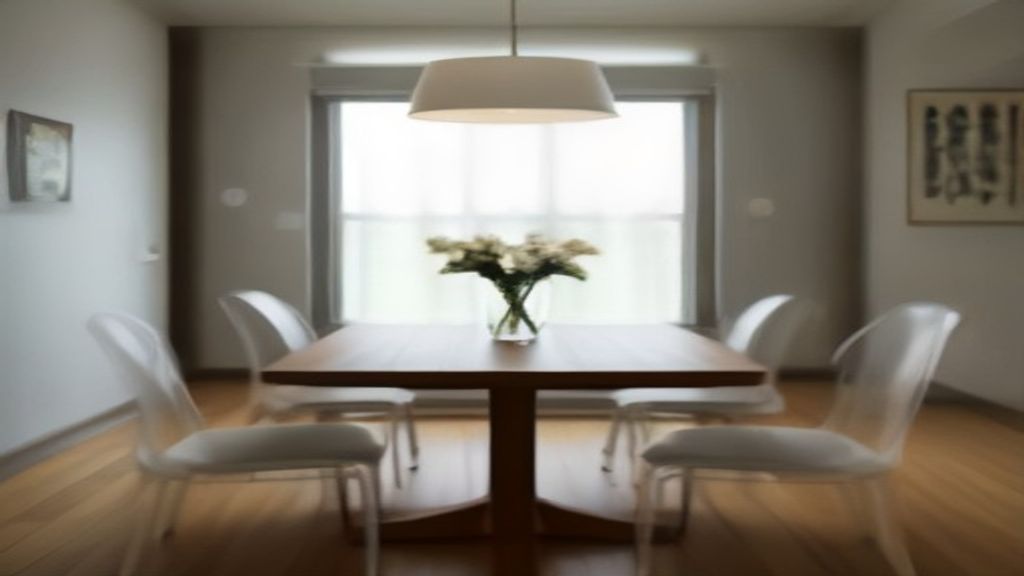
It started with a 19-inch seat depth. That's the number that broke my kitchen layout, and it's the first thing I measure now on any ghost dining chair. Most listings show overall height and width, but the seat depth—from the front edge to the backrest—is what determines if you can actually sit down. My previous chairs were 22 inches deep. Changing to ghosts with a 19-inch seat meant about 6 extra inches of walking space between the chair and the wall. Doesn't sound like much, but in a 10-foot-wide room, it was the difference between sucking in to get by and just walking past.
Why ghost chairs feel like they take up less room
The visual trick is real: transparent acrylic doesn't block sight lines, so a room with four ghost chairs looks less crowded than the same number of wood chairs. I bought mine for a small dining nook that's basically 8 by 10 feet, and it went from feeling like a waiting room to something that opens up when I look at it.
But the physical footprint is the same as any other chair. A 19-inch seat is still 19 inches. If you're measuring for a tight pass-through, don't assume clear acrylic shrinks the geometry. It doesn't.
What I actually measured (and what I got wrong)
I made the classic mistake first: I bought a set online based on the product photos alone. The listing said "19.5-inch seat depth," and I believed it. When the boxes arrived (delivery took two weeks, two boxes, nothing damaged), I set one up and measured. It was 19 inches. Close enough, but the overall height was 32 inches, and I didn't think about the armrests—there weren't any. That's another piece of the equation: ghost chairs usually don't have arms. If you need something to push against when you get up, they're not it.
I also figured out that the seat height had to match my table. My table's apron is 29 inches high, so the seat at 19 inches is a solid 10-inch gap. Feels okay. A friend's table is lower—27 inches—and the same chair sat too high, making her knees hit the underside. Measure the distance between your table apron and the floor before you buy.
Stacking and storage: the one thing I didn't anticipate
Ghost chairs stack. That's the big selling point for storage. I have four chairs, and they stack neatly in a corner of my bedroom closet when I need the space. Each one weighs about 11 pounds. So moving them around is easy.
But here's the catch: they scratch. The acrylic is clear, but the edges are sharp. If you stack them carelessly, you'll see white scuff marks where the plastic rubs together. I learned that when I moved one set from the kitchen to the living room for a dinner party. Now I put a microfiber cloth between each chair when they're stacked. Takes two seconds, keeps them clear.
Eight weeks in: what I'd tell a friend
I've had these ghost dining chairs for eight weeks. Finishing? The polish is still glossy, but the seat back has fine scratches from chair legs scraping against it when I leaned back. I don't see it unless I look closely, but it's there.
One chair developed a small crack near the base of the backrest—like a stress fracture. I think it's from someone tipping back too far on two legs. These aren't meant for that. Treat them like fragile glass, because they kind of are.
The good news: they're easy to clean. Wiping down the acrylic takes seconds. No fabric to vacuum, no crumbs stuck in upholstery. That's the honest upside.
A different route if clear isn't your thing
If the ghost look isn't quite right, or you want a bit more warmth, the same airy effect can come from a Low Back Dining Chairs: The One Decision That Fixes Your Layout. Low backs don't block sight lines either, but they're sturdier and less delicate. Or if you're in a bigger space, something like Round Dining Table with 4 Chairs: What the Price Tiers Really Get You might give you more options without the acrylic fragility.
For me, the ghost chairs stay because the layout works. But I wouldn't buy them again without checking the seat depth first.
The one thing to do before you click buy
Pull out a tape measure, find the gap between the table leg and the wall, and subtract 19 inches. That's the minimum width each chair needs. If there's room left over for a chair to slide out without hitting a wall—you're good. If not, look for a slimmer model or a different style entirely. That's what I'd tell my friend who's about to buy her first set.