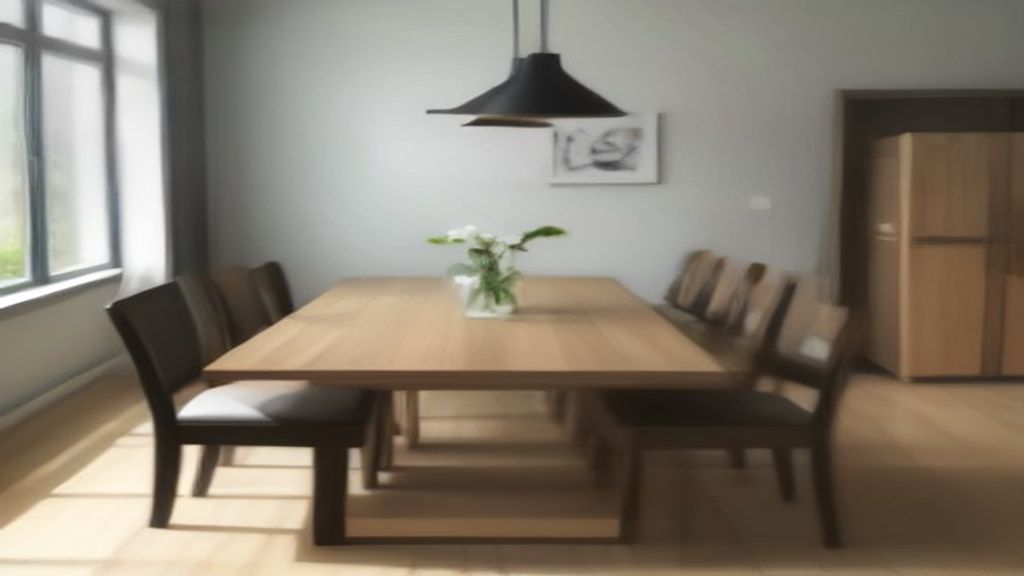
I measured the dining room three times. The tape said 44 inches from wall to wall. I bought a contemporary dining table set for 6 anyway. The delivery guys got it up the stairs, but when they placed it, there was 8 inches of clearance on each side. I couldn't pull the chairs out. Returned it same week.
Here's how I finally got a set that works.
The 36-Inch Rule I Almost Ignored
The real number isn't table width. It's the aisle between table edge and wall or buffet. You need 36 inches minimum for chairs to slide back and let someone sit. I only left 14 inches. That's a good way to get a table that looks fine from the doorway and is a daily hassle.
Measure from the table top's edge, not the chair when pushed in. Chairs stick out at least 20 inches. I added 36 inches behind each seat. My room needed at least 112 inches in one direction for a 72-inch table. It didn't have it.
What Shrank: A 72-Inch Table with 4 Chairs
Instead of a 72-inch table with six chairs crammed in, I got a 72-inch table with four chairs on the long sides and plans to add two more on the ends. That put the side chairs at 36-inch clearance from the wall. The end chairs sit about 30 inches from the doorway. It's not perfect, but I can move around without doing that crab-walk thing.
Also, the set I bought had a 44-inch wide table. Wide is fine for family-style serving, but for a narrow room, a 36-inch wide table works better. Same seating, less footprint. That's the trade-off I should've made the first time.
Delivery Pain You Can Skip
The delivery guys carry it, obviously. But they won't clear your existing furniture. I had to move a sideboard and two bookcases before they'd even come in. Schedule delivery after your room is empty, not before. And ask if they'll assemble the legs. Mine did, but they didn't know which bolts went where. Took 30 minutes of arguing while I held the manual.
Material: Don't Go With White Lacquer If You Cook
I almost bought a glossy white [contemporary dining table set for 6](). But I cook with turmeric a lot. That sends a cloud on the table every time. Glossy white shows every wipe mark. I went with matte oak veneer instead. It hides the streaks, and the wood doesn't show water rings like a glass top. My friends think it's solid wood, which is fine.
The downside: the veneer chips if you drag plates. I still do it. But scratched veneer at least looks lived-in, whereas white lacquer looks dirty within a week.
Chair Count Matters More Than You Think
A set for 6 usually means two end chairs with arms. Arms are comfortable but eat space. Those arms add 4 inches each to chair width. If your room is 10 feet wide, you might fit six armless chairs but only four with arms. That was my mistake. I didn't realize arms were even a thing until I sat in the showroom.
So my rule now: measure wall-to-wall, subtract 72 inches for table depth, then see if each chair has 20 inches of elbow room. Six chairs at 20 inches each is 120 inches. That's the number that tells you if a six-seater actually fits.
During the first week, we had friends over. Four of us sat around the table, and the other two pulled up stools from the kitchen. That worked. We haven't been six around it yet, but honestly, most weeknights it's just two.
One more thing: if you're between two table sizes, get the bigger one. I returned a 72-inch and got a 78-inch. The extra 6 inches changed everything. People stop bumping elbows, and you can actually put a centerpiece down without moving plates. That's the buying point. Not looks, not brand.
Before you order, read about what I learned from three returns and how a wrong size table gets returned. Also, check out dining chair options if you're mixing and matching instead of buying a set.
My contemporary dining table set for 6 now seats six, barely. I have to squeeze past the tv stand, but it's fine. The deciding factor was aisle clearance. Everything else, the style, the price, even the material, was secondary. Measure that first, and you'll save yourself the return.