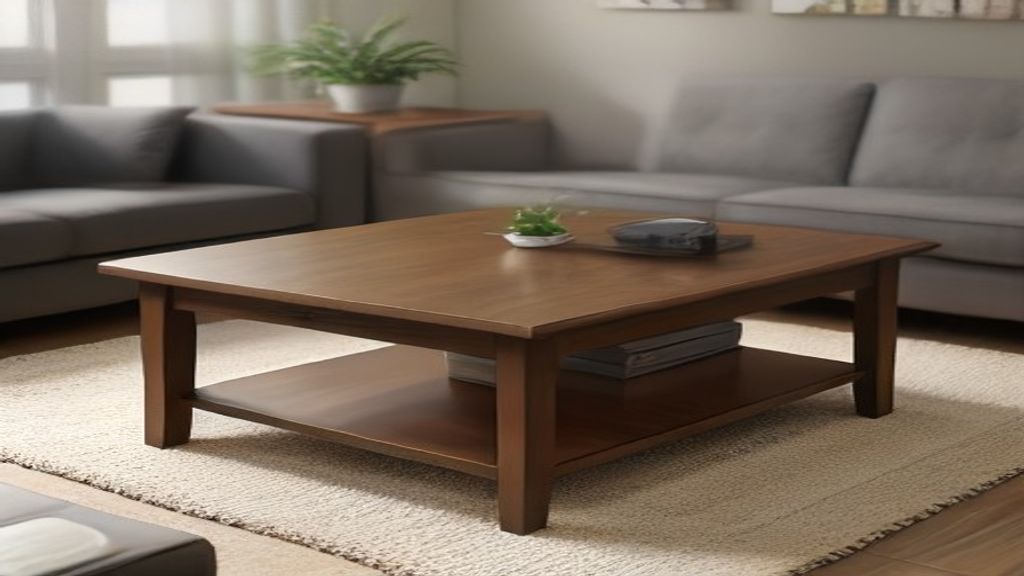
The problem isn't the table. It's the gap between your couch and where the table will sit. I didn't measure. I bought. And now the top lifts straight into the couch armrest before it's even flat.
The gas strut pushes the top up past 45 degrees at that point, so mid-raise it jams. You have to manually tilt it sideways, which throws the whole thing off. That's not a working coffee table. That's a nudge hazard.
Measure the Couch Gap and Armrest Height First
The gap between the front edge of your sofa cushion and the front of the table is the one that matters. I had about 12 inches. My old table was 16 inches deep. The lift top needs roughly 20 inches of clearance because the top swings upward — it's not a guillotine sliding straight up. It arcs toward the sofa.
The other number is armrest height. Mine measured 22 inches. The fully lowered top sits at 17 inches. Once lifted to 27 inches (a good eating height), the top edge is slightly above the armrest, but the armrest overlaps the top's path by 3 inches when the table is pushed close. That's the conflict.
What to write down: gap, armrest height, and the table's maximum lift angle. Most wood lift tops lift 10–14 inches above the base. Check the spec sheet for "adjusted height" — that's the top's highest point.
The Lift Mechanism: Gas Strut or Manual? Wood Quality Probably Matters More
I ended up with a manual single-strut on a rubberwood frame. It works, but the strut gets stiffer in winter. At 42°F, it took two hands to push down from full extension. Not a dealbreaker, but if you plan on using it as a daily desk, spend more for a double strut or a gas spring rated for at least 110 lbs.
The other thing: the top board leans forward slightly when fully open. Not so much that a laptop slides, but a plate of soup will carry a small constant slope. Check the assembled table for wobble before you commit. A light hardwood with a single strut will flex more than plywood with doubled-up locks.
Wood species matters for the finish. My rubberwood shows every scratch from a coffee mug rim. If you go oak or walnut, expect a longer life, but it's heavier. A 40-inch oak lift top with solid wood edges will weigh around 45 lbs. Moving it is a two-person job.
The Height Range Is a Compromise
The low position works only if you sit high. With my 17-inch couch seat, the 17-inch table top feels like a tiny coffee table — fine for drinks but your hands stretch 10 inches down to reach a magazine. The lift brings it to 27, about perfect for a home desk, but then a 24-inch tall side table nearby looks short.
So decide one primary use. If it's a laptop station, forget the low position. If it's just trays and remotes at eye level, skip the lift top entirely.
The One I Kept, and What I'd Change
I ended up with a 42-inch rubberwood with a double strut, but I still had to modify the strut mounts because the brackets were off by half an inch. That's common with cheaper builds.
What I'd change: measure first, obviously. But also measure the path of the strut's arc, not just the gap clearance. The strut extends below the table edge when the top rises — it sticks out toward the couch. If the strut hits the armrest, it's an expensive fix.
The one I kept has a shallow footprint, so it fits the gap now that I pushed the couch forward 4 inches. But the strut still almost kisses the armrest on full extension. I'll add a small rubber bumper to the base edge.
If you're buying any coffee table, measure the room first. Both of those things are real problems in real living rooms. After you get the numbers down, check the Saarinen Coffee Table: I Measured the Room, Not the Hype to see how a pure style piece can hit the same trap. It's just that the lift top has more moving parts.
For another deep dive into a different angle, read Lift Up Coffee Table IKEA: What I Learned After Measuring My Couch Gap. Same math, different source.
If you're still stuck between a lift top and a normal table, one basic test solves it: take a piece of cardboard and cut it to the table's depth. Stack books to the lift height. Slide the cardboard and books between the couch and the wall. If anything touches, you have your answer. Go with the plain table.