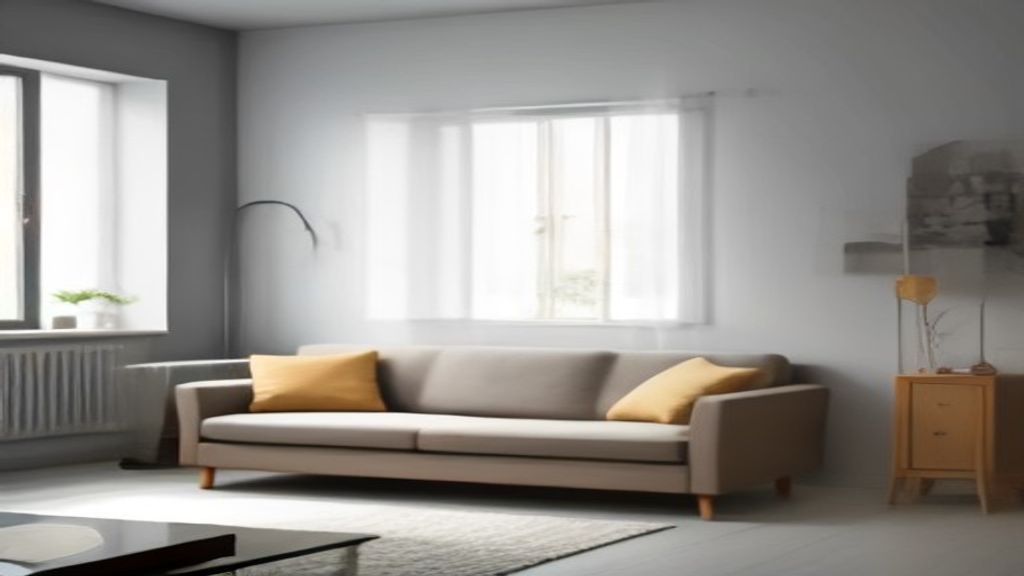
I've owned three dark oak coffee tables. Two went back. The third is sitting in my living room right now, and it's only there because I finally measured my room instead of trusting the online photos.
The dark oak thing is a trap. It looks rich in a staged room, but in a real apartment it can feel like a black hole if it's too big or too dark. So here's the blunt truth: start with your constraints—your sofa height, your walkway width, your kids or your dog—then pick a table.
Sofa Height Comes First
Measure your sofa's seat height. Not the back, not the armrest. The seat. Your coffee table should be within an inch or two of that number. If your sofa seat is 17 inches, a 14-inch table is a stretch every time you reach for a mug. A 19-inch table? You'll feel like you're leaning over a fence.
I measured mine at 18 inches. My first dark oak table was a chunky 14-incher. Looked great, drove me nuts. I kept bending forward, and my back started complaining after three nights.
The fix: find the spec sheet before you order. If the seat height isn't listed, email the seller. If they don't know, that's a shutdown. Move on.
Walkway Math
Next, measure the distance between the sofa and the TV stand or wall. You need at least 18 inches between the table and the sofa for your knees, and another 18 inches on the walkway side. That's 36 inches total plus the table width. My living room is barely 11 feet wide, so a 48-inch table was already too much. I needed something closer to 36 inches.
That's how I ended up with a dark oak table—but it's a narrow, lighter-stain one. The dark stain was still fine, but I sized down to 40 inches by 18 inches deep. It freed up the walkway, and I stopped banging my shins.
Real Habits Rule
If you eat dinner on the couch, you need a table that's easy to wipe. Dark oak can hide stains, but a matte finish will show every water ring. I had a matte one and a mug left a white mark for a week. Now I have a satin polyurethane coat, and it takes abuse without drama.
Do you have pets? Then skip a glass top. My friend's dog walked across her dark oak table and scratched the lacquer. She's still mad about it.
Think about what actually happens on your table. Laptops? Coffee mugs? Kid's homework? If you need to work from the couch, a lift-top design helps, but you need to check the raised height. I've seen lift tops that go too high, and you end up with a desk in your lap. That's a different problem. The Lift Up Coffee Table IKEA: What I Learned After Measuring My Couch Gap has real numbers if that's your thing.
Finish and Quality
Dark oak comes in two basic flavors: solid hardwood and veneer over MDF. For a coffee table, veneer is fine if the core is decent. But check the edges. A cheap veneer will peel at the corners after a year. I returned one because the edge tape was already lifting when it arrived.
Also, look at the grain. A good dark oak table has visible wood grain, not a flat, painted-black look. Run your hand over it—feel the texture, not a smooth plastic coat.
What I'd Do Next Time
Honestly, I'd buy a dark oak table again, but I'd check the weight capacity first. My current one holds a stack of books, a laptop, and two mugs without wobble. The previous one started swaying after a week because the legs were thin. Screw the legs into the frame if you can—or at least tighten everything every few months.
One last thing: if your room is tiny, don't insist on dark oak. I tried to make a 46-inch dark oak work in a space that needed a 30-inch round. It was like a bear in a bathtub. The 30 Round Coffee Table: What Fits When Your Room Doesn't Cooperate is proof that round and lighter can save you.
A dark oak coffee table isn't for everyone. If you're moving a lot, or you have a dark floor and a tiny room, skip it. It'll make the space feel like a cave. And if you don't want to measure, just don't buy online—go to a store and sit on your heels. See what it feels like.
That's it. Measure twice, order once. Or like me, measure once, return twice, then measure again.