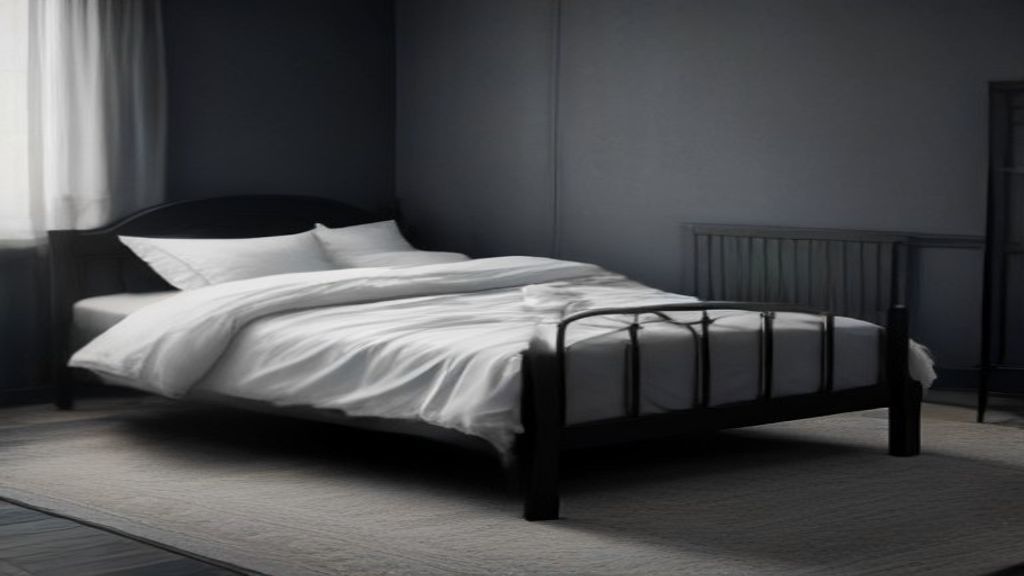
106 days. That's how long the black metal bed frame sat in my guest room before I finally trusted it enough to sleep on it every night. And I almost didn't get there—because it squeaked like a haunted porch swing by night three.
Here's what I learned (after three returns, two YouTube rabbit holes, and one very patient partner).
The mistake I kept making: chasing the price tag
My first black metal bed frame was $89. Free shipping, four stars, looked solid in the photos. The headboard arrived scuffed, but whatever—it's a bed.
By night one, the middle support bar bowed under the mattress (mine's a heavy hybrid, ~90 lbs). Night three, the squeak started. By week two, the slats—those are the horizontal boards that hold the mattress—were already showing stress marks where the supports met them.
I'm not saying you need to drop $800 on a bed frame. But the cheap ones share the same weak points, and knowing them changes what you buy.
What I actually found:
- The slats: 13 thin metal strips bent in the middle, reinforced with a flimsy plastic brace. Not great.
- The gap between slats: 3.5 inches. My mattress (memory foam 12" thick) sagged slightly between them after a few weeks.
- The middle support: a single Y-shaped bar that only contacted the legs at four points, leaving the center to hold the weight alone.
- The welds: barely visible, more like blobs. That's where the squeak came from.
What actually fixed the squeak (and what didn't)
I tried felt pads, oiling the screws, even tightening everything every other day. Squeak came back within 48 hours.
Then I did two things:
1. Snugged up all 16 bolts. Yep, then added thread-locker (blue Loctite) to keep them from backing out.
2. Added a piece of 1/2-inch plywood over the slats. Cut to the mattress footprint.
That plywood made the biggest difference. It distributes weight evenly so the slats don't flex or moan at the joints. The squeak dropped by 90%. The frame still creaks when I sit hard on the edge, but not while I'm asleep.
Also, I added a third center leg under the middle support. Some frames come with one, but mine didn't. That leg took the bow out of the middle and took strain off the headboard bolts.
If you're handy, those are two $20 fixes. If not, look for a frame that already has solid slats (1.5 inches wide or more) and a center rail that sits flush on the floor.
The one spec that matters most: the gap between slats
Most black metal frames are platform beds—no box spring. The mattress sits on the slats. If they're spaced more than 2.5 inches, your mattress will sink between them. No way around it.
For reference: my second frame (the one I returned) had a 3.5-inch gap, and I could see the floor through the mattress after two weeks. The third frame—the one I kept—has slats set about 1.8 inches apart, and the middle bar is a full-width piece of steel, not a stamped-out rail.
That third frame cost $240. Worth it.
What the weight rating actually means
Some black metal beds list a "300 lb" weight capacity. But that's the static weight, not what you get when you sit, toss, or turn. The true test is bounce:
- Have two adults sit on the edge. Does the corner dip or squeak?
- Put all your weight on the middle of the mattress. Is there a low spot after you get off?
- Roll over a few times. Notice any groan at the joints?
My first frame? Corner dip of over an inch. My kept frame? Maybe a quarter-inch. That difference is everything.
How to shop black metal bed frames without repeating my mistakes
Bring a tape measure to your next scroll. Even if the listing doesn't show slat spacing, ask.
1. Slat spacing: ask if it's under 2.5 inches.
2. Support legs: how many along the center? At least two, plus one at the head and one at the foot, please.
3. Weld quality: look at the photos close—smooth, coated welds last longer.
4. Weight limits: if they say 1,200 lbs on a cheap frame, that's marketing. Cross-check with user photos.
Also, consider the height. Standard frames sit about 12–14 inches off the floor. Your nightstand should match, or the bed will float weirdly. If you have an adjustable bed, most black metal frames will drop the adjustable legs, and the center support will fight the motors—skip it and get one with clear channel space,
What I'd buy instead (if I did it over)
Not naming specific products, but here's the pattern:
- Get a frame with solid steel rails (not stamped "L" brackets) and slats that are actual planks of wood—or metal strips that are at least 1.5 inches wide and spaced tightly.
- Avoid anything with "quick assembly" in the listing without thousands of reviews. Quick often means thin.
- Skip frames that come with a headboard that's only held up by two small bolts. That joint is where the wobble starts.
Meanwhile, my $89 frame went to a friend's basement. She uses it for storage, and it does fine—no guests, no nightly use. That's the clue: if you plan to actually sleep on it, don't cheap out.
Last thought: measure your room before you fall in love
This isn't about the frame size, but the whole layout. A queen is 60 inches wide, but the frame's headboard adds 2–4 inches if it has one. I learned that after my delivery guy pointed out my nightstands were suddenly too close.
So grab a tape and check your room width. Many standard bedrooms fit a queen but barely a king.
For more, check out The King Size Bed Base Mistake I Keep Seeing Buyers Make and Black Velvet Bed First-Week Setup. And if you're weighing a platform frame, see what 8 months taught me in this king platform frame recap.
Next step: measure the distance from your floor to your nightstand top. If it's under 14 inches, a low-profile metal frame might be the right pick. If it's over, get standard. Then order based on slat spacing, not stars.