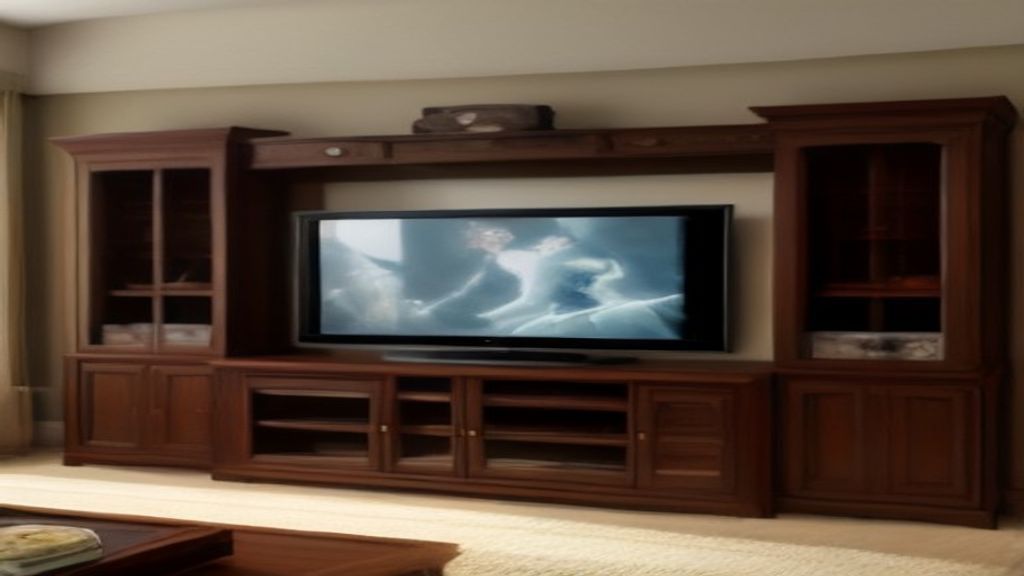
The box weighed 92 pounds. I know because I dragged it up two flights of stairs and cursed every pound. When I finally got the cardboard off, the first thing I noticed was the smell—fresh MDF and lacquer, that new furniture smell that disappears in three days. Then I noticed the width. I had measured the wall, the TV, even the doorway. But I hadn't measured the gap between the window trim and the corner. That's the one that matters.
The One That Matters: Trim-to-Corner Width, Not Wall Width
I'll be honest: my first week with a large entertainment center was a string of small victories and one big blunder. The unit itself—a 70-inch-wide walnut-look console with two open shelves and two cabinets—looked great in the photos. It fit the 65-inch TV fine, left about 4 inches on each side. That part was fine.
The problem? The left side of the console butted right up against the window trim. The trim sticks out about 3/4 of an inch. So the console couldn't sit flush against the wall. It had to sit about an inch forward, which threw off the whole vibe. The back of the console was exposed, cables visible, and it looked like I'd given up on alignment.
So before you buy, measure the floor width between architectural obstacles, not just the wall. That's the measurement that matters. I had measured the wall: 86 inches. Plenty of room. But the usable space between the trim and the baseboard was only 68 inches. My 70-inch console didn't fit. I had to return it and get a 64-inch model.
The Return Process: What They Don't Tell You
The return wasn't free. The store charged a $75 restocking fee plus shipping, which came to another $40 because it was oversized. Total waste: $115 and a lost weekend. I could have avoided it with a tape measure and a little patience. Also, if you're assembling a large entertainment center, the instructions will say "two people recommended." They're not lying. The top panel alone weighs 38 pounds. I used a furniture dolly to get the box up the stairs, and I still nearly dropped it.
What Fits and What Doesn't: Real Dimensions
For a large entertainment center (65 to 80 inches wide), here's what I learned:
- If your TV is 65 inches, you want at least 4 inches on each side for balance, so a 72-inch console is fine. But if you have less than 74 inches of clear wall, go smaller.
- Cable management holes: check they're at least 2 inches in diameter. Some are 1.5, and that's a pain for HDMI heads.
- Depth matters too. My first attempt was 16 inches deep, and the TV's stand stuck out 3 inches beyond the front edge. That looked awful. Go for at least 18 inches if your TV has legs.
- Weight capacity: the box said 100 pounds per shelf. My soundbar and receiver were fine, but if you have a heavy A/V receiver, make sure it's on a shelf rated for it.
I also learned the hard way that 'large' doesn't mean 'fits your stuff.' The console I ended up keeping has one cabinet that's 22 inches wide inside. My cable box is 17 inches, fine. But my friend's receiver is 20 inches, and it wouldn't fit. So measure your components.
Week One: Living With It
After two returns and one final setup, I've had the large entertainment center for a week. It holds the TV, the soundbar, a plant, and a stack of vinyl. The open shelves accumulate dust fast—I already wiped them twice. The cable management is okay, but the holes are placed at the back, so I had to use a power strip with a long cord.
The finish? It's a matte laminate, and a coffee cup left a ring on the top because I didn't use a coaster. That's on me, but a real wood piece would've laughed at that. For the price, though, it's fine.
Who Should Skip This
If your wall is narrower than 72 inches, or if you have trim, baseboard heaters, or doors that swing into the space, a large entertainment center will fight you. If you're not willing to measure the actual floor clearance, skip it. If you can't lift 90 pounds or don't have a friend who can help, skip it. And if you're the kind of person who hates assembling furniture with cam locks, maybe go for something pre-assembled or from a store that has white-glove delivery.
I kept the 64-inch model, and it looks fine. But I spent way more time and money than I should have. Learn from my mistake.
If you're still deciding, I've got more first-week notes for other styles. Check out the Farmhouse Style Entertainment Center: My First Week and the One or Floating Entertainment Center for 75 Inch TV: The First Week and the One. And for smaller spaces, avoid my width blunder with Thin Entertainment Center: The First Week and the One Measurement.