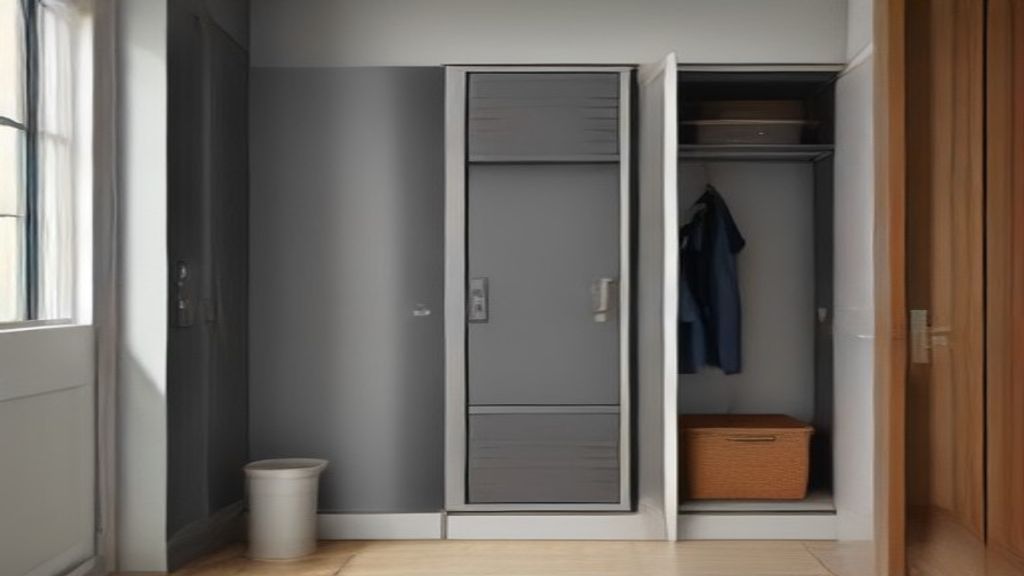
Two weeks ago I unpacked a locker that was supposed to slide into a 30-inch gap next to the washer. The box said 29.5 inches wide. The actual frame was 30.2. So it sat in the hallway for three days while I figured out returns. I've been through this enough that I should've measured the inside of the box, not the listing.
If you're hunting for small lockers for home, you're probably dealing with a tight nook, a mudroom that's barely a closet, or a kid's room that eats floor space. I went through three before landing on one that's still in service. Here's how I finally got it right.
The Real Constraints: Not the Ones You Think
My first mistake was only measuring width. The gap was 30 inches wide and 40 inches deep, plenty by the numbers. But I didn't account for the locker's depth when the door was open, or the fact that the hinges added two inches of protrusion. In my garage, the second one fit width-wise but the door hit the shelf above. I ended up sawing the shelf in half.
So, before you pick anything, write down three numbers: width, depth, and height — but also the door swing. That means the depth with the door fully open. My finished locker sticks out 17 inches from the wall when closed, but when you open it, that jumps to 24 inches. If you've got less than 24 inches of clearance in front of your spot, the door won't open all the way.
Schedule constraint nobody mentions: delivery. Most of these arrived via freight, and I had to be home for a scheduled window. The first one took two weeks to arrive, and the delivery guys left it in the lobby because the box wouldn't fit in the elevator. I had to drag it up three flights on a dolly. Plan for that. Or order through a retailer that ships via parcel. Two of mine came UPS, which was much easier.
Picking the Right Size: What I Actually Needed
I tried to stuff a 16-inch-wide locker into a 20-inch nook. It fit, but I couldn't get my kid's backpack in without scraping the paint. He uses it for shoes and sports gear, and I use a taller one for tools and cleaning supplies.
What I finally kept is: one 14-inch-wide, 40-inch-tall locker for my tools, and a separate 18-inch-wide, 36-inch-tall double-door for the kid's stuff. That combo takes up about 32 inches of wall, leaving 18 inches of floor space for a basket.
If your stuff is mostly long (broom, yoga mat, hockey stick), look at tall, narrow lockers. If it's boxes or bins, a wider, shallow one works better. And if you're not sure, buy a flexible shelf kit — the kind you can move up and down. My first one had fixed shelves, which was a disaster.
The real lesson: furniture shopping made me realize I needed to measure my room layout before anything, or I'd keep making the same mistake.
Durability: What Holds Up and What Doesn't
I abused my first locker. I threw a 20-pound dumbbell inside without thinking. The bottom was particleboard, and it cracked within a month. The second one had a steel frame but cheap hinges that bent after a kid slammed the door. I've learned to check the gauge of the metal. You want at least 0.8mm thick steel for the walls and thicker for the corners. Look for a warranty — even a one-year warranty is better than none.
The finish matters too. My current locker is the one I call "the one I'll keep." It's got a powder-coated finish, and the edges haven't chipped despite my moving it in and out of my car to haul garbage. The interior shelves are laminated MDF, not raw particleboard, and they hold weight without sagging.
That said, none of these are impregnable vaults. One of my kids sat on top of the double-door model, and it bent. If you're planning to use it as a bench, buy one rated for that, not a standard locker.
The Right Material for Your Space
If you're planning to put it outdoors, don't even think about laminate. Go with all-steel, galvanized or powder-coated. My neighbor's plastic locker faded and got brittle after one winter. If it's in a damp basement, get something with a sealed back, or you'll see rust on screws within a year.
For indoor use, I've found that steel is best for garages and mudrooms. Wood options look nicer in a bedroom, but the good ones are pricey. Laminate can be fine if it's sealed well, but don't leave wet boots in it — that's how you end up with peeling edges.
Final Choice: What I'd Do Differently
Instead of buying blind, I went to a local metal supply shop and handled a few pieces. Not the same as using them, but I felt the gauge. I built a simple small locker setup that fits my space, but if I were to buy again, I'd order a model with adjustable feet — mine didn't have them, and one floor's slope made the door sag.
Here's what I wish someone had told me before the second return: don't trust the "fits any space" photos. Take your own measurements, include the door swing, and budget for delivery time. And if you're still debating, look at your actual floor plan.
I set up my locker last weekend, and it's holding. My next step is to add a couple of hooks on the side for jackets — the one thing I forgot to plan for. If you're at the point of ordering, measure twice, and don't skip delivery logistics. That's half the battle.
If you're also short on space, I found Japanese Organization: 7 Storage Rules That Work in Small Apartments useful for making the most of every inch.