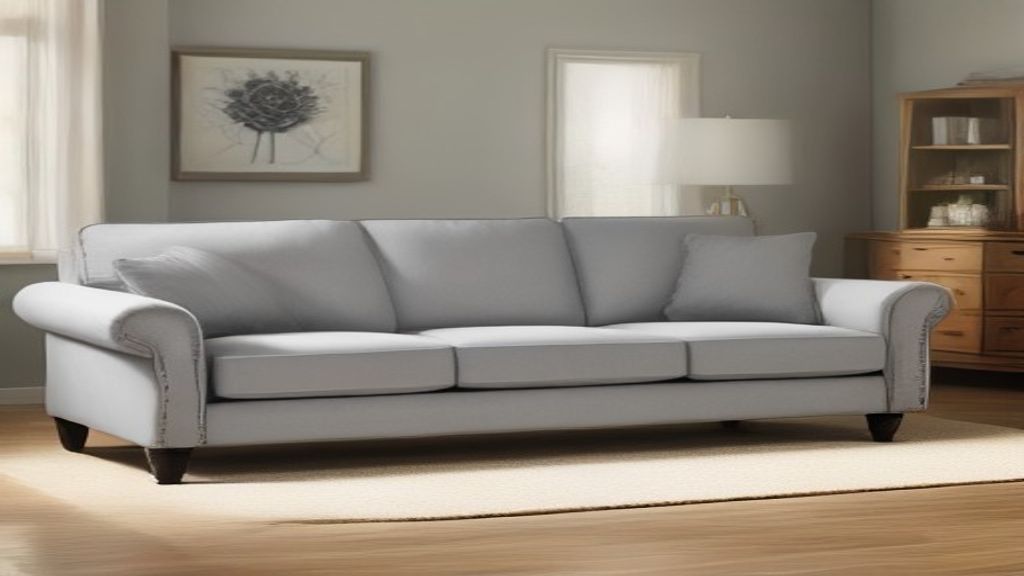
The first thing you notice when the Winchester sofa comes off the truck is the smell. Not bad, not chemical—just that dense foam-and-new-lumber aroma that says this wasn't assembled in a warehouse aisle. But I didn't buy it for the smell. I bought it after a tape measure told me the frame was worth the price.
We're in a narrow living room, 11 feet wide at the widest point, with a radiator that sticks out 9 inches from the wall. I'd already sent back two sofas because they arrived and I hadn't accounted for the arm width. The Winchester's spec sheet listed a 40-inch seat depth and 35-inch overall height, but the arms were the catch. I measured the arm width at 7.5 inches each—not the 6 inches some listings claim. That extra 3 inches of total width meant the sofa left 8 inches of clearance past the radiator. Enough to walk, barely, but it turned the room from a hallway into a passable space.
The frame is what sold me. I pulled the dust cover off the bottom before the delivery guys even left. Kiln-dried hardwood, corner blocks, and the center support legs weren't just glued—they were screwed into the crossbeam. I've seen worse on sofas costing twice as much. The seat springs are sinuous, not the cheap zigzag you find on budget couches, and they're spaced tight enough that I couldn't push a finger between them. After a month of daily sitting, three movie nights, and a couple of naps, the cushions still have their shape. No sagging in the middle, no lumpy spots.
The fabric is where I nearly got burned. The Winchester comes in a "performance" polyester blend that feels like a mid-weight canvas. The marketing says it's stain-resistant. I tested it with coffee the second week—spill, blot, it came out clean. But the weave is rough. If you're used to a soft brushed cotton, this will feel like a work shirt. I don't mind it; the dog's nails haven't snagged it, and it's held up to the occasional muddy paw.
Delivery was the usual pain. The sofa ships in a single box, 130 pounds, and the delivery team wouldn't take it upstairs. I had to unbox it in the garage and carry the pieces up. The back and seat cushions are removable, so it's manageable, but plan for two people and a clear stairwell.
One thing I didn't expect: the recliner mechanism. The Winchester is a stationary sofa—no moving parts—but the seat depth is generous enough that I thought it might work as a recliner substitute. It doesn't. The back is firm, almost upright; you sit on it, not in it. If you want to lounge, you'll need to put your feet up on a coffee table. The seat cushions are high-density foam, not the plush down-blend you'd find on a Karlstad Sofa: First Week Setup and the One Decision That Matters. That's a trade-off: firm means it won't sag, but it won't hug you either.
Compared to the Owen Chaise Sectional Sofa: First-Week Setup and the One Measurement I tested last month, the Winchester is a better fit for a room that isn't strictly rectangular. The chaise on the Owen demands a corner; the Winchester is a straight line that works against a wall or floating. I put mine at a slight angle to the radiator, and it doesn't block the baseboard heat.
If you're looking at the Winchester, measure the back length, not just the width. The back cushions are 6 inches thick and don't compress much; the overall depth is 38 inches, so if your room is shallow, you might lose more floor space than you expect. In my 11-foot room, it's fine, but I had to move a bookshelf to make it work.
The price—$1,100 at the sale I got—puts it in the mid-range. It's not the Affordable Sofas: What You Actually Get at Each Price Point budget pick, but you're paying for the frame. If you can find it on sale, grab it. If not, wait for the holiday promo.
The one thing that decides the buy? The frame. The fabric wears, the cushions flatten, but a solid frame means you're not shopping for a new sofa in three years. That's the reason I kept it.