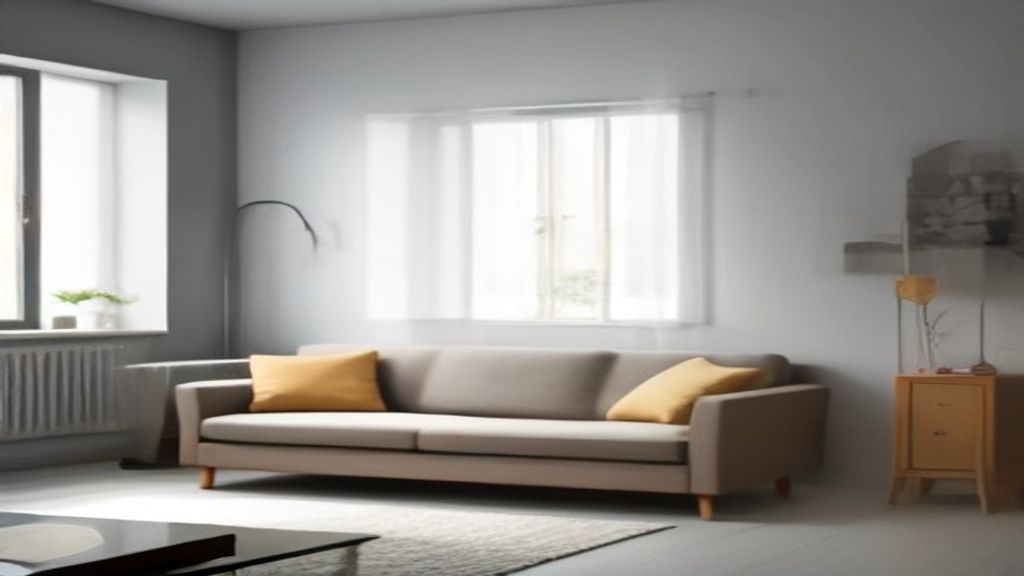
I bought a wide seat sectional online because the description bragged about "the perfect lounge depth." The seats were 23 inches deep, the cushions were 8 inches thick, and the shipping label said it would arrive in five days. Nobody mentioned the 28-inch-wide storm door leading into my living room.
The delivery team took one look, laughed, and told me they couldn't take it past the curb. I spent a Saturday disassembling the frame and paying two guys $150 to lift it through a window. If I'd measured the doorway before clicking order, I'd have saved the money and a lot of curse words.
The real measurement almost nobody makes
Online listings give you the assembled width—usually from arm to arm. That's useful for the floor plan, but it's not the number that decides if the sectional gets inside. You need the narrowest point the couch has to pass through. For me, that was the storm door (28 inches), the interior door (30 inches), and the hallway corner (32 inches diagonal). The sectional's narrowest piece after taking off the back cushions and legs was 36 inches. Still too fat.
Add 2-3 inches to the measured clear width for packaging or rotation errors. The delivery guys told me they've failed jobs because of half an inch on a door frame.
How the wide seat sectionals are built
Wide seat usually means the seat depth is 20+ inches and the seat height is a bit lower than standard, so you can sink in. That's fine if you're tall. My wife is 5'2" and her feet dangle like a kid at a high-top table. If you're under 5'6", sit before you buy.
The frame pieces are heavier, too. My chaise section alone weighed 90 lbs. Two-person lift minimum, and you need to think about stairwells and landings. A straight hallway on the ground floor is a different story from a 90-degree turn at the top of the stairs.
What a wide seat sectional taught me about space
A 104-inch wide seat sectional ate my room. I thought the extra depth meant I could place it against the wall and still have floor space. Wrong. The chaise side stuck out 64 inches into a 12-by-14-foot room, and I had to walk sideways to get to the coffee table.
If you have a common living room, think about the clearance for walking behind the couch. You want at least 24 inches. Measure from the wall to the front of the table, not just the couch silhouette.
The fabric choice also changed my mind. I picked a light beige microfiber because it felt soft in the sample. After three months, the seat where I sit every evening has a definite darker sheen. Microfiber with a textured weave, like a twill or a performance basket weave, hides the wear better than smooth cloth.
When a wide seat sectional is the right call
If you're over 6 feet tall and you've accepted that your living room is a lounge-first space, a wide seat can feel like lying down on clouds. But don't order from a listing that just says "wide seat" without seat depth in inches. You're getting 20 to 25 inches when you want 24 to 26 for full leg support.
And never trust a manufacturer's "fits through doorways" claim. I saw one with a diagram that showed the sectional passing through a 32-inch opening by tilting the chaise diagonally. That only works if the doorway is perfectly square and you've got 8 feet of clearance in front.
If you're still in the shop, keep a measuring tape in your car. Unfold the recliner or the chaise, measure the assembled width, and then measure the smallest section after removing the back and sides. Take the following measurements:
- Doorway clear width (inside frame edge to edge)
- Door height, in case you remove the legs
- Stair width and landing size
- Hallway width at the tightest point
The one factor that decides the buy is also the easiest to get wrong: the width of the widest piece after subtracting every removable part. If that number doesn't fit through the narrower door in the path, nothing else matters. Not the cushions, not the depth, not the price.
I ended up keeping my wide seat sectional because I got it through a window, and honestly, it's the comfiest thing I've sat on. But I'll never order furniture again without busting out the measuring tape first. Check the doorway and the hall corner before you fall for the chaise.
For more on the mistake of sizing up, read My Small Sectional with Chaise Didn't Fit—Here's the Mistake I Made. If you're comparing price points, What a Pop Up Sleeper Sectional Actually Costs: $900, $1,600, and $2,800 Compared is a good follow-up. And if you've got a tight room, The Costco Pop Out Sectional: I Measured the Chaise and the Door, Here's the Real Math saves you the same headache.