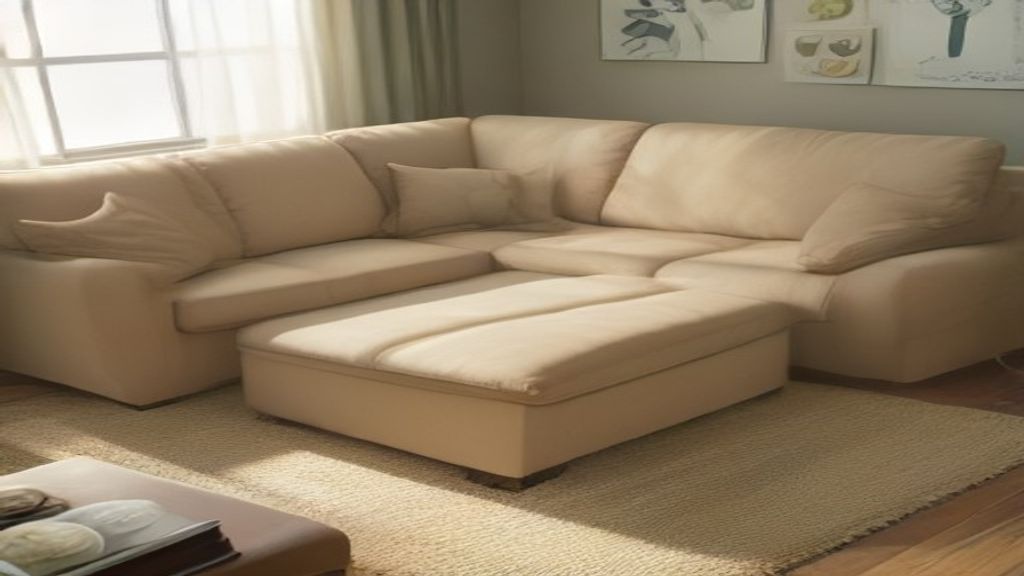
The box weighed 187 pounds. I know because I helped the delivery guys carry it up two flights of stairs, and my back still remembers. The smell of new upholstery hit me before we even got it through the door—that weird combo of fabric glue and polyfill. I’d ordered a 120-inch sectional, the kind with deep seats and chaise on both ends, advertised as “the ultimate movie night throne.” It looked massive in the online photos, and I was excited. I didn’t measure my living room. That was mistake #1.
We got it inside—barely. The doorway had 29 inches of clearance, but the sectional came in 31-inch-wide pieces. The delivery crew had to unbox it on the landing, and we wrestled each section up sideways. One armrest scraped the doorframe, leaving a two-inch gash in the wood. I didn’t notice until after they left. In my head, I’m thinking, “So this is what the reviews meant by ‘measure your doorways.’” I’d scrolled past that warning a hundred times.
The real problem wasn’t the door, though. It was the room. I’d measured the wall at 12 feet, but I forgot to account for the floor vent and the baseboard heating. The sectional fit, but only by six inches. The chaise on the left pushed against the floor vent, blocking the airflow. In the winter, my heating bill went up $40 a month before I noticed. Three months later I found a 12-inch piece of the fabric had worn thin where it rubbed against the vent’s metal grille. That ruined the look, not to mention my temper.
So what should you do instead? Here’s the checklist I wish someone had shoved in my face before I clicked “order.”
Measure the Entry, Not Just the Wall
You can’t just measure the wall. Measure every door, hallway corner, and stairwell between the street and your living room. My sectional came in three boxes, each 34 x 32 x 28 inches. They fit through the front door, but only if we angled them a certain way. If your door opens into a tight hallway, that could be a deal-breaker. Bring a tape measure to the furniture store, or if you’re buying online, call and ask for the packed dimensions. I had to wait a week for the return because the delivery company didn’t want to re-box it.
Also measure the room’s outlets and vents. I’m not the only one who’s blocked airflow with a big sofa. The return policy didn’t cover “damage from improper clearance.” I learned that the hard way.
The Fabric Is More Important Than the Cushion Fill
Everyone talks about cushion density. I didn’t care about the fabric. I bought a polyester blend because it was cheap and looked soft in the photos. Three weeks in, my dog’s claws started pilling it. I vacuum, I trim her nails, but pilling happens. If you have pets or kids, skip the low-denier pricing and go for high-performance fabric like Crypton or a tight-weave twill. A friend has a microfiber one that’s been through two kids and a golden retriever. It still looks new, and it’s not as hot as you’d think.
Also sit on it for 20 minutes before you buy. I didn’t. The seat depth was 24 inches, which is fine for lounging, but when I lean back, my feet don’t touch the ground. That’s OK for watching TV, but for working on my laptop, it’s aggravating. I end up crossing my legs or tucking them under, which kills my posture.
Delivery Day Is a Test of Patience
I thought delivery was the end of the headache. It was the beginning. The guys put it together in 30 minutes—they even vacuumed the foam crumbs off the floor. But they were rushing, and they left the chaise connector bracket loose. Two days later, the two chaise sections shifted apart by an inch and a half, and I had to crawl under to tighten it myself. A magnetic screwdriver did the job, but I shouldn’t have had to. If you’re buying a modular sectional, check every connector before they leave. Don’t just sign the paper. Or at least take photos of the underside so you know how to fix it later.
I also didn’t realize the sectional didn’t come with a warranty that covers “normal wear” on the mechanism. The manual said I had to flip the cushions every six months, but I didn’t find that until I was searching for the warranty form. So here’s a hard lesson: read the care card before you throw away the packaging. Mine’s still in the box in the garage, which would’ve been better off being recycled.
The One Factor That Decides
Forget the price tag, the brand, the cushion fill. The single factor that decides whether you love your large comfy sectional is the layout. I bought a U-shaped with chaise on both ends. I thought that was the peak of comfort. But I didn’t have a coffee table yet, so the footrests became de facto tabletops. Now there’s a permanent circle of coffee rings on one chaise because I didn’t buy coasters for two weeks. The U-shape also blocks the path to the sliding door. I have to walk around the whole thing to get outside.
What I should’ve done: measure the actual living space, not just the dimensions, and sketch out how the sectional would sit in real life. I’d have chosen a simple L-shape with one chaise, which would’ve opened up the room and still fit five people.
So take the time to lay on a blueprint. Or do what I do now: when I walk through a furniture store, I stop at the sectional, stand back, and imagine walking around it with a cup of coffee. That visual test—thinking about the daily path, the vent, the doorway—that’s what separates a sofa you live with from a sofa you regret.
If you’re in the market, I’d suggest reading about someone else’s mistake with a wide seat sectionals failure to see how a small measurement can break the whole order. And before you pick a modular reclining sectional, ask the store if the connectors come finger-tight or need a tool. My story is just one of thousands, but the lesson is universal: measure more than you think you need, and go for the simpler layout than the flashy one. The sofa is for sitting, not for winning design awards.