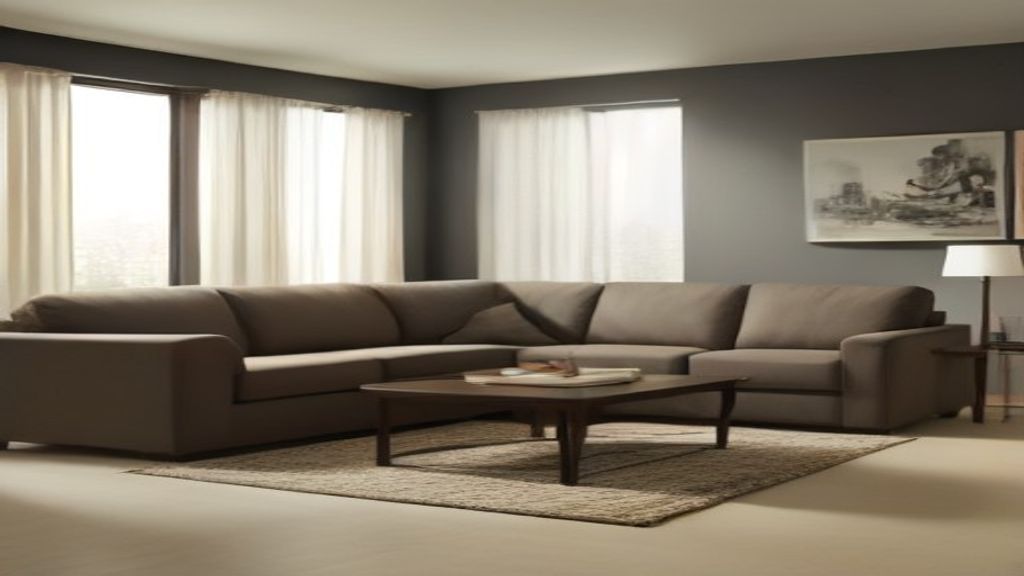
The box shows up and the first thing you notice is the weight. Even the pieces that are supposed to be light—the ottoman, the back cushions—have that awkward bulk that makes you rethink your life choices. The delivery guys drop the main frame in the living room and leave, and you're standing there with a tape measure in your pocket and a faint smell of new polyurethane foam in the air. That's when it hits you: the setup is not just about bolting pieces together. The setup is the whole game.
I've been through three deep sectionals in five years. Two of them were returned or sold within months. This one—the one I'm living with now—I kept, and the difference came down to one thing I didn't expect.
The First Hour: What the Boxes Don't Tell You
You open the cardboard and there it is: a giant chunk of furniture that's supposed to be "deep." And it is deep. The seat depth on these things runs 40 to 44 inches, which means your knees are barely touching the front edge when you sit back. That's the point. But it also means the piece eats up floor space. I had measured the room five times, but measuring the floor is not the same as living with the shadow of a 10-foot-long hunk of fabric looming over everything.
The first thing I did was dry-assemble the sectional in the middle of the room. Not moving it against the wall, not pushing it into the corner—just placing all the pieces roughly where they'd go, leaving a two-foot gap around each one. Then I walked around it. I sat in each seat. I got up, walked to the kitchen, came back, looked at it from the hallway. That's the thing no spec sheet tells you: a deep sectional changes the geometry of the room. It's not just a couch; it's a wall that you can't see through.
That dry run took about an hour, and it saved me from making the room feel like a waiting room at a dentist's office.
The One Measurement That Determines Everything
Here's what I learned from the previous disasters: the single most important number is not the overall length or the depth of the seat. It's the clearance you need behind the sofa to make the angle work. Most deep sectionals have a slight recline in the backrest—not adjustable, just a fixed angle that pushes your hips forward. That means you need at least 10 to 12 inches of clearance from the back of the sofa to the wall if you want to walk behind it. Otherwise, you're shimmying sideways every time you want to get to the window.
I measured the room, marked a line 12 inches from the wall with painter's tape, and then pushed the sofa right up to that line. It felt like a huge waste of space at first. But when I sat down, the difference was night and day. With the sofa close to the wall, the backrest angle meant my shoulders were pressed back and my feet didn't quite touch the floor. With the 12-inch gap, the recline felt natural and my posture actually worked. That gap is the one decision. If you skip it, you'll end up with a $2,000 seat that gives you a sore lower back by the end of the week.
Placement Tricks: Angle It, Don't Square It
Another mistake I made with the first deep sectional was lining it up perfectly with the walls. That square layout looks fine in the store but it turns your living room into a corridor. With this one, I angled the chaise section slightly toward the TV, about 15 degrees off the wall. That slight angle broke up the rectangle of the room and made the whole space feel less like I had parked a bus next to the fireplace.
And while you're at it, check the floor. Deep sectionals are heavy. The base is solid beechwood or plywood, and the legs are usually plastic or cheap metal. On my second sectional, the legs gouged the laminate floor because the weight was concentrated on four small points. I picked up inexpensive felt pads with plastic glides and screwed them to the bottom of each leg before the first sit. That took ten minutes and prevented a long series of scratches.
Fabric Care Starts the Day It Arrives
The deep cushions mean you'll be living on this thing for years, so treat the fabric right from the start. The first week, I had the couch sprayed with a fabric protector. I know, some people say it's a waste, but I have a dog and two kids who think the couch is a trampoline. The protector created a thin layer that makes spills bead up and wipe off. Also, I flipped the seat cushions every other day that first week. That helped the foam settle evenly so I didn't end up with one side that sagged and the other that felt like a ramp.
The cushions are heavy. On a deep sectional, each seat cushion is a brick of foam and springs. I remember thinking, "There's no way this is going to get softer." But it did. By the third week, the initial firmness gave way to a nice, supportive give that molds to your shape without swallowing you. Give it time. Don't panic if the first few nights feel like sleeping on a park bench.
The Decision That Matters More Than Brand or Fabric
If you're in the market for a deep sectional, you've probably already buried yourself in fabric swatches and corner-unit configurations. But the thing that decides whether you'll keep it or hate it is this: the distance from the front edge of the seat to the backrest when you sit all the way back.
Some deep sectionals are so deep that your feet dangle, and you have to sit cross-legged to feel comfortable. Others are deep but with a firm back that doesn't recline, so your back ends up arched. The sweet spot is a seat depth that allows your back to rest against the backrest while your feet stay planted. When you're testing in the store, take off your shoes and actually lie back. If you can't get your heels on the floor, it's too deep for you.
That one measurement—the distance from your ankle to your knee—controls everything. I ignored it twice and paid for it with two returns. The third time, I measured my own leg: 22 inches from the back of my knee to the floor. My seat depth: 41 inches. That extra inch or two beyond that meant I could sit comfortably without a footrest.
At the end of the day, the best deep sectional sofa is the one that matches your body and your room's geometry. It's not about the brand name or the fabric grade. It's about whether you can coexist with its depth. I will say this: I'm sitting on mine right now, with my feet propped on the matching ottoman, and there's no place I'd rather be. The setup was painful, the first week was a test of patience, but the right measurement made all the difference.
And if you're still in the shopping phase, read up on some common pitfalls. I wish I had before my first disaster: Sectional Sofa With Ottoman: The Delivery Day Mistake That Costs You and IKEA Sectional Sofa: Four Rooms, Four Lessons in Measuring Wrong. At the very least, you'll know what you're getting into.