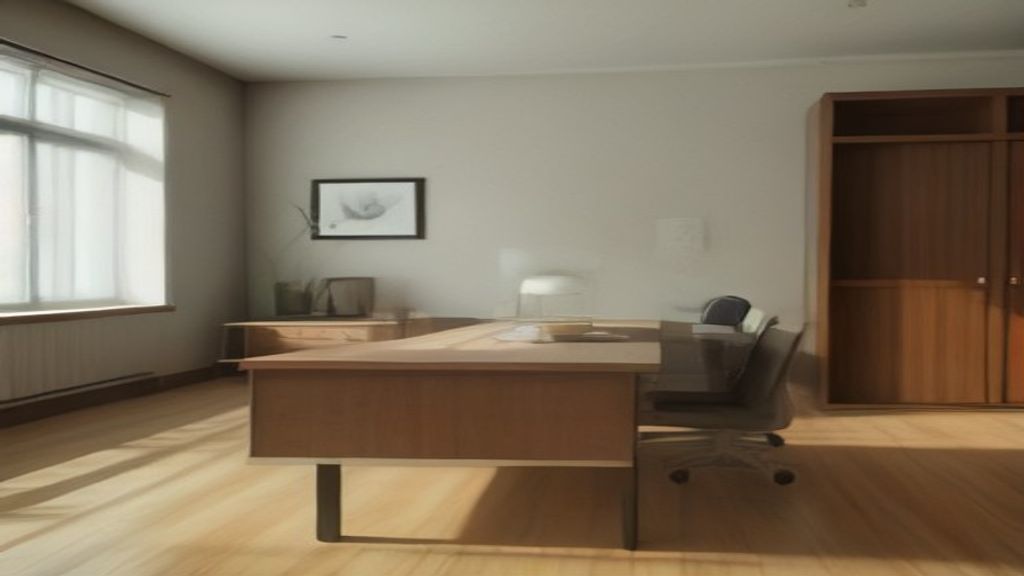
You got the box, cut the tape, and now the thing is glowing in your spare bedroom. Looks fine. But after three days of sitting there, your neck hurts and your mouse arm is doing something weird. I’ve been there. Returned three office tables for home before realizing I wasn’t buying bad tables — I was measuring the wrong thing.
The First Week of an Office Table for Home: What Actually Bites
That first week is when the small stuff shows up: wobble, a finish that chips, a frame that's crooked, too-short cables. I remember one desk where the legs were adjusted to different heights out of the box. Fixed it in under a minute with a twist. Another had a laminate seam right where my forearms touched. I could feel it even through a pad.
The real enemy, though, is height. I’m not joking. I measured every single inch of my chair, my legs, even where my elbows land when I lean forward. Ignore the marketing. The single measurement that decides everything is the desk’s height compared to your folded elbow height when you sit.
Sit normally, shoulders relaxed, and bend your arm to 90 degrees. That point—your elbow—is exactly where the desk surface should sit. I had a 29-inch desk, and my elbows were at 27. So I hacked it with two-inch desk risers. That fixed more than a $300 chair did.
The One Decision That Matters More Than Style
Go visit a big furniture store. Pull every small desk you find down to some weird position. You can even carry a tape measure in your pocket — I made employees nervous. Focus on the cheap hydraulic lift lever. Is it loose? It will break in a year. If a sit-stand desk isn’t in your budget, get a fixed one with a decent height.
Most budget office tables for home are 28 to 29 inches tall. They’re built for average-height manufacturers, not for your body. The first decision is not wood color or laminate. It’s target height. Because the perfect board won’t hurt your elbows.
Of course, getting the right legs is a battle. Most cheap metal frames can’t support two 27-inch monitors clamped to the back. So I ran some wider “C” legs from my local hardware store instead. That brings up wobble. If the frame wiggles when you hip-check it, it will bother you every single time you type a hard bit. Get one where the frame top is a solid parallelogram, no diagonal that bends.
Notes From My Garage (I Nailed One Down)
A friend said he’d measure twice, cut once. He didn’t. I dragged an old office table out to my detached garage, wore safety glasses, and added corner blocks with a pocket hole jig. Then I clamped a thick butcher block countertop to see if the whole thing would rack. It didn't. That’s the consistency you’re after: zero side-to-side movement.
I also tested sit-stand, but only after laying on it like a lazy dog. Not kidding — a hydraulic desk dropped six inches when I sat on it. Never trust a gas lift that low.
And don’t park the cable mess under the desk until you flip it over once. Bolts shift. If a crossbar is pressing against a drawer, you’ll find out at 11pm, typing a returns email. Do the first-test-night setup at 8pm. I’ve been out in the dark with a phone flashlight, re-tapping threads, more times than I like.
What You Actually Do With It
If you’re a writer, you want a front edge that doesn’t dig into your wrists. If you design, you want a matte surface that doesn’t reflect every overhead light. If you game, prioritize length, not depth — my arms need to rest, not hang like wet noodles.
Find the spot where your planner, coffee, and two notepads fit without your phone falling next to the monitor. When you stack a drafting board, it changes your eye height.I now design every room around the single rule: my office table for home has to have more width than my elbows’ spread, a thick edge, and a stable crossbar.
But hold on — I’m not telling you to dump everything before trying the $400 laminate version. Just look at the surface before you bolt it. Look at the under-frame coating. Cheap metal oxidizes. I’ve watched spray paint flake off after three months, staining my floor. So don’t be afraid to return. Trust your measurements, not the product page.
Everyone’s body is different. Some want a low seat, some might raise the whole thing by two inches with little risers. At the end of the week, you might find you hate the dark oak grain or want a lighter maple top. That’s normal.
The only thing that matters is that it fits — not the shelf life of a good review. Measure your elbow height first, then look for a desk that matches. You don’t need a genius-level setup, just simple numbers.
I mean, I still want a small walnut desk with steel legs, but I’m not going to buy it without a tape measure. I measured my actual table, and it’s 29.25” tall — I can live with it after adding two fat mouse pads. But that’s a whole other project.
Maybe decide about the height before you bring it home. And if you make a mistake, well, the first day of the return window is my favorite day.