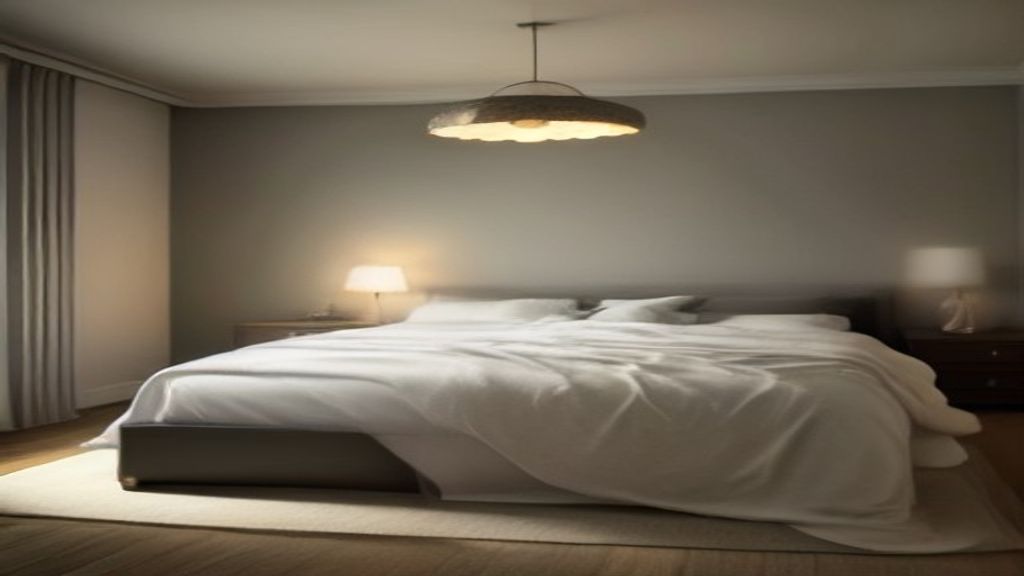
The chandelier I ordered for my 10×12 bedroom arrived in a box the size of a small dog, and I didn't check one critical measurement: the width of my nightstand clearance. It cleared by three inches on each side, but the visual mess while reaching for my water glass at 3am made me switch back to a flush mount within a week.
Before you hit checkout on something that looks like it belongs in a hotel lobby, measure the height of your bed frame, the distance from the ceiling to where your head rests, and the width of the room. Fancy lights for bedroom use aren't just about looks — they have to work for how you actually live in the room.
Check the mount, not just the shade
Most 'semi-flush' mounts drop 8 to 18 inches. My room has 9-foot ceilings, so I thought I was safe. But with a tall headboard, the bottom of the fixture ended up level with my forehead when I sat up. That's a sleep psychologist's nightmare, and I didn't realize it until I ducked every morning.
Your ceiling height and bed placement are the two numbers that matter. A chandelier that hangs 24 inches might be perfect in a house with 12-foot ceilings and a low platform bed, but it's a headbreaker in a standard apartment
Understand dimmer compatibility before you install
Warm dimming sounds wonderful until you find out your $250 light doesn't play nice with your $8 dimmer switch. Most fancy bedroom lights, especially ones with LED panels or certain integrated dimmers, need a compatible dimmer. I didn't check that my light needed a TRIAC-compatible dimmer — the worst part, it hummed at 30%. Not loud, but at night, it's the only sound in the room.
If you have existing dimmers, ask for the specs before buying. And if you're like me and don't want to replace switches, stick to lights that are clearly 'dimmer compatible' in the description.
The first week is where you win or lose
I see people judge a light by how it looks in the catalog photo. But in real life, the color temperature, the placement of the light source, and how it bounces off your walls matter more than the design.
My fancy light looked great during the day — nobody was home. At night, it lit up the ceiling and left my reading chair in the dark. I needed a reading lamp anyway, but I expected the main light to do more.
I returned mine after six days. Test a fancy light for at least a week, at different times of day, with your normal lamps and curtains. Watch how it filters through your lampshades and whether it casts weird shadows on your face when you're lying in bed.
Check the light spread
A lot of bedroom fixtures are designed for dining rooms or entryways — they throw light horizontally, not downward. That's fine for a foyer, but it's terrible for reading or getting dressed. My chandelier had exposed bulbs that created a starry effect on the ceiling, but the light pools near the ceiling, not on the floor. I ended up using it for a few days and then switching it off entirely.
Don't underestimate how much light you actually need. Look at the room's square footage and what you do there — reading, dressing, relaxing. A 400-lumen fixture might be perfect for a moody bedroom, but if you rely on it to find your socks, you'll have to keep the nightstand lamp on.
Silence the hidden design flaw
The worst part? The beautiful brass pendant I bought had a hollow rod that amplified when I adjusted the height. I could hear a faint musical hum in the dark. It took me two more nights to realize it was the fixture. That's what you get when you ignore the physical construction and choose a throw pillow of thinking.
For something that's supposed to be a focal point, fancy bedroom lights need more thought than thinking about how they'll look in an Instagram post.
A $180 mistake taught me that the right fancy light for a bedroom is the one that lets you read without turning on the side lamp, doesn't make you duck to get out of bed, and doesn't hum at night. I'm still looking for that fixture. Maybe I'll check the clearance after a better measurement — or I'll just keep the flush mount I've got.